
Complete product specifications
Support customization
PRODUCTS
MESSAGE
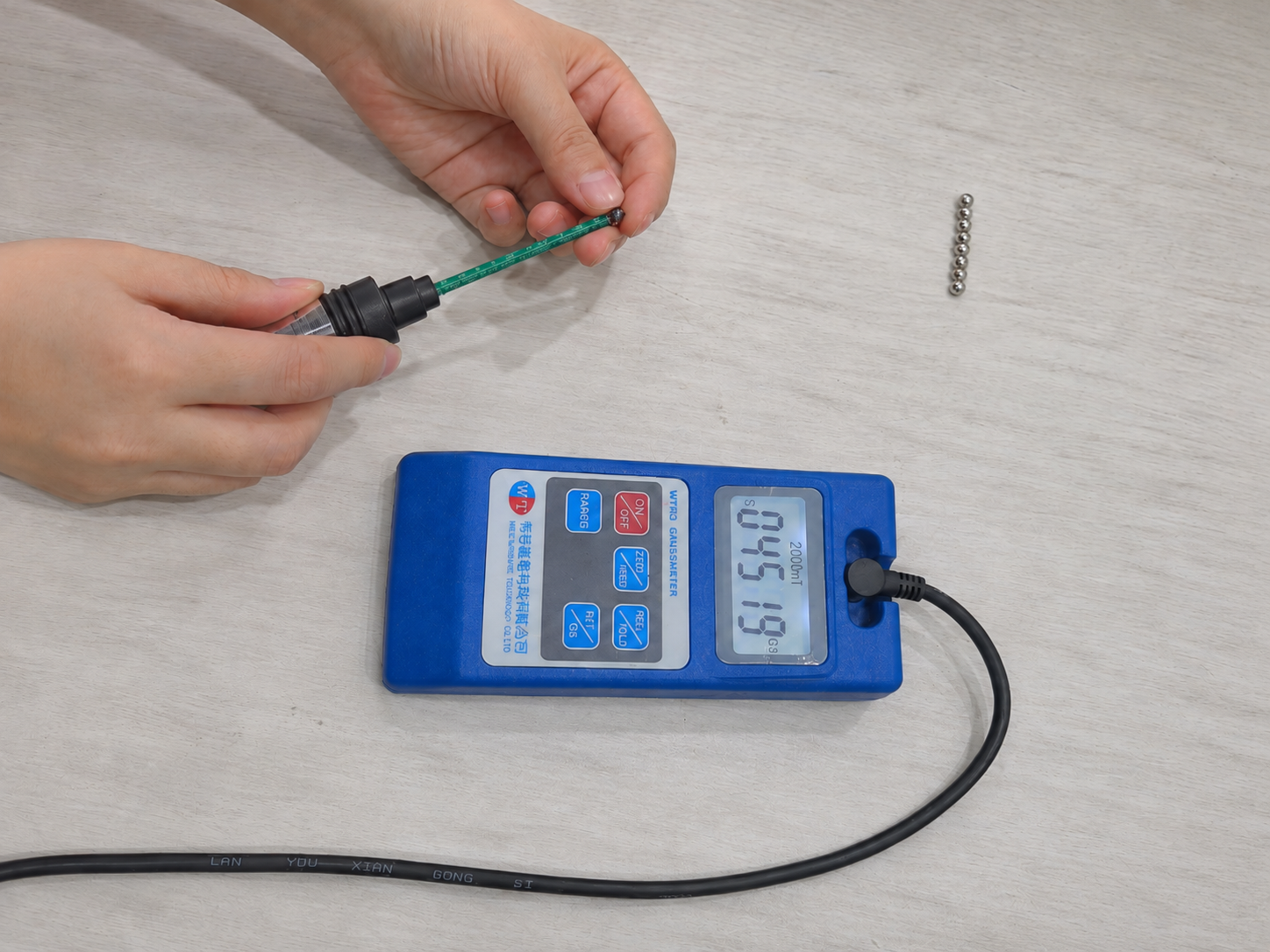
Why Do Neodymium Magnets Lose Strength Over Time? 5 Common Causes and How to Test Them
Why does a neodymium magnet perform well when first installed but show a noticeable loss of magnetic strength after several months of use?
Some electric motors pass performance tests before leaving the factory but experience reduced output after extended operation. Similarly, certain magnetic assemblies initially meet their holding force requirements, yet customers notice a decline in performance after months of use.
In these situations, the first suspicion is often that the magnet has become demagnetized or that its quality is defective.
However, a decrease in holding force does not necessarily mean that the magnet itself has lost its magnetism.
Changes in the magnet's intrinsic magnetic properties, magnetic circuit design, installation conditions, and operating environment can all affect its performance in the final product.
So, why do neodymium magnets lose strength over time? And how can you identify and solve the problem?
01. Has the Magnet Really Been Demagnetized? Understanding the Difference Between Magnetic Performance Loss and Reduced Holding Force
Before investigating the problem, it is important to understand one thing:
A decrease in surface magnetic field strength, a change in magnetic flux, and a reduction in actual holding force are not necessarily the same phenomenon.
For example, when a neodymium magnet is installed in a motor rotor or magnetic assembly, its final performance depends not only on the magnet itself but also on the working air gap, surrounding magnetic components, installation position, and overall magnetic circuit design.
If any of these conditions change, the product's holding force or operating performance may decrease even when the magnet itself has not experienced significant demagnetization.
Therefore, when a customer reports that a magnet has become weaker, the first step should be to determine:
Has the magnet's intrinsic magnetic performance decreased, or has the product's holding force changed?
Does the magnet show a measurable change in magnetic field strength when tested separately?
Have the installation position or working air gap changed?
Has the magnet been exposed to excessive temperatures, corrosion, or mechanical damage?
Identifying the actual type of problem is essential for finding the correct solution.
02. Five Common Reasons Why Neodymium Magnets Lose Strength Over Time
Cause 1: Excessive Operating Temperature
Temperature is one of the most important factors affecting the long-term stability of neodymium magnets.
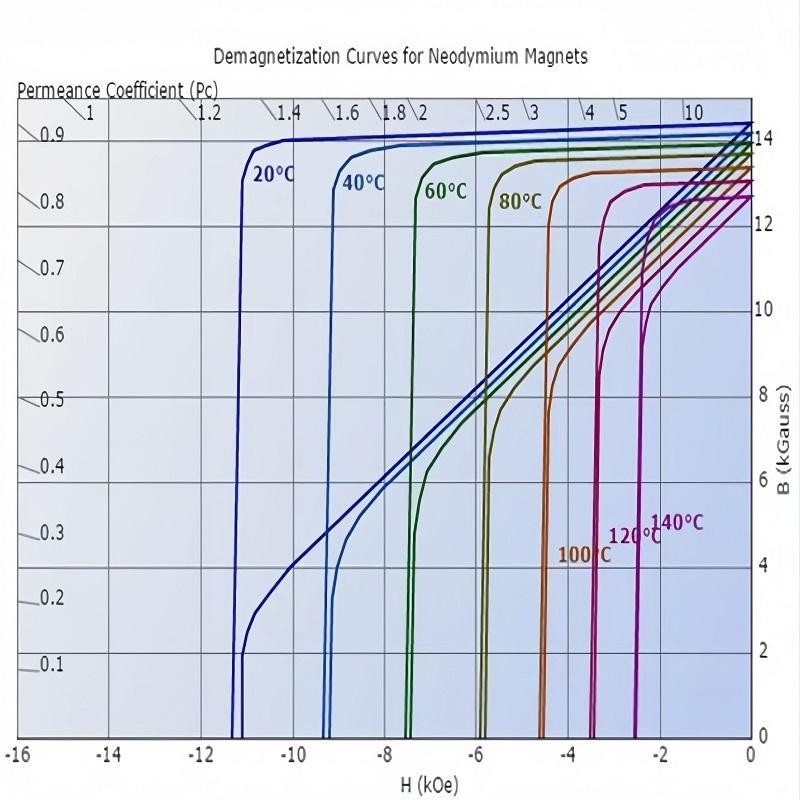
Both remanence (Br) and intrinsic coercivity (Hcj) are affected by temperature. As temperature increases, the magnetic properties of the magnet generally change.
If a magnet operates in a high-temperature environment and its operating point enters the irreversible demagnetization region, permanent magnetic performance loss may occur.
For example, in a permanent magnet motor, the windings, iron core, and other components generate heat during continuous operation. If the magnet's temperature rating does not match the motor's actual operating temperature, the risk of demagnetization may increase.
When selecting a neodymium magnet, it is not enough to consider its magnetic properties at room temperature. You should also evaluate:
Normal operating temperature.
Maximum operating temperature.
Duration of high-temperature exposure.
Magnet grade and intrinsic coercivity.
Actual magnetic operating point.
For high-temperature motors, robotics, and electric vehicle applications, the temperature suitability of the magnetic material should be evaluated during the design stage.
Further reading: NdFeB Magnet vs. SmCo Magnet
Cause 2: Excessive Reverse Magnetic Fields Causing Irreversible Demagnetization
In addition to temperature, reverse magnetic fields are another important factor affecting the stability of neodymium magnets.
When a magnet is exposed to an external magnetic field opposite to its original magnetization direction, its magnetic state may change.
If the reverse magnetic field is too strong and pushes the magnet's operating point beyond the material's demagnetization limit, irreversible magnetic performance loss may occur.
This is particularly important in permanent magnet motors, magnetic transmission systems, and certain complex magnetic assemblies.
Take a permanent magnet synchronous motor (PMSM) as an example. During operation, the motor may generate an armature reaction field. When this reverse magnetic field acts together with elevated temperatures, the risk of magnet demagnetization may increase further.
Therefore, selecting a magnet based only on its maximum energy product grade, such as N35, N42, or N52, is not sufficient. You also need to evaluate:
Intrinsic coercivity (Hcj).
Operating temperature.
Reverse magnetic field strength.
Actual magnetic operating point.
Demagnetization curves under different operating conditions.
The material grade and magnetic circuit design must work together. Simply choosing a magnet with a higher energy product does not guarantee better resistance to demagnetization.
Cause 3: Changes in Magnetic Circuit Design or Installation Conditions
A magnet does not operate independently.
In motors, magnetic assemblies, and magnetic transmission systems, magnets work together with iron cores, magnetic materials, and other components to form a complete magnetic circuit.
If the magnetic circuit is poorly designed or the installation structure changes during operation, the final magnetic performance may be affected.
Common problems include:
An increased working air gap between the magnet and the corresponding iron component.
A shift in the magnet's installation position.
Deformation or loosening of magnetic components.
Changes in the magnetic circuit's return path.
Failure of adhesive bonding, causing the magnet to move.
For example, if an arc-shaped magnet in a motor rotor shifts from its original position, the air gap between the rotor magnet and stator may change. This can affect the magnetic field distribution and motor output performance.
Therefore, when equipment performance declines, it is important to inspect the entire magnetic circuit and assembly structure rather than focusing only on the magnet material.
Cause 4: Corrosion Affecting Long-Term Magnetic Reliability
Neodymium magnets have relatively limited corrosion resistance, so surface coatings are generally required to provide protection.
Common surface treatments include:
Ni-Cu-Ni plating.
Zinc plating (Zn).
Epoxy coating.
E-coating.
Passivation.
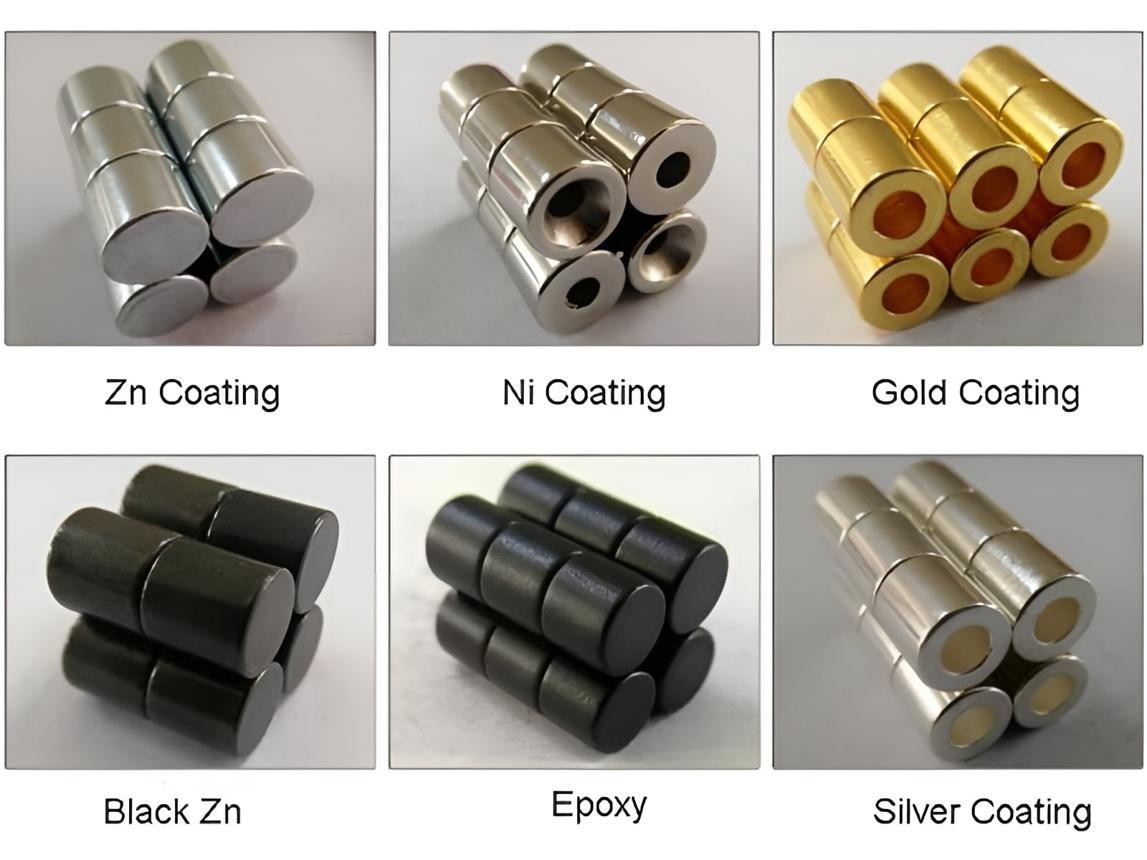
If a magnet is continuously exposed to high humidity, salt spray, condensation, or corrosive environments, an unsuitable surface protection system may lead to corrosion.
Common signs include surface rust, coating blistering, edge powdering, and localized corrosion.
Severe corrosion may compromise the magnet's structural integrity and affect the long-term reliability of the product.
It is important to note that corrosion does not necessarily mean demagnetization. However, it may change the magnet's effective dimensions and structural condition, which can affect its actual performance.
When ordering custom neodymium magnets, the coating should therefore be selected according to the actual operating environment, and relevant corrosion resistance should be verified through testing when necessary.
Further reading: Why Do Neodymium Magnets Rust?
Cause 5: Mechanical Impact and Vibration Causing Magnet Damage
Neodymium magnets have relatively high hardness, but they are also brittle.
During transportation, assembly, and long-term operation, excessive mechanical impact may cause chipping, cracking, or even complete breakage.
For high-speed motors, robotic joints, and industrial automation equipment, long-term vibration, mounting structures, and assembly stress must also be considered.
If a magnet shifts, cracks, or experiences coating damage, the overall performance and reliability of the magnetic assembly may be affected.
Therefore, the following factors should be considered during magnet design and assembly:
Avoid violent collisions between magnets.
Optimize magnet mounting and fixing methods.
Avoid excessive or uneven press-fitting stress.
Control vibration during equipment operation.
Ensure the reliability of adhesive bonding and mechanical fixing structures.
For high-performance industrial magnets, proper structural design and assembly processes are just as important as material properties.
Further reading: Why Are Neodymium Magnets Brittle?
03. How to Test Whether a Neodymium Magnet Has Really Lost Its Magnetic Performance
When a change in magnetic performance is suspected, it is not advisable to rely solely on subjective impressions or simple attraction tests.
A more reliable approach is to compare current test results with the original data recorded when the magnet was manufactured.
Common testing methods include:
It is important to understand that different testing methods measure different magnetic properties and cannot be directly substituted for one another.
For example, surface magnetic field measurements must be performed with consistent probe positions, probe directions, and measurement distances. Otherwise, the results may vary.
To determine whether irreversible demagnetization has occurred, it is advisable to analyze complete magnetic performance data together with the operating temperature and actual magnetic circuit conditions.
For industrial magnets produced in batches, it is recommended to establish baseline inspection records, including:
Initial magnetic performance data.
Critical dimensions and dimensional tolerances.
Changes in magnetic properties before and after high-temperature testing.
Performance variations between production batches.
Test results obtained after long-term use.
Only by establishing comparable test data can you more accurately determine whether a magnet has actually undergone demagnetization.
04. How to Prevent Neodymium Magnets from Losing Strength During Operation
For magnet manufacturers and purchasers, preventing magnetic performance loss should not rely solely on inspections after production. More importantly, potential problems should be addressed during the design and manufacturing stages.
1. Select the Appropriate Magnet Grade Based on Actual Operating Conditions
Choose a suitable NdFeB grade according to operating temperature, reverse magnetic field conditions, and magnetic performance requirements. Do not simply pursue a higher N-grade.
2. Evaluate the Magnetic Circuit Design
For motors and complex magnetic assemblies, evaluate magnet dimensions, working air gaps, magnetic circuit structures, and actual operating points.
3. Choose Suitable Surface Treatments
Select appropriate coatings and protective systems based on humidity, salt spray exposure, and corrosive operating environments.
4. Optimize Magnet Manufacturing and Assembly
Control dimensional tolerances, chamfering, installation positions, and fixing methods to reduce the risk of mechanical damage.
5. Establish Batch Quality Inspection Procedures
Use dimensional inspection, magnetic performance testing, and batch consistency controls to ensure that samples and mass-produced magnets meet the agreed specifications.
For industrial equipment that requires long-term continuous operation, these measures should be implemented during product development rather than waiting until failures occur.
05. How Can a Magnet Manufacturer Help Solve Magnetic Performance Problems?
For industrial applications, the long-term stability of a magnet depends not only on its material grade but also on machining accuracy, surface treatment, magnetization direction, and actual operating conditions.
When ordering custom neodymium magnets, we recommend providing the following information:
With this information, we can more accurately evaluate the magnet material, dimensions, magnetic properties, and manufacturing requirements.
For projects that already experience demagnetization, corrosion, or unstable magnetic performance, we also recommend identifying the root cause before deciding whether the material grade or product structure needs to be changed.
Conclusion: Magnet Quality Must Be Proven Through Long-Term Performance
A neodymium magnet may demonstrate excellent magnetic properties when it leaves the factory, but this does not guarantee that it will maintain the same performance under every operating condition.
Temperature, reverse magnetic fields, magnetic circuit design, corrosive environments, and mechanical conditions can all affect how a magnet performs in its final application.
For industrial magnets, what truly matters is not only their initial magnetic performance but also whether they can continue meeting the product's performance requirements after long-term operation.
As a manufacturer specializing in permanent magnetic materials and custom magnets, we focus on every stage of the process, from material selection and precision machining to magnetic performance inspection, helping customers find solutions suited to their actual applications.
If your product is experiencing reduced magnetic performance, or you are developing a neodymium magnet that needs to operate reliably over the long term, feel free to share your product drawings, operating temperature, and application requirements with us.
Our technical team can help evaluate the appropriate magnet grade, magnetic properties, and custom manufacturing solution.
Please give us a message
Beijing Saint Langma Magnetic Industry Technology Co., Ltd.