
One stop solution for magnetic products
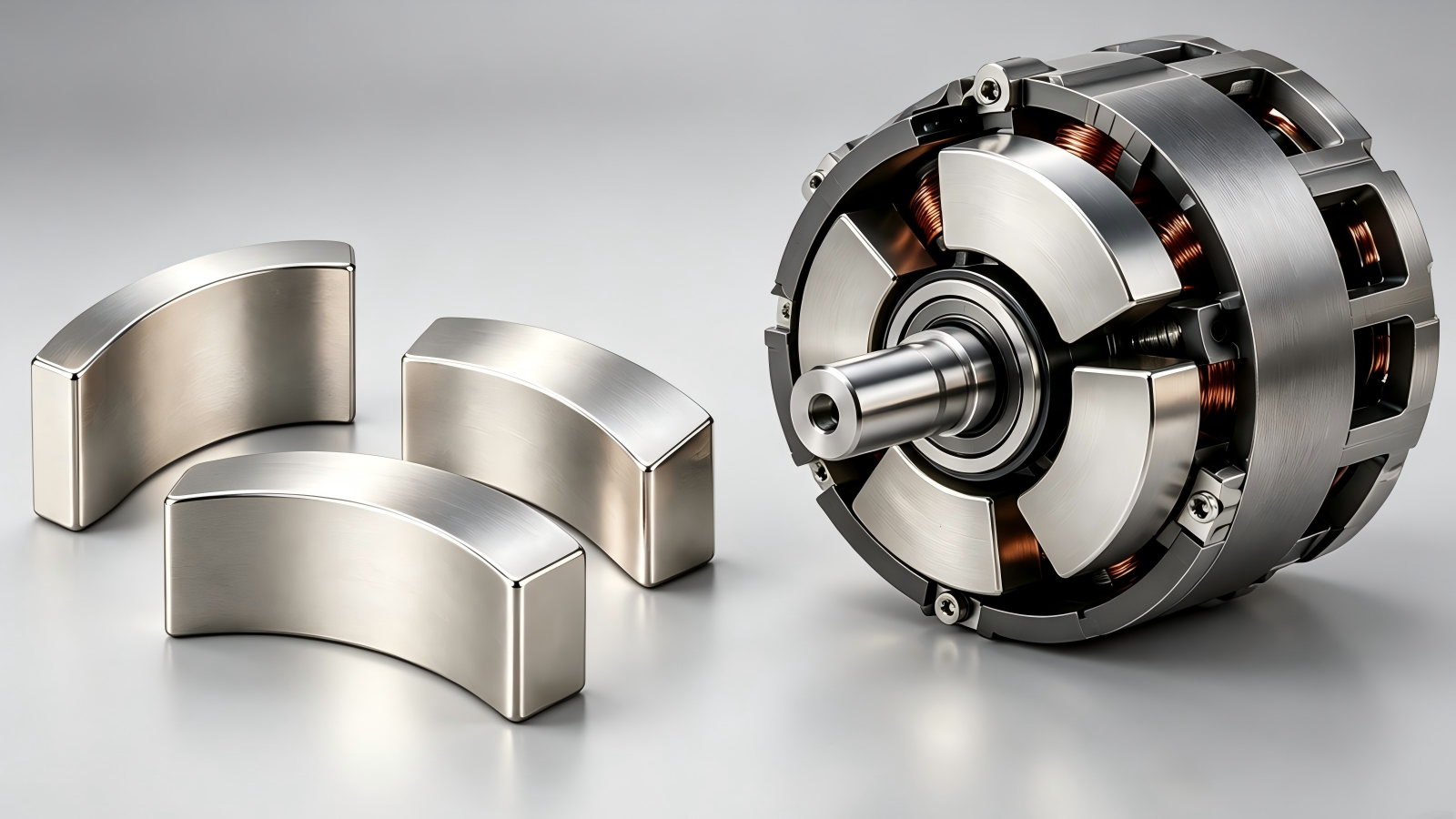
A humanoid robot weighing only a few dozen kilograms may require nearly 4 kg of high-performance neodymium magnets.
These magnets are integrated into the joint motors throughout the robot. From the shoulders, elbows, and wrists to the waist, hips, knees, and ankles, each joint needs to deliver power within a limited space, placing stringent requirements on motor size and weight.
As humanoid robots move toward mass production, neodymium magnets are gradually becoming an important magnetic material in the robotics supply chain, evolving from a traditional industrial component into a key material for advanced robotic systems.
What Exactly Are Neodymium Magnets?
Neodymium magnets are primarily composed of neodymium, iron, and boron (NdFeB) and are among the strongest commercial permanent magnets in terms of magnetic performance. (What Is a Neodymium Magnet? A Complete Guide to NdFeB Magnets For a more detailed introduction to neodymium magnets, please see our related article.)
For electric motors, their advantages are straightforward: a stronger magnetic field within the same volume can help increase torque output while allowing for smaller and lighter motor designs.
These characteristics are particularly important for humanoid robots. Space inside each joint is extremely limited. An oversized motor adds weight to the entire robot, while insufficient output can limit its ability to move and carry loads. At the same time, the motor must provide fast and precise response.
As a result, permanent-magnet motor designs, including frameless torque motors, are increasingly being adopted in robotic joints, making high-performance neodymium magnets an important material for modern robotic systems.
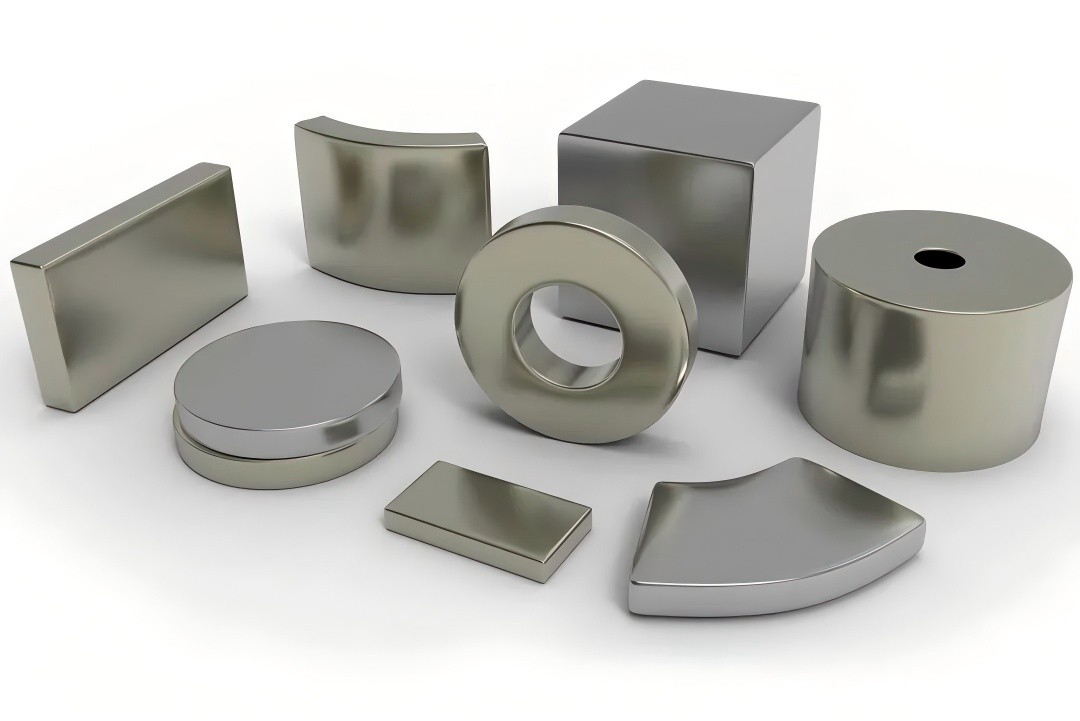
Image Source: Arnold Magnetic Technologies Official Website
Do Humanoid Robots Really “Consume” More Magnets Than Electric Vehicles?
When looking at the amount of magnet material used per vehicle, the difference may not be as significant as it first appears.
Electric vehicles (EVs) equipped with permanent-magnet traction motors also use neodymium magnets. The amount varies depending on the vehicle model, number of motors, and motor technology, but can also reach the kilogram level. Industry estimates suggest that robot magnets in a humanoid robot may weigh approximately 3.5–4 kg per unit, although this is not a standard configuration across all humanoid robot models.
What makes this comparison interesting is that a robot weighing only a few dozen kilograms may require a similar amount of magnetic material as an electric vehicle weighing one or two tons.
The reason lies in how the motors are distributed. EVs typically rely on a small number of high-power drive motors to transfer power to the wheels. Humanoid robots, on the other hand, distribute their power across the entire body, with dozens of degrees of freedom requiring numerous joint motors. Major joints such as the hips and knees also need to deliver high peak torque within a limited space.
The total weight of robot motor magnets—often several kilograms per humanoid robot—is the cumulative result of magnets used across multiple joint motors.
The amount used in any single joint may not seem significant, but when all the joints throughout the robot are added together, the total becomes substantial.
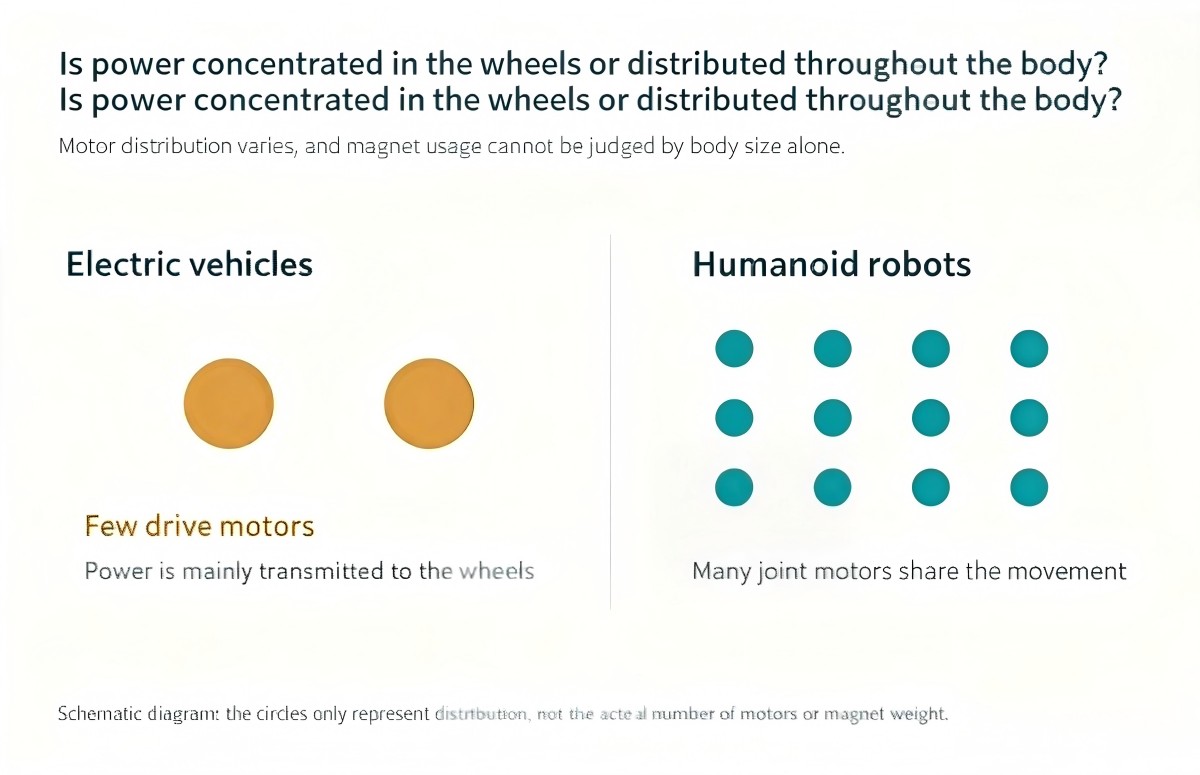
Illustration of Motor Distribution, Not Actual Quantity or Magnet Usage
How Much Material Goes into 4 kg of robot motor magnets?
Sintered neodymium magnets go through multiple manufacturing processes, including powdering, sintering, cutting, and grinding, before being processed into motor components such as arc-shaped and block magnets. Material loss from offcuts and grinding occurs throughout these processes.
Based on a rough overall material yield of 60%–80%, producing 4 kg of finished magnets may require approximately 5–6.7 kg of raw NdFeB material, or roughly 5–7 kg of NdFeB material. The actual yield depends on factors such as magnet shape, dimensions, and machining processes. After accounting for processing losses, the upstream material requirement may be even higher.
Robots Are Also Highly Demanding When It Comes to Magnets.
The demand created by the robotics industry also needs to be considered at the level of magnet grades.
Space inside robotic joints is extremely limited. Frameless motors can generate significant heat under high-load operation, while the overall robot needs to remain as lightweight as possible. Neodymium magnets used in robots must maintain their magnetic performance under these conditions while providing sufficient coercivity, temperature resistance, and long-term stability.
Therefore, even as humanoid robot shipments increase, it does not necessarily mean that all NdFeB magnet manufacturers will benefit equally. Manufacturers capable of consistently supplying high-performance sintered NdFeB magnets are better positioned to meet these requirements.
Alternative technologies are also being explored. The automotive industry has already begun developing reduced-rare-earth and rare-earth-free motors, while ferrite magnets and low-heavy-rare-earth formulations each offer different trade-offs.
However, the room for alternative materials in humanoid robots is more limited. If switching to another material means making the motor larger or heavier, it could affect the overall design when the motor is integrated into the knee, arm, or hip joint. In the short to medium term, high-performance NdFeB magnets will remain difficult to fully replace in many robotic applications.
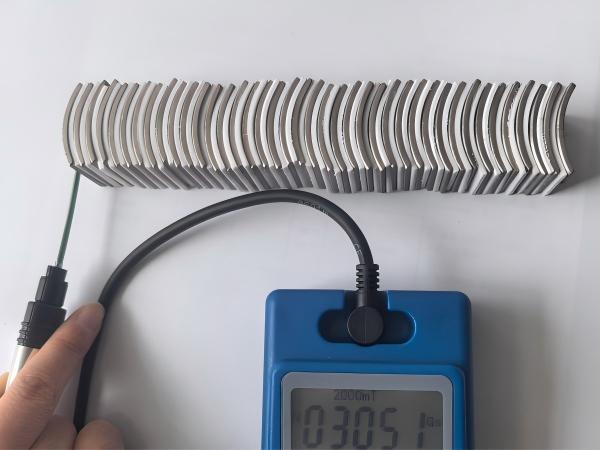
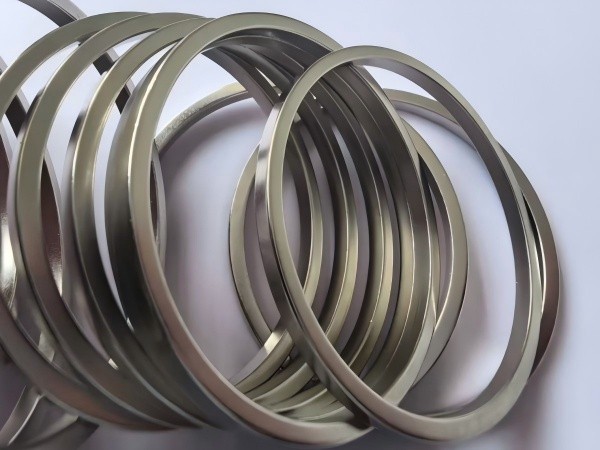
China Has Established a Complete Supply Chain for Humanoid Robot Components.
From rare-earth separation and purification to the manufacturing of high-performance NdFeB magnets, China has established a relatively complete industrial supply chain.
The 4 kg figure is simply an easy way to understand the scale of demand. As a magnet manufacturer, we also need to address more specific requirements: What magnet grade is needed? What dimensional tolerances can be achieved? What is the magnet's operating temperature? Can consistent quality be maintained during mass production and delivery?Ultimately, the demands of mass-produced robots on magnetic material suppliers come down to these details.
Search
Categories List
Please give us a message
Beijing Saint Langma Magnetic Technology Co.,Ltd