
One stop solution for magnetic products
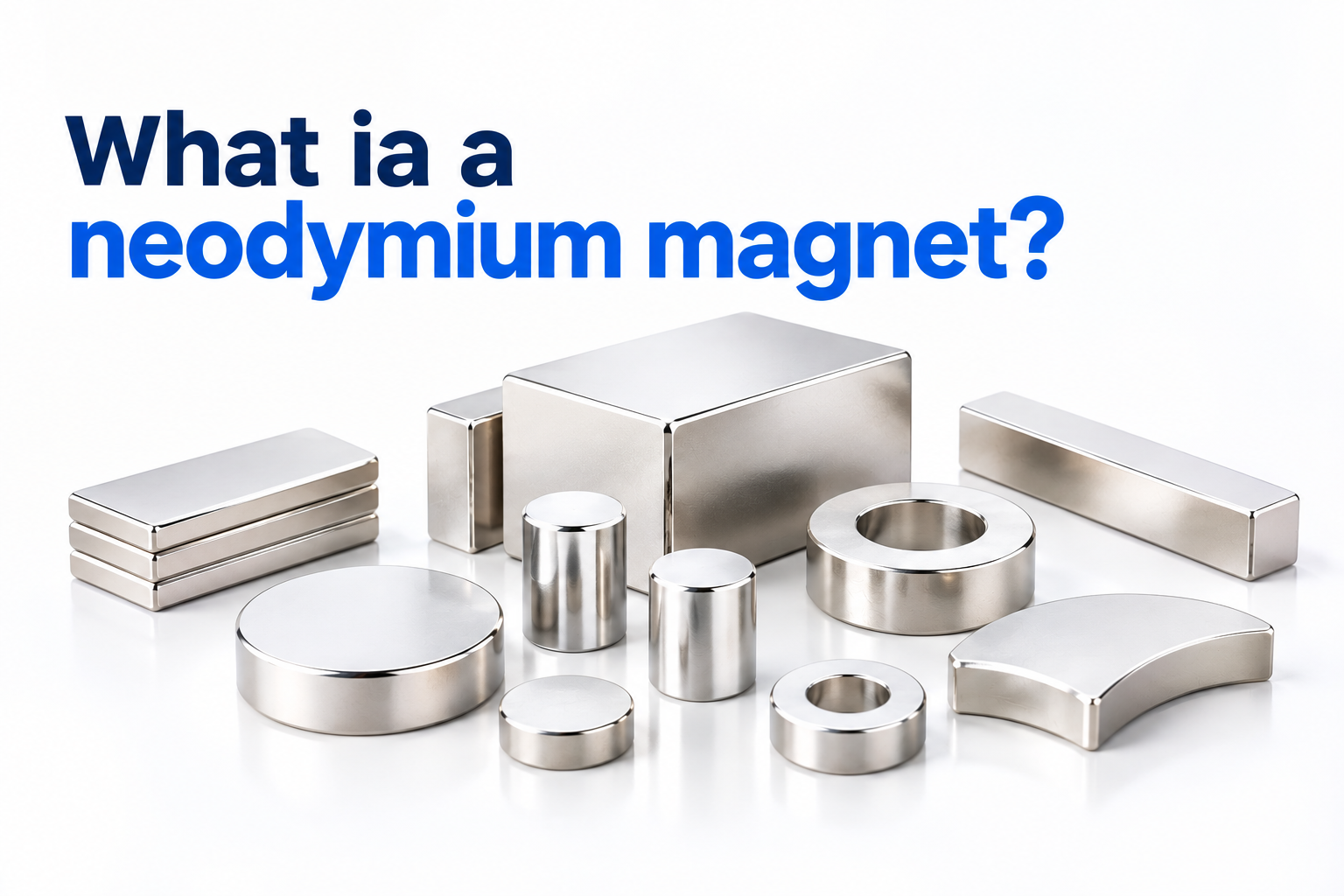
1.What Is a Neodymium Magnet?
A neodymium magnet is a type of permanent magnet primarily made from three elements: neodymium (Nd), iron (Fe), and boron (B). The material is commonly referred to as NdFeB.
Neodymium magnets belong to the rare earth magnet family. Their main advantage is their ability to provide strong magnetic performance in a relatively small volume. Compared with many traditional permanent magnet materials, NdFeB magnets can achieve higher magnetic strength while maintaining a compact design.
This makes them suitable for applications where both high magnetic force and limited installation space are important.
2.How Are Neodymium Magnets Made?
The manufacturing process of a neodymium magnet involves several important steps to achieve the required magnetic and physical properties.
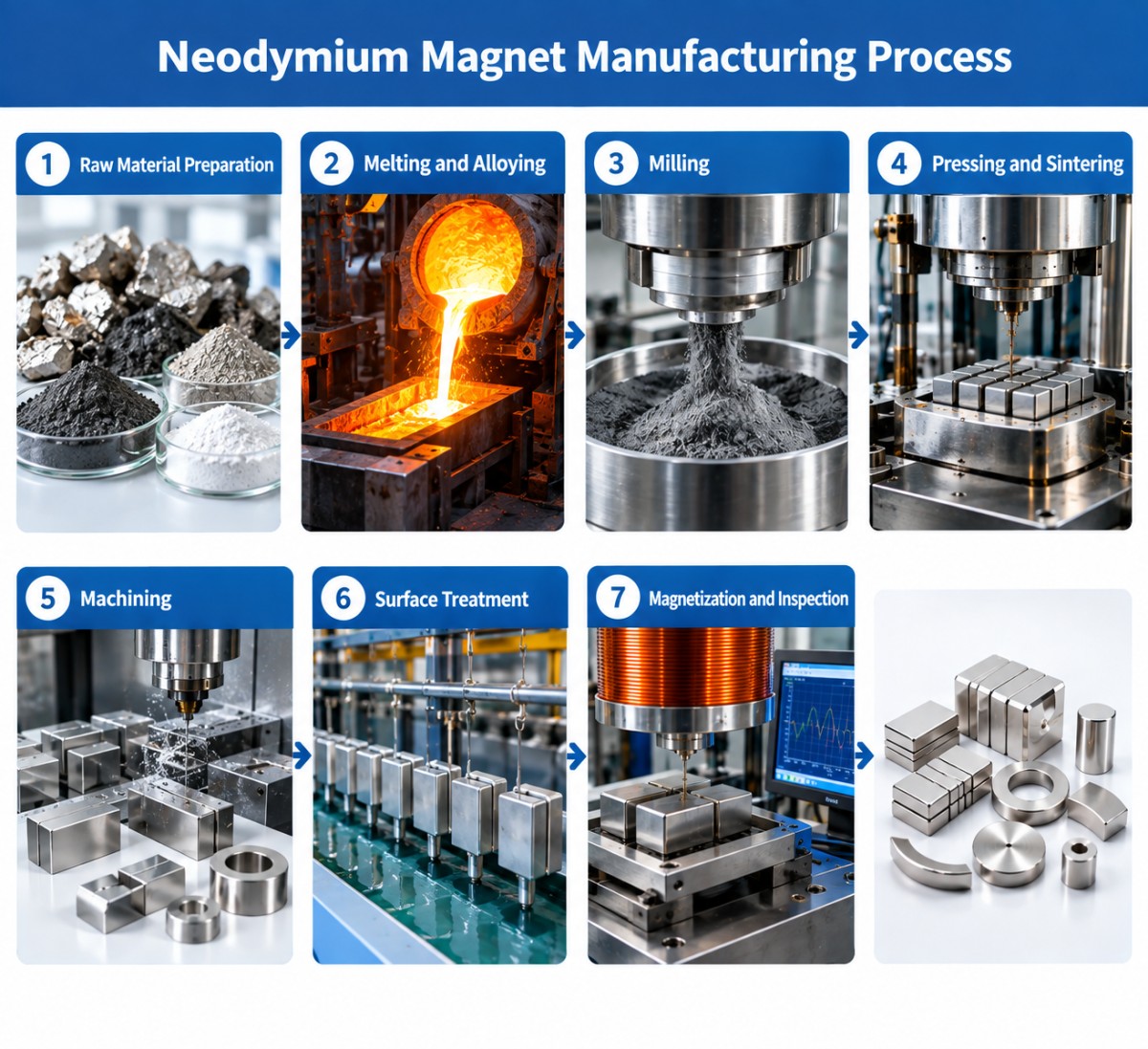
Raw Material Preparation: The required amounts of neodymium, iron, boron, and other alloying elements are prepared according to the target material grade.
Melting and Alloying: The raw materials are melted and combined to fo rm a neodymium-iron-boron alloy with controlled chemical composition.
Milling: The alloy is processed into fine magnetic powder. The particle characteristics of the powder are important for the final magnetic performance.
Pressing and Sintering: The magnetic powder is pressed into the required shape, often under an applied magnetic field. The compact is then sintered at high temperature to form a dense magnetic material.
Machining: After sintering, the material can be machined into different shapes and dimensions, such as blocks, discs, rings, cylinders, arcs, and custom shapes.
Surface Treatment: NdFeB magnets are susceptible to corrosion, so surface coatings are commonly applied. Typical options include nickel, zinc, epoxy, and other customized coatings.
Magnetization and Inspection: Finally, the magnet is magnetized in the required direction and inspected according to the specified dimensions and magnetic performance.
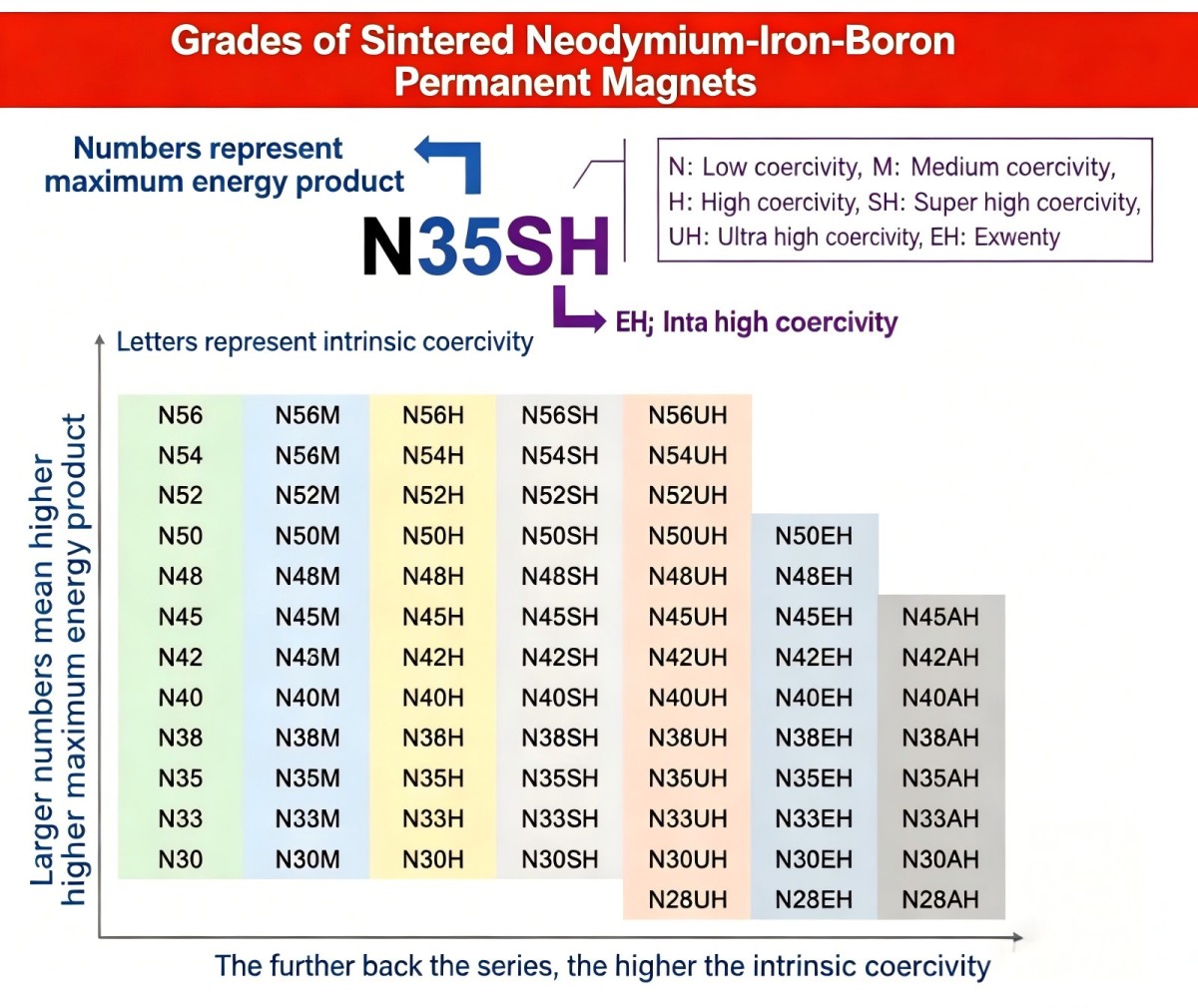
3.Understanding Neodymium Magnet Grades
We have successfully developed and manufactured N56-grade NdFeB magnets for customer-specific applications. Looking for high-performance magnets for your application? Send us your specifications or drawings for a customized solution and a free quote.
4.Important Neodymium Magnet Specifications
When purchasing or customizing NdFeB magnets, several technical specifications should be considered.
5.Common Shapes of Neodymium Magnets
NdFeB magnets can be manufactured in many different shapes according to application requirements. Common shapes include:
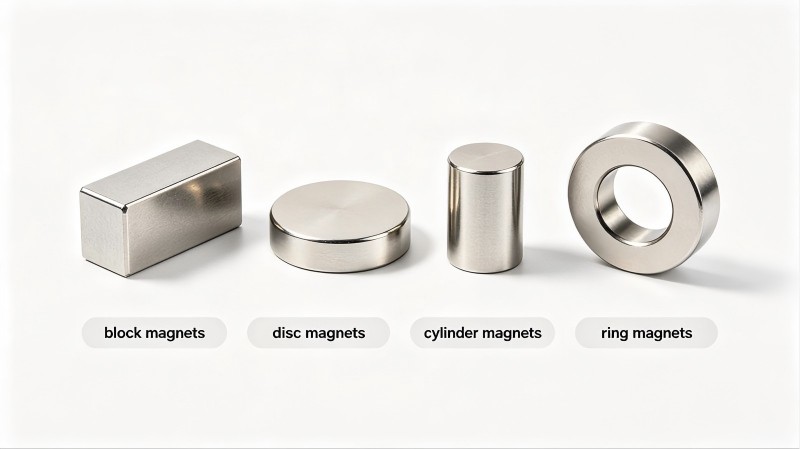
block magnets , disc magnets, cylinder magnets, ring magnets, arc magnets, countersunk magnets, bar magnets, custom-shaped magnets
Custom dimensions, tolerances, magnetization directions, and surface treatments can also be specified depending on the application. Click the Magnet Name Below to Purchase.
6.Why Do Neodymium Magnets Need Coating?
One important characteristic of NdFeB material is its susceptibility to corrosion. For this reason, many neodymium magnets require a protective surface coating.
Common coating options include:
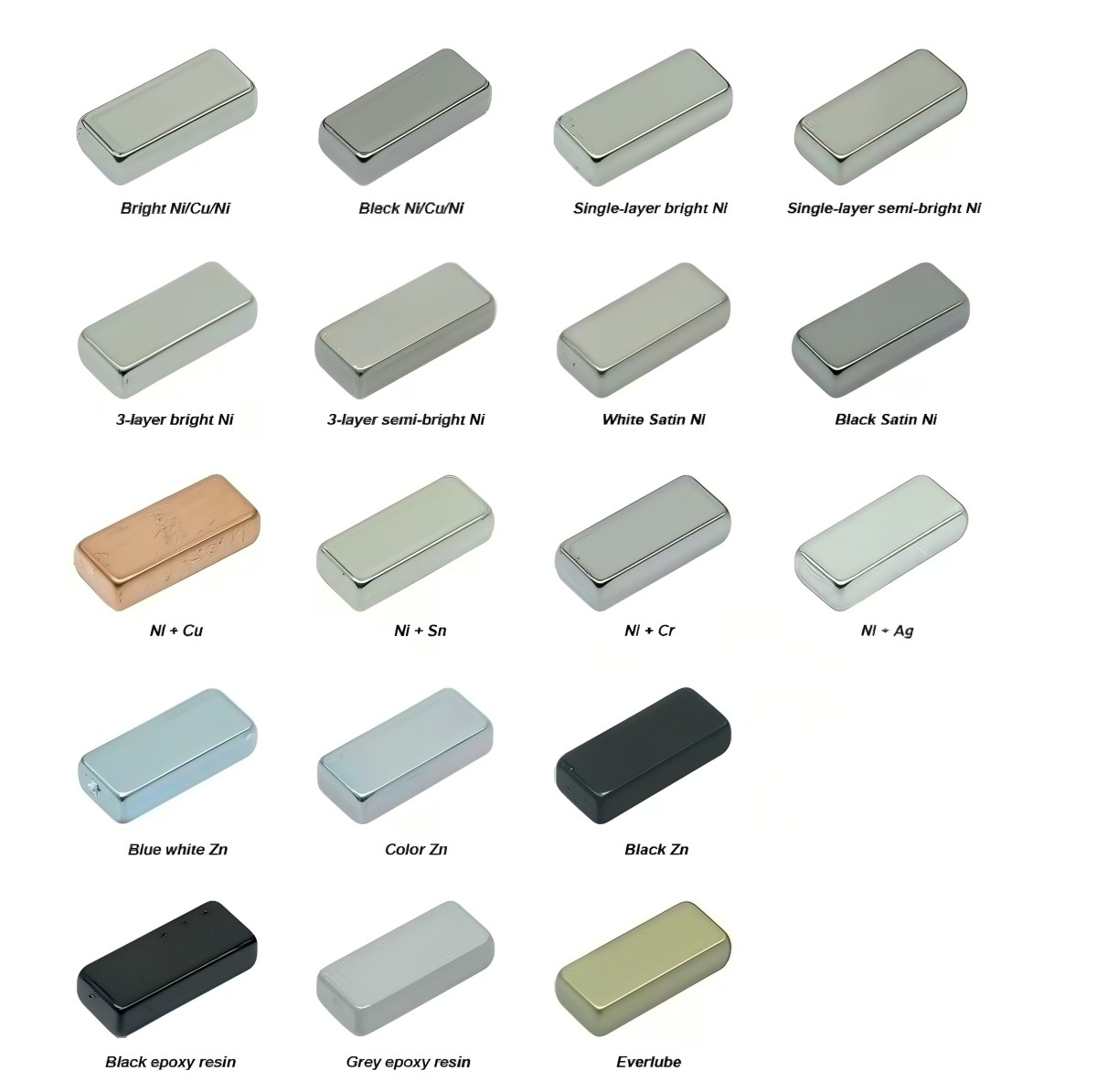
Nickel (Ni-Cu-Ni): One of the most widely used coatings for general industrial applications.
Zinc (Zn): Often used for applications where a different surface finish or specific environmental requirements are needed.
Epoxy: Can provide additional protection and is available in different colors depending on requirements.
Phosphate: A surface treatment used for certain applications and assembly requirements.
Other Coating Options: The appropriate coating depends on the working environment, humidity, temperature, mechanical requirements, and expected service conditions.
7.Applications of Neodymium Magnets
Because of their high magnetic strength and compact size, neodymium magnets are widely used across different industries.
8.What information should I provide when ordering custom magnets?
The most useful information includes magnet size, shape, grade, coating, magnetization direction, quantity, working temperature, and application. A drawing or product sample can also help with customization.
If you are unsure which grade or specification is suitable, providing a drawing, sample, product photo, or application description can help a magnet manufacturer recommend an appropriate solution.
As a professional magnet manufacturer, whether you need standard magnets or specially designed magnetic components, we can evaluate your requirements and provide a suitable solution.
Search
Categories List
Please give us a message
Beijing Saint Langma Magnetic Technology Co.,Ltd