
One stop solution for magnetic products
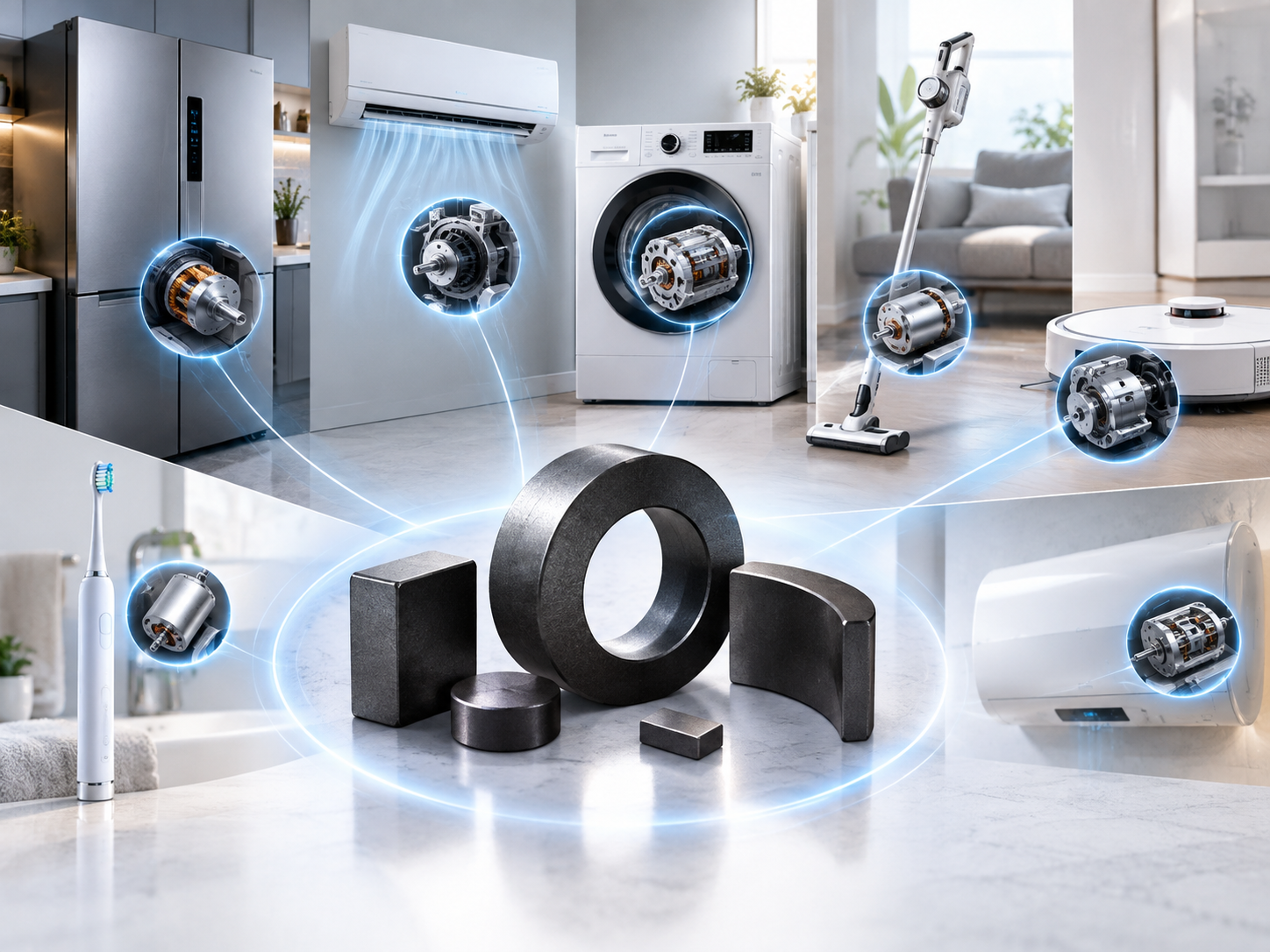
Have you ever wondered—
Why are modern air conditioners more energy-efficient than they were ten years ago, yet even quieter?
Why can a robot vacuum navigate around chair legs without bumping into walls?
The answer lies in a tiny, dark-colored magnet,
often no bigger than your fingernail.
It is commonly known as a permanent magnet steel.
Unassuming and far from flashy,
yet it plays a crucial role in almost every smart appliance in your home.
1. How Permanent Magnets for Home Appliances Enable Compact Smart Appliances.
Those who remember older appliances may recall that washing machine motors used to be almost as large as half a watermelon—heavy, bulky, and noisy.
Today? The drive motor in a modern front-load washing machine can be compact enough to fit inside a thermos, yet deliver several times the power. This remarkable transformation is made possible by high-performance permanent magnets. Their magnetic strength can be 5–10 times that of ordinary magnets, while achieving the same power output with only about one-tenth of the volume.

And that has given engineers a whole new level of flexibility:
1.1 Air Conditioner Compressors
With permanent magnets for air conditioner motors, compressor motors can achieve significantly improved energy efficiency while reducing operating noise. In some applications, energy consumption can be reduced by 20%–30%, with operating noise below 40 dB—quieter than the sound of turning pages in a library.
1.2 Electric Toothbrushes
In electric toothbrushes, miniature motors rely on compact, high-performance magnets. Their small size allows them to fit inside slim brush handles while still delivering powerful performance, with vibration speeds of up to 40,000 movements per minute.
1.3 Robot Vacuum Cleaners
The precision motors used in LiDAR systems for robot vacuum cleaners can benefit from permanent magnet technology. Magnets for robot vacuum cleaners help enable compact, high-performance motor designs, allowing LiDAR systems to scan thousands of points per second and accurately map the surroundings.
In short, without permanent magnets, today's washing machines might still be stuck with the same bulky, heavy, and noisy designs of the past.
2. The Role of Permanent Magnets magnets for smart home devices.

You may think permanent magnets are only used to make things move.
Not quite. They can also sense and transmit information.
2.1 Can the refrigerator door tell if it is properly closed?
It can—with the help of miniature magnetic encoders that detect changes in the magnetic field. Magnets for refrigerator sensors enable precise position detection, helping determine whether the door is fully closed without relying on physical contact.
2.2 How does a washing machine accurately detect water levels?
Magnetic sensing technology can also be used to detect water levels. By utilizing changes in magnetic fields, magnets for washing machinescan support non-contact position detection and precise control in appliance systems.
Even more interesting is magnetic coupling transmission.
In high-end electric water heaters, magnetic coupling can help separate the drive chamber from the water-containing chamber, transferring torque through a magnetic field without a conventional direct shaft connection. This design can reduce the risk of seal-related water leakage and improve system reliability.
At this point, permanent magnets are no longer simply a source of driving force. They have become a bridge between sensing, transmission, and control in modern home appliances, with permanent magnet strength for motor applications playing an important role in achieving compact and efficient designs.
3.Permanent Magnets: Improving Refrigerator Energy Efficiency and Resource Recycling
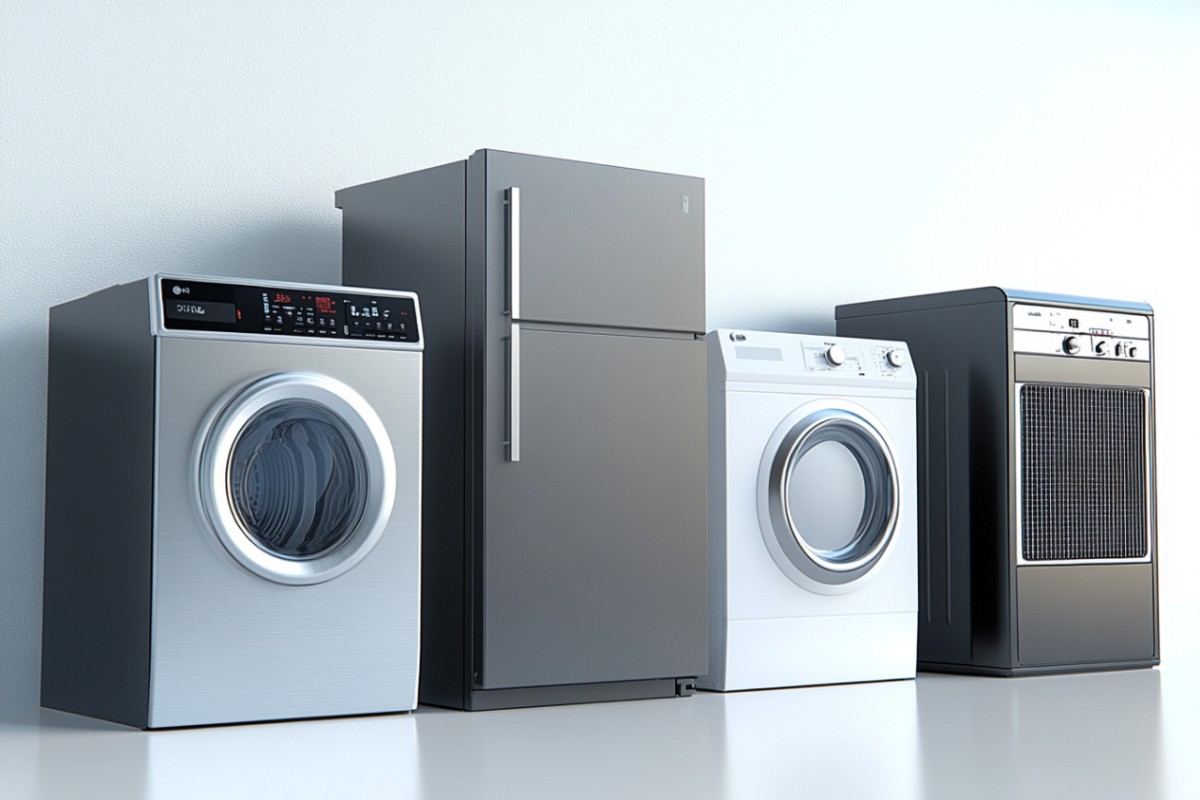
In the era of carbon neutrality, permanent magnets are also playing an important role in making home appliances more energy-efficient and sustainable. Let’s look at the numbers:
A refrigerator equipped with a variable-frequency motor using permanent magnets can consume around 100 kWh less electricity per year than a traditional fixed-speed refrigerator. Over ten years, that could amount to approximately 1,000 kWh of electricity savings, potentially avoiding around 1 ton of carbon emissions, depending on the electricity mix.
At the same time, NdFeB magnets for appliances can also be recycled. Through hydrogen-based processing technologies, more than 90% of used NdFeB permanent magnets can potentially be recovered and further refined, supporting the recycling of rare-earth resources and reducing resource waste.
Thank You to This Unsung Hero
We are gradually getting used to home appliances becoming quieter, smarter, and more efficient.
Yet few people notice the small black magnet hidden deep inside.
It makes no sound. It gives off no light.
Yet, like the invisible framework of a precision machine, it supports energy efficiency, enables compact designs, senses the environment, and helps connect us to the future.
Permanent magnets for motors may be small, but their role in modern appliances is anything but insignificant.
Looking for permanent magnet materials for your application? Feel free to send us a message or give us a call.
We can recommend and customize the right permanent magnet material based on your requirements. If you're wondering which magnet is suitable for appliance motors, our engineering team can help you evaluate the appropriate material, grade, size, and performance requirements.
As a China NdFeB magnet manufacturer, we provide customized permanent magnet solutions for different motor and appliance applications.
Search
Categories List
Please give us a message
Beijing Saint Langma Magnetic Technology Co.,Ltd