
One stop solution for magnetic products
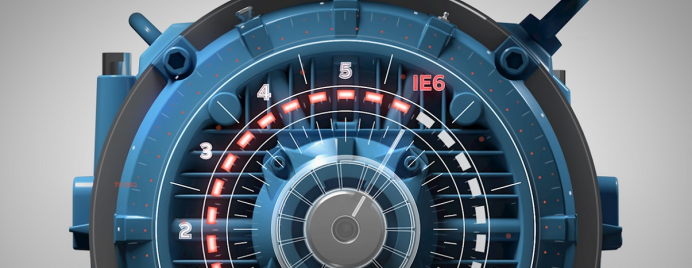
Motors are ubiquitous, yet their requirements vary drastically across applications. Some demand low cost, some prioritize durability, and others call for compactness and high power. As the core component of a motor, magnet selection directly determines whether the motor can fulfill its intended function.
I. Household Appliances & Daily Equipment – Balancing Cost and Reliability
Household appliances are the most common motor applications, including air conditioners, washing machines, refrigerators, and fans. These products are mass-produced, making cost a critical factor. Meanwhile, they must operate stably in home environments for many years.
Core Requirements
Low cost, sufficient reliability, long service life, and compliance with energy efficiency standards.
Common Motor Types
Induction motors, brushless DC motors (BLDC), low-power permanent magnet synchronous motors.
Magnet Selection Logic & Advantages
1. Sintered Ferrite – Low Cost
Selection Logic: An economical choice for low-performance applications such as indoor fans of fixed-frequency air conditioners and drain pumps of old washing machines. Though its magnetic force is weak (resulting in larger motor size), it fully meets basic functional needs.
Advantages: Extremely low price; non-conductive with no eddy current heating; excellent corrosion resistance without expensive surface treatment.
Summary: Choose sintered ferrite for cost-competitive, basic functional applications.
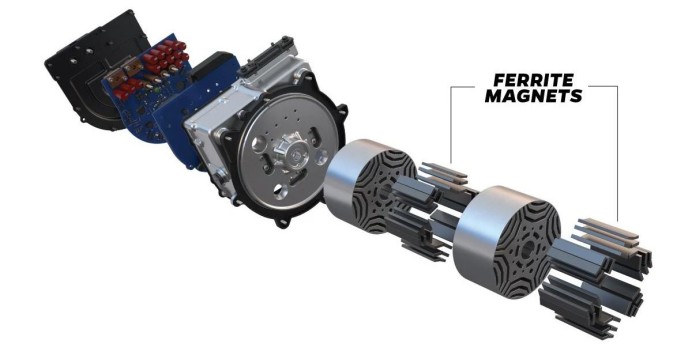
2. Sintered NdFeB – The Core of High Efficiency & Energy Saving
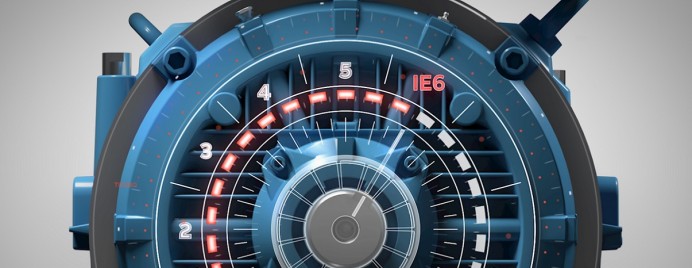
Selection Logic: Essential for modern high-efficiency appliances pursuing high energy efficiency levels (IE3, IE4, even IE6), such as compressors of inverter air conditioners, direct-drive washing machine motors, and inverter refrigerator fans.
Advantages: Ultra-strong magnetic force enables motors to deliver higher power in smaller volumes and greatly improve efficiency, helping appliances meet higher energy efficiency ratings and save electricity.
Notes: Requires anti-corrosion coating (e.g., nickel plating); high-coercivity grades (e.g., SH) must be selected to prevent demagnetization in high-temperature and humid environments (e.g., washing machines).
3. Injection Molded / Bonded Magnets – Compactness & Quiet Operation
Selection Logic: Used for small motors with special structures requiring smooth and quiet operation, such as wheel motors of robotic vacuums, computer cooling fans, and smart toilet water pumps. These motors often have irregular shapes and high rotating speeds.
Advantages:
• Flexible shaping: Can be injection-molded into highly complex shapes in one step.
• Low noise: Excellent consistency and dynamic balance ensure smooth rotation and low noise.
• Low eddy current loss: Magnetic powder is separated by resin, generating almost no eddy current heating, suitable for high-speed small motors.
II. Industry & Automation – Testing Power, Precision & Durability
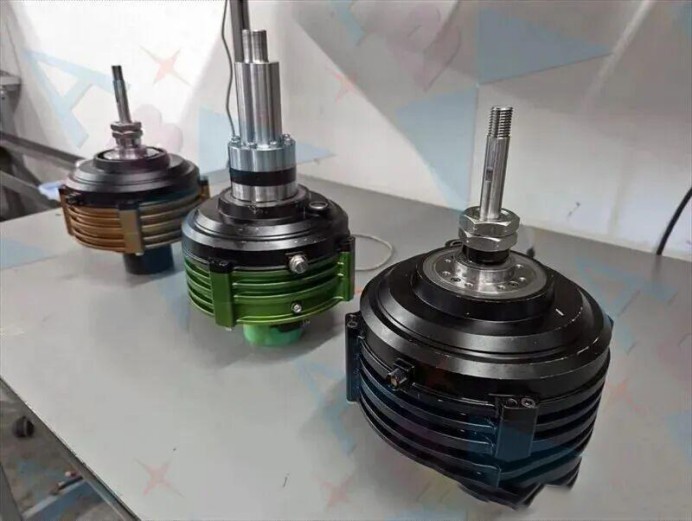
Industrial motors serve as the power source for manufacturing. They operate in harsh conditions with stringent demands: high power, precise control, and continuous non-stop operation.
Core Requirements
High power, high torque, high control precision, high reliability, and adaptability to harsh environments.
Common Motor Types
Induction motors (traditional power), permanent magnet synchronous motors (servo spindles), servo motors, stepper motors.
Magnet Selection Logic & Advantages
1. Sintered NdFeB – Servo & High Power Density
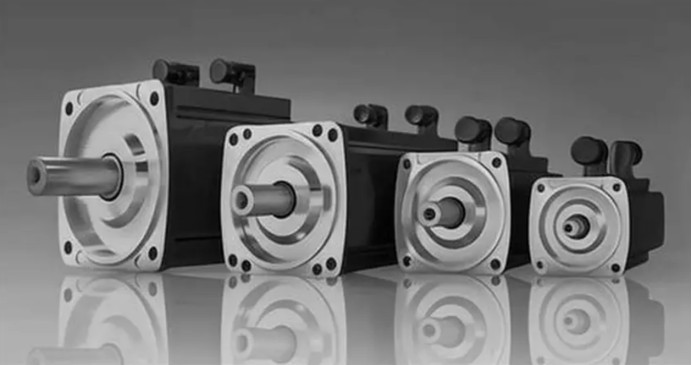
Selection Logic: Applied in servo motors, CNC machine tool spindles, and industrial robot joints, which require fast response, precise control, small size, and high output. The high magnetic energy product of NdFeB is the foundation for achieving these goals.
Advantages:
• High power density: Delivers massive torque in a compact size, making robotic arms lighter and more flexible.
• High efficiency: Reduces overall power consumption in factories.
• Excellent control performance: Enables precise position and speed control with high-performance controllers.
Notes: High-temperature-resistant grades (UH, EH) are required for workshops with high ambient temperatures.
2. Samarium Cobalt (SmCo) – Guardian for High-Temperature & Harsh Environments
Selection Logic: Used in special and severe industrial environments, such as motors near injection molding machine barrels, chemical process pumps, and ground source heat pumps, where temperatures may exceed 180°C for long periods with corrosive gases.
Advantages: Extremely high temperature resistance – its magnetic force degrades far less than NdFeB at high temperatures, an irreplaceable advantage; excellent corrosion resistance, ideal for harsh environments.
Summary: Choose SmCo when NdFeB cannot withstand excessively high operating temperatures.
3. Bonded NdFeB & Injection Molded Magnets – High-Speed Applications
Selection Logic: For high-speed spindles, small centrifugal fans or pumps with rotational speeds of tens of thousands to over 100,000 RPM. Eddy current heating of magnets becomes a critical issue at high speeds.
Advantages: Ultra-low eddy current loss – magnetic powder is encapsulated by insulating resin, preventing large-scale current flow inside the magnet, minimizing heat generation and ensuring efficiency and stability at high speeds.
III. Automotive Industry – Balancing Safety, Efficiency & Space
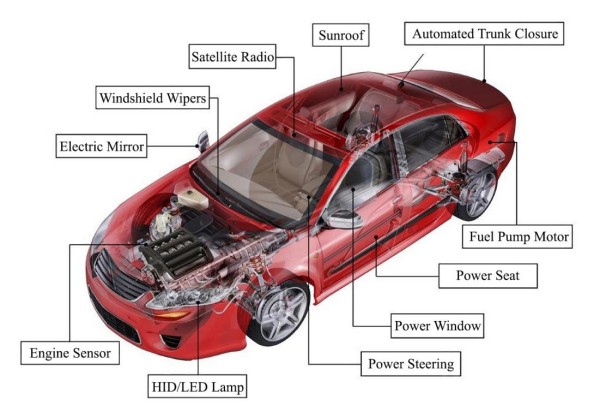
Automobiles are evolving from mechanical to electronic products with an increasing number of motors, from window regulators to vehicle propulsion. Automotive motors have extremely complex and stringent requirements.
Core Requirements
Extreme reliability and safety, high efficiency (affecting cruising range), ultra-high power density (space-saving), wide operating temperature range (-40°C to over 150°C), and controllable cost.
Common Motor Types
Permanent magnet synchronous motors (main drive, oil pumps), brushless DC motors (fans, water pumps, brake boosters), stepper motors (electronic throttles).
Magnet Selection Logic & Advantages
1. Sintered NdFeB (Market Dominant) – Electric Heart
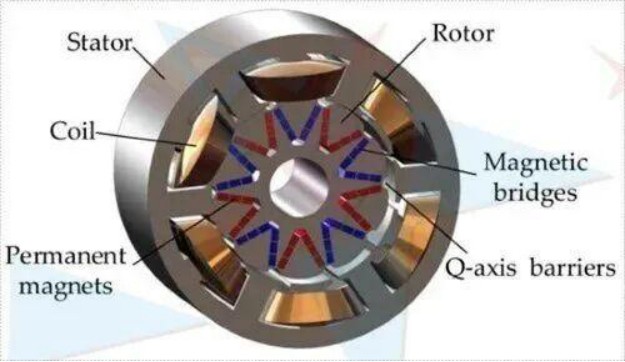
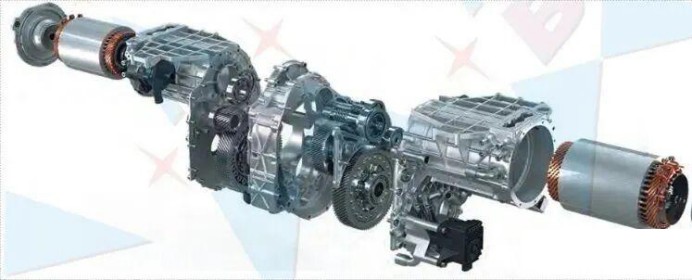
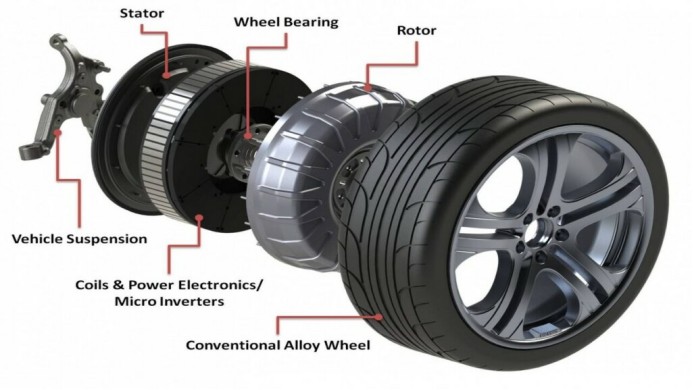
Selection Logic: Core for main drive motors and electric power steering motors of new energy vehicles, directly determining acceleration, cruising range, and spatial layout.
Advantages: Ultra-high power density makes drive motors lightweight and powerful, freeing up space for passengers and batteries; high efficiency maximizes the conversion of electricity to driving range.
Special Requirements: Automotive-grade NdFeB has ultra-high standards – ultra-high coercivity grades (UH, EH) to resist high temperatures and strong demagnetizing currents; heavy anti-corrosion coating to withstand salt spray and moisture; resistance to severe thermal cycling and vibration.
2. Samarium Cobalt (SmCo) – High-Temperature Applications
Selection Logic: Used in electric actuators of traditional automotive turbochargers, water pumps or oil pumps in high-temperature positions near engines, where ambient temperatures may reach 180°C–200°C+ for long periods.
Advantages: Unmatched high-temperature stability – operates stably in the "oven-like" engine compartment, while NdFeB may suffer demagnetization failure.
3. Injection Molded / Bonded Magnets – Experts for Small Auxiliary Systems
Selection Logic: For numerous small auxiliary motors in vehicles, such as air conditioning damper actuators, electronic water pumps, and oil pump rotors, which require ultra-compact space, special shapes, and mass low-cost manufacturing.
Advantages:
• Integrated molding: Combines magnets with plastic structural parts, saving space and assembly steps.
• Suitable for automated production: Good consistency for fast assembly.
• Smooth and quiet operation: Improves vehicle NVH (noise, vibration, harshness) performance.
IV. Wind & Hydropower Generation
Generators are designed for stable operation for 20–30 years after installation, with extremely high maintenance costs. Thus, reliability and long-term stability are top priorities.
Core Requirements
Long service life, reliability, ultra-high efficiency, and resistance to harsh natural environments (wind, rain, salt spray, humidity, temperature fluctuations).
Common Motor Types
Direct-drive or semi-direct-drive permanent magnet synchronous generators.
Magnet Selection Logic & Advantages
1. Sintered NdFeB (Mainstream Choice) – Cornerstone of Efficient Power Generation
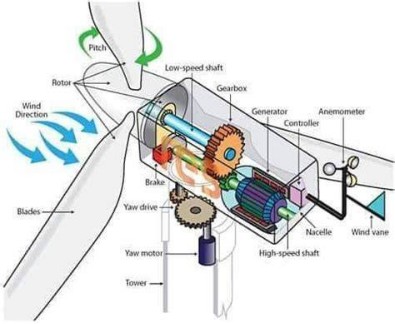
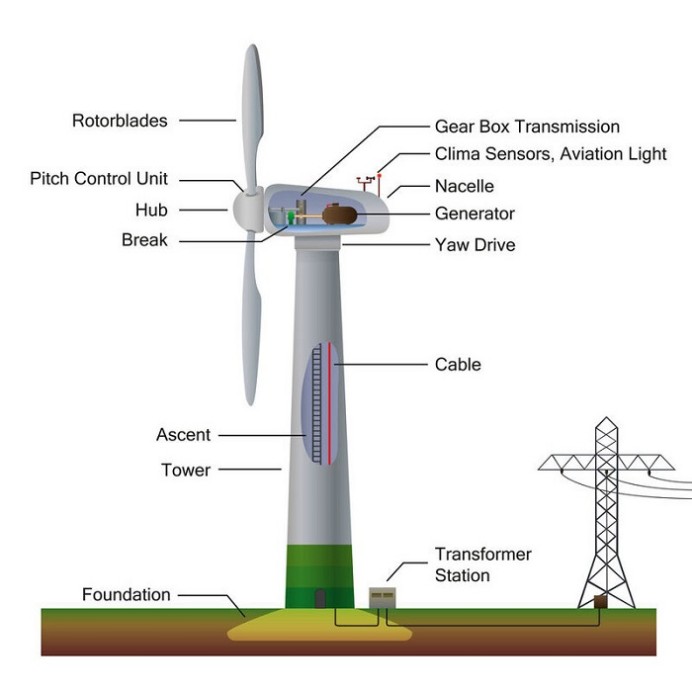
Selection Logic: Almost all modern large-scale permanent magnet direct-drive wind turbines use high-performance NdFeB, as it enables efficient and compact power generation systems, eliminating heavy gearboxes and improving reliability.
Advantages: High efficiency directly increases power generation revenue; high power density makes generators more compact.
Stringent Process Requirements: Ultra-high coercivity grades to resist demagnetization; heavy anti-corrosion coating systems (e.g., Al-Zn-Chromium composite coating) to ensure 20-year corrosion resistance in humid and salt-spray environments; strict accelerated life tests (thermal aging, salt spray) before delivery.
2. Samarium Cobalt (SmCo) – Alternative for Special Environments
Selection Logic: Used in projects with extremely harsh environments (e.g., high-temperature and humid sea areas) or extreme long-term attenuation requirements, as well as high-temperature and high-speed flywheel energy storage systems.
Advantages: Superior inherent corrosion resistance and long-term high-temperature stability theoretically provide longer performance retention, but it is less popular than NdFeB in wind power due to high cost.
V. Consumer Electronics & Precision Equipment – The Art of the Millimeter-Scale World
Motors in this field are tiny but have demanding requirements, hidden in mobile phones, cameras, watches, and hard drives.
Core Requirements
Miniaturization, low power consumption, ultra-quiet operation, fast response, and easy precise control.
Common Motor Types
Micro brushless DC motors, vibration motors, stepper motors, voice coil motors.
Magnet Selection Logic & Advantages
1. Bonded / Injection Molded NdFeB & Ferrite
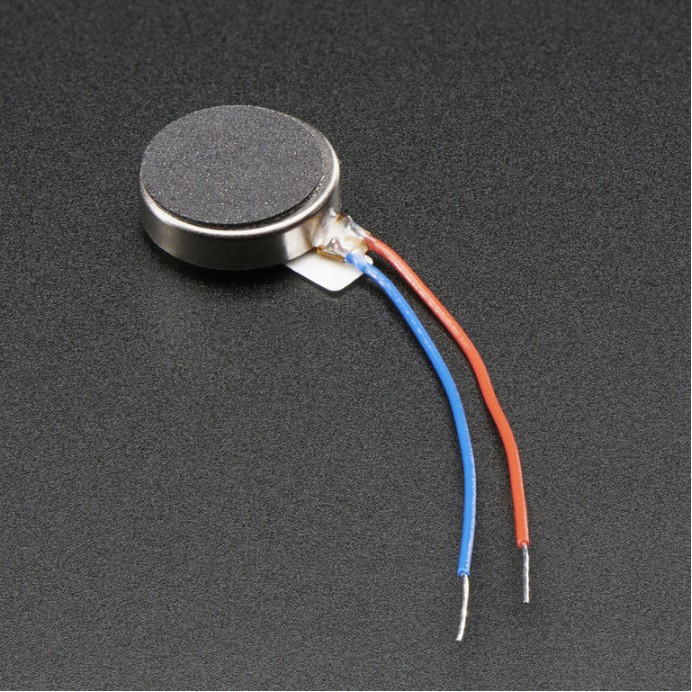
Selection Logic: Applied in mobile phone linear vibration motors, micro fans, drone gimbal motors, and digital camera focusing motors, where space is measured in millimeters, magnets require special shapes, and heat generation is prohibited.
Advantages:
• Unlimited shaping: Unmatched by sintered magnets, meeting creative structural designs.
• High dimensional accuracy: Eliminates processing steps, ideal for miniaturization.
• Lightweight: Contributes to weight reduction of consumer electronics.
2. Micro-Sized Sintered NdFeB – Micro Motors Requiring Strong Magnetic Force
Selection Logic: For certain micro high-performance motors with ultra-high magnetic force requirements, needing strong power in an extremely small volume.
Advantages: Delivers far stronger magnetic force than bonded magnets and ferrite even in tiny sizes.
Challenge: High processing cost of micro sintered magnets.
VI. Summary: Selection Logic at a Glance
Search
Categories List
Please give us a message
Beijing Saint Langma Magnetic Technology Co.,Ltd