
One stop solution for magnetic products
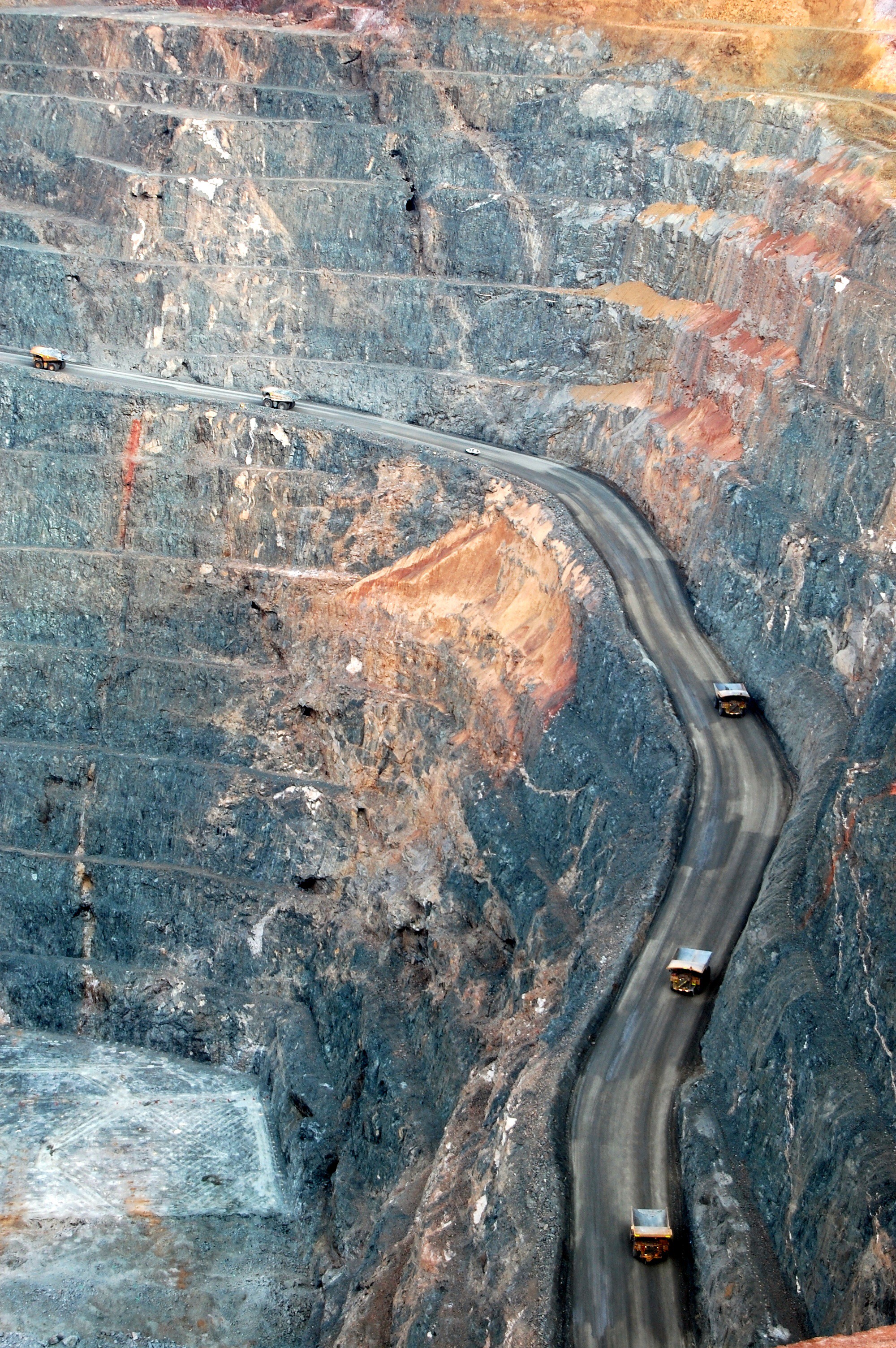
Against the backdrop of stricter work safety and environmental regulations,
the development of green mines
has evolved from an optional initiative to an absolute necessity.
Consistently maintaining ore quality is achievable.
During crushing and conveying of run-of-mine ore, large volumes of ferromagnetic contaminants often get mixed into the material. These include metal parts fallen off mining equipment, metal fragments introduced during transportation, residual drill steels from blasting operations, and more. Though seemingly insignificant, such ferrous impurities act as silent hazards to mining equipment. Once they enter crushers, mills or roller presses, they may jam machinery and trigger unplanned downtime at minimum, or cause permanent failure of core components in severe cases. Today, permanent magnet iron removal technology overcomes the limitations of conventional solutions. It enables highly efficient pre-sorting iron removal for mine raw materials, achieving the goal of “zero ferrous fragments entering mills and round-the-clock protection”, and helps mines strike a win-win balance between safe production and operational profitability.
1.Why Ferrous Contamination Remains a Persistent Headache for Mines
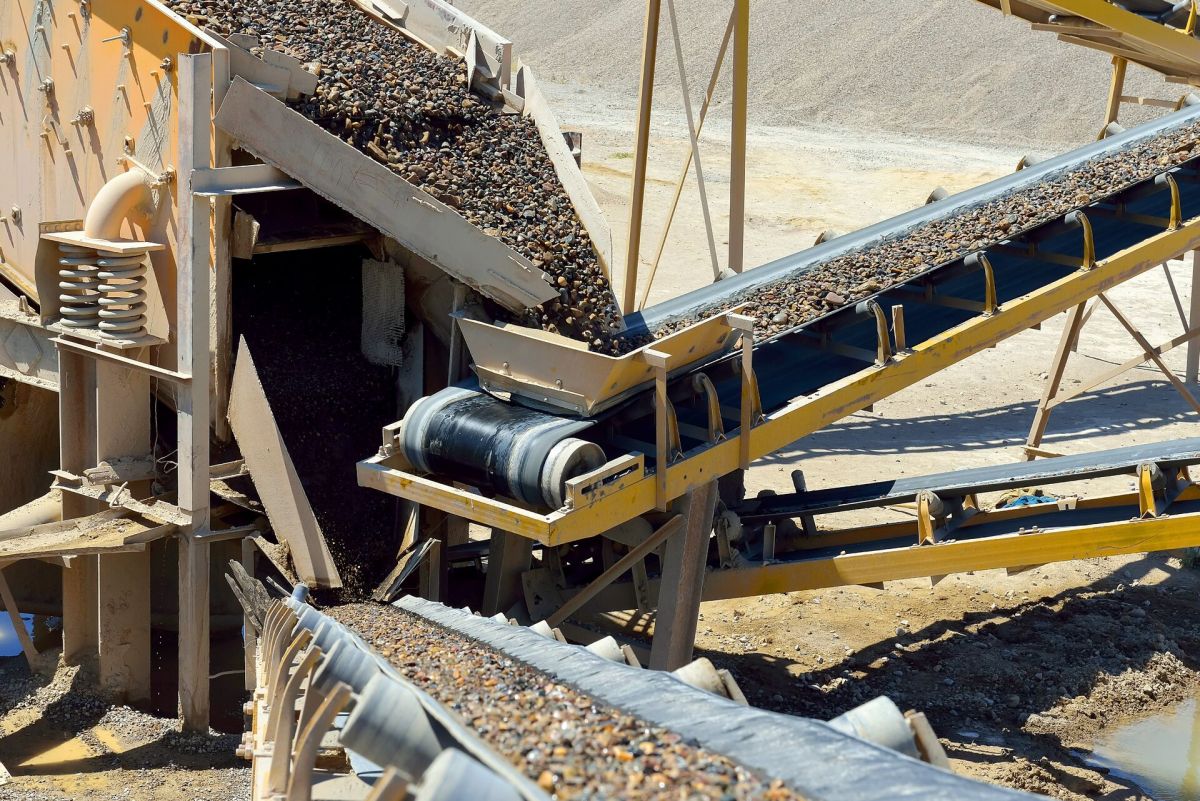
Ferromagnetic impurity contamination is an inevitable challenge in the mining and conveying processes of iron ore, coal mines, building material mines and other mining operations:
01 Diverse Sources of Ferrous Debris
Ferrous contaminants stem from numerous hard-to-eliminate sources: worn-off components of mining machinery, loose bolts on conveyor belt joints, leftover drill steels after blasting, abandoned tools left on site, etc.
02 Severe Destructive Impact on Equipment
Ferrous fragments entering crushers will cause severe damage to hammers and liners; inside mills, they trigger abnormal wear of steel balls and liners; when trapped in roller presses, they can directly jam the roller surfaces, with a single breakdown possibly incurring losses worth hundreds of thousands of yuan.
03 Low Efficiency of Manual Sorting
Manual visual inspection on belt conveyors involves heavy labor and low throughput. Tiny ferrous fragments are easily missed, especially during night shifts.
04 High Energy Consumption of Electromagnetic Iron Separators
Traditional electromagnetic iron separators require continuous power supply for excitation, resulting in high power consumption and excessive temperature rise. Their magnetic field varies between cold and hot operating conditions. Worse still, captured ferrous objects will fall back into the material flow once power is cut off.
In short, conventional manual sorting and electromagnetic iron removal have conspicuous drawbacks: high miss detection rate, high energy consumption and complicated maintenance, making them unable to meet stringent standards in the modern safety production era.
2.Permanent Magnet Iron Removal: The Key to Resolving Ferrous Contamination
Permanent magnet iron removal technology relies on rare-earth permanent magnets to generate a stable strong magnetic field. Mounted above belt conveyors, vibrating feeders and other conveying equipment, it captures ferromagnetic debris in real time. It requires no power for magnetic excitation, delivers steady magnetic force and reliable operation, serving as core pre-sorting iron removal technology for mine raw materials.
Core Innovations
01 High-performance Permanent Magnetic Materials
Rare-earth neodymium iron boron (NdFeB), known as the “Magnet King”, is adopted as the permanent magnetic material, with surface magnetic flux density reaching over 9,000 gauss (0.9 T). The magnetic circuit is optimized via computer simulation design, featuring deep magnetic penetration, powerful magnetic force and high magnetic gradient. It effectively removes both oversized ferrous lumps and tiny ferrous particles.
02 Stable Non-decaying Magnetic Field
Unlike electromagnetic iron separators whose magnetic output fluctuates between cold and hot states, permanent magnet iron separators maintain a constant magnetic field. Magnetic force does not disappear upon power failure, so captured ferrous materials will not drop back onto the conveyor belt, ensuring stable and safe operation. The magnetic core loses no more than 5% of its magnetic force within eight years, with a service life exceeding 15 years.
3.Green Economy: From Ferrous Contaminants to Zero Equipment Damage
The true value of permanent magnet iron removal technology lies in forming a safety closed loop covering “material conveying – iron removal – milling feeding”, with iron removal efficiency exceeding 99.9%. It not only satisfies work safety requirements, but also brings impressive economic benefits attractive to all mine operators.
Taking an iron mine with an annual processing capacity of 3 million tons as an example, the calculation is conducted based on commonly adopted industry cost parameters.
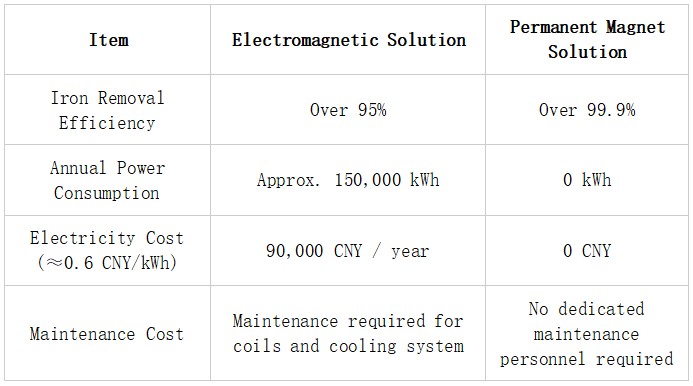
The above figures are estimates based on general industry parameters. Actual results vary depending on ore type, production scale and other factors.
4.Equipment Selection Support
Select suitable equipment for mining operations
Key Parameters for Reference
01 Throughput and Belt Width
Select equipment according to the width of the belt conveyor. Processing capacity rises with belt width.
02 Suspension Height
When the clearance between the permanent magnet iron separator and the conveyor belt is ≤30 mm, the magnetic field strength reaches ≥8,000 gauss.
For every additional 10 mm in distance, the required magnetic field strength increases by 2,000 gauss.
A lower suspension height delivers better iron removal performance. Meanwhile, sufficient clearance must be reserved to avoid interfering with normal belt operation.
03 Magnetic Field Strength
Standard iron removal (removal efficiency ≥90%): 8,000–10,000 gauss (0.8–1.0 T), suitable for ordinary iron removal on mine conveying lines.
High-precision iron removal (removal efficiency ≥99%): 12,000–15,000 gauss (1.2–1.5 T), ideal for critical equipment sensitive to ferrous contaminants.
04 Installation Recommendations
Before crushers: Installation is mandatory to prevent ferrous debris from entering the crushing chamber.
At the head pulley of the belt conveyor: Ferrous materials are ejected at high speed; the magnetic field strength should be 20% higher than that required for mid-conveyor installation.
At the middle section of the belt conveyor: Standard installation position; suspension height can be appropriately reduced.
Final barrier before milling: Guarantee zero ferrous fragments entering the mill.
Ferrous impurities are far from trivial issues — they act as ticking time bombs that may trigger equipment losses worth millions. Permanent magnet iron removal technology prevents ferrous fragments from entering mills via magnetic force and protects equipment with a stable magnetic field, offering a practical technical solution for safe mining production.
Against the backdrop of stringent safety production requirements and energy conservation targets, raw material iron removal is no longer an option but a necessity. Permanent magnet iron removal represents an excellent solution for mining enterprises.
Should you have any requirements, feel free to leave a message or call the contact number below. We will provide customized industry solutions to support your operation!
*Some content in this article is compiled from publicly available industrial technical documents and market research reports online. Please contact us for removal in case of copyright infringement.
Search
Categories List
Please give us a message
Beijing Saint Langma Magnetic Technology Co.,Ltd