
One stop solution for magnetic products
The lifespan and safety of a lithium battery
may already be determined
at the very moment it is manufactured.
The key factor that determines this “fate”
is often not some grand design concept,
but those nearly invisible
“metal impurities”
measured in parts per million or even parts per billion.
They are like hidden “time bombs” inside the battery.
A single iron particle with a diameter of only 20 microns may grow into a dendrite during charge and discharge cycles, pierce the separator, and trigger catastrophic thermal runaway!
A trace amount of transition metal ions at only a few ppb levels can catalyze electrolyte decomposition, reducing battery cycle life by one-third!
For this reason, lithium battery materials have an astonishingly low tolerance for metal contamination. In high-end power battery cathode materials, magnetic foreign matter content is strictly required to be below 100 ppb, and it has even become a factor influencing national strategic technology export controls.
Facing this “purity war” that determines the future of the industry, a seemingly traditional but continuously evolving technology — permanent magnetic iron removal technology — is quietly becoming an indispensable “gatekeeper” on lithium battery production lines, thanks to its unique advantages of zero energy consumption, maintenance-free operation, and ultra-high precision!
01 Why“Lithium Battery Materials Cannot Tolerate Metal Contamination”
Metal impurities pose a critical safety threat to batteries
You may wonder: why is the tolerance for metal impurities in lithium batteries so extremely low?
The reason lies in the fatal risks that metal contaminants pose to battery safety.
The energy density and safety performance of lithium batteries largely depend on the purity of cathode materials. Studies have shown that metal particles larger than 20 μm can penetrate separators and cause micro short circuits, while trace transition metal ions (such as Fe³⁺) can catalyze electrolyte decomposition and accelerate battery degradation.
Main Sources of Metal Contamination
1) Contamination introduced from raw materials
Raw materials such as lithium ore, phosphate ore, and cobalt salts naturally contain trace amounts of iron impurities.
During high-temperature drying processes (220 ± 20°C), some iron oxides may transform into magnetic Fe₃O₄, increasing the risk of magnetic contamination.
2) Wear of production equipment
Equipment such as sand mills, mixing tanks, and conveying pipelines operates at high speed for long periods.
Wear and abrasion may release Fe-Ni-Cr alloy particles from stainless steel components.
Meanwhile, fractured zirconia grinding media can also introduce impurities, further increasing metal contamination risks.
3) Contamination introduced during processing
Metal fragments generated during welding operations, external particles entering through air inlets of jet mills, and metal particles introduced during manual handling can all enter the material system.
Fatal Effects of Trace Metal Impurities
1) Triggering internal short circuits
During battery charging and discharging, metal impurities can oxidize into ions at the cathode and reduce back into metallic deposits at the anode.
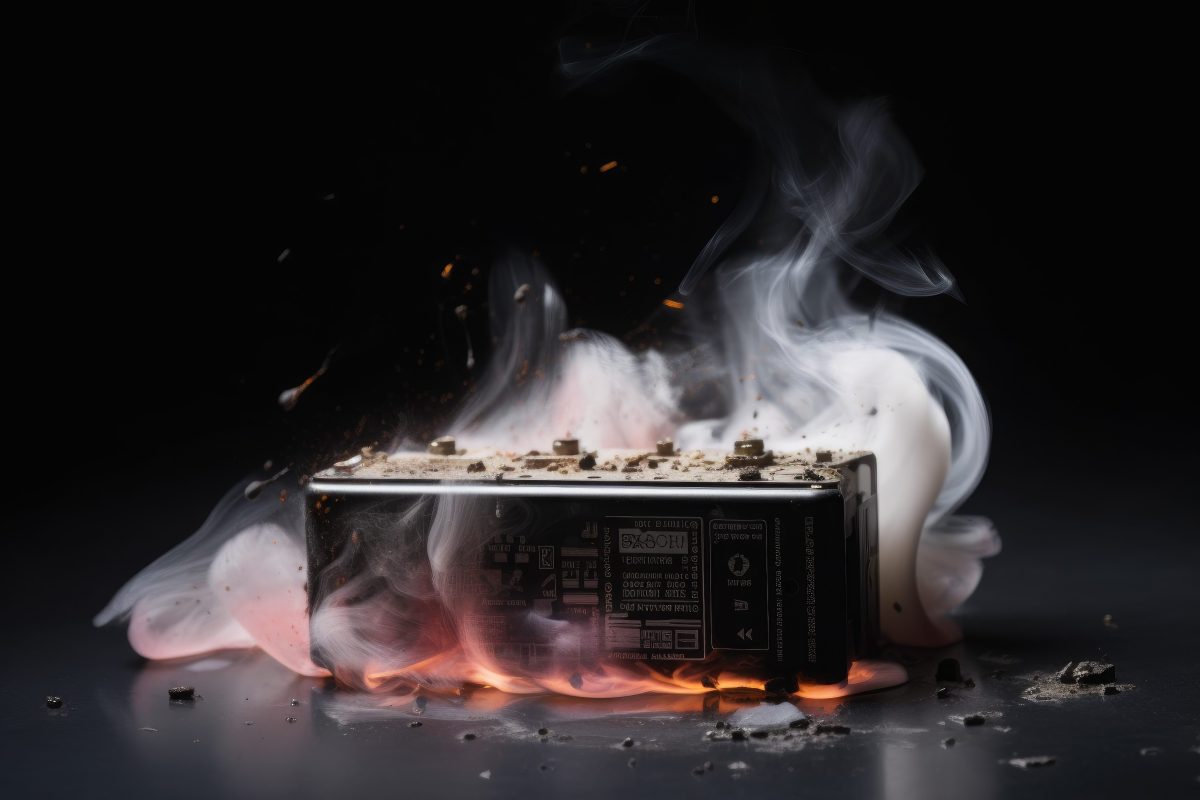
Over time, they form sharp dendrites that penetrate the separator, causing internal short circuits and, in extreme cases, thermal runaway, fire, or explosion.
2) Accelerating performance degradation
Iron impurities can damage the crystal structure of cathode materials, reduce electrochemical activity, accelerate capacity loss, and shorten cycle life by more than 30%.
3) Increasing self-discharge rate
Metal impurities may create localized conductive pathways, increasing battery self-discharge rates by five times and seriously affecting battery consistency and reliability.
More importantly, current industry requirements for magnetic foreign matter in lithium battery raw materials have reached the parts-per-billion level.
According to the Specification for Lithium-Ion Battery Cathode Material Products, magnetic substance requirements for lithium iron phosphate (LFP) are ≤1 ppm, while nickel-cobalt-manganese (NCM) materials require levels as low as ≤100 ppb.
Announcement No. 28 of 2025 issued by China’s Ministry of Commerce further included magnetic impurity control below 10 ppb as one of the export control requirements for lithium iron phosphate preparation technologies, demonstrating its strategic importance.
According to media reports, the proposed mandatory national standard for power banks has tightened the magnetic foreign matter limit of cathode materials to no higher than 200 ppb.
02 Why“Permanent Magnetic Filters Have Become Standard Equipment on Lithium Battery Production Lines”
From Rough Impurity Removal to Precision Purification
Faced with the lithium battery industry’s extremely strict requirement for “zero metal contamination”, Saint Langma permanent magnetic filtration equipment relies on advanced rare-earth permanent magnet separation technology to build an efficient and precise iron removal barrier.
Compared with traditional metal removal equipment, it achieves a transformation from basic impurity removal to precision purification, providing comprehensive contamination control throughout lithium battery material production.
Core Working Principle of Permanent Magnetic Filters
Permanent magnetic filters use high-performance permanent magnets as the core component.
Through optimized magnetic circuit design, they generate a strong and stable magnetic field of 8,000–15,000 Gauss.
When lithium battery materials (powders or slurries) pass through the magnetic field area, ferromagnetic impurities are attracted by magnetic force, overcoming gravity and material friction, and are captured onto the surface of the magnetic components.
Meanwhile, non-magnetic lithium battery materials pass through smoothly, achieving precise separation between valuable materials and metal contaminants.
The key advantages include:
• No external power supply required
• Energy saving and environmentally friendly operation
• Stable magnetic performance
• Simple maintenance
• Compatibility with continuous and automated lithium battery production lines
Main Equipment Types for Lithium Battery Applications
Lithium battery materials mainly exist in two forms:
• Dry powders (such as lithium iron phosphate and ternary cathode materials)
• Slurries (such as cathode and anode electrode slurries)
Saint Langma permanent magnetic filtration equipment provides customized designs for different production stages, covering the entire iron removal process.
1) Suspended Permanent Magnetic Filter
Installed above belt conveyors, suspended magnetic filters are mainly used for preliminary iron removal during raw material transportation.
With a magnetic field strength of approximately 10,000 Gauss, they capture larger iron particles and rust contaminants at the beginning of the process.
Typical performance:
• Reduce iron impurities from 30–50 ppm
• Down to approximately 10–20 ppm
This prevents contaminants from entering downstream processes and reduces equipment wear.
2) Pipeline Permanent Magnetic Filter
Designed for pneumatic conveying systems or closed pipelines.
With a magnetic field strength of approximately 11,000 Gauss, it is mainly used for fine purification after grinding processes.
Typical application:
• Fine powder after milling
• Removal of microscopic iron particles
Performance:
• Reduce iron contamination to approximately 5–10 ppm
3) Drawer-Type Permanent Magnetic Filter
Featuring a multi-magnetic-rod structure, drawer-type filters are suitable for dry powder materials such as anode graphite.
The design allows materials to fully contact the magnetic rods, improving iron removal efficiency while preventing material bridging and blockage.
Advantages:
• High contact efficiency
• Suitable for continuous powder processing
• Easy cleaning and maintenance
4) Rotary Permanent Magnetic Filter
Using a dynamic rotating magnetic field design, rotary magnetic filters solve the problem of incomplete separation caused by material agglomeration.
They are especially suitable for easily clumping materials such as battery-grade lithium carbonate.
Typical performance:
• Reduce iron contamination from 15 ppm
• To below 2 ppm
5) Permanent Magnetic Filter for Slurry Applications
Specially designed for electrode slurry purification.
The equipment uses ceramic or 304 stainless steel contact materials to prevent secondary contamination.
Applications:
• Cathode slurry
• Anode slurry
Performance:
• Control iron content below 0.1 ppm
This meets the ultra-high purity requirements of advanced lithium battery manufacturing.
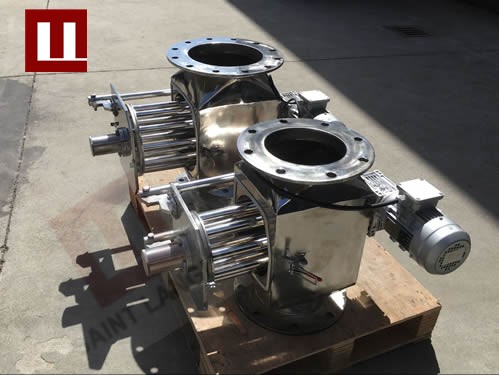
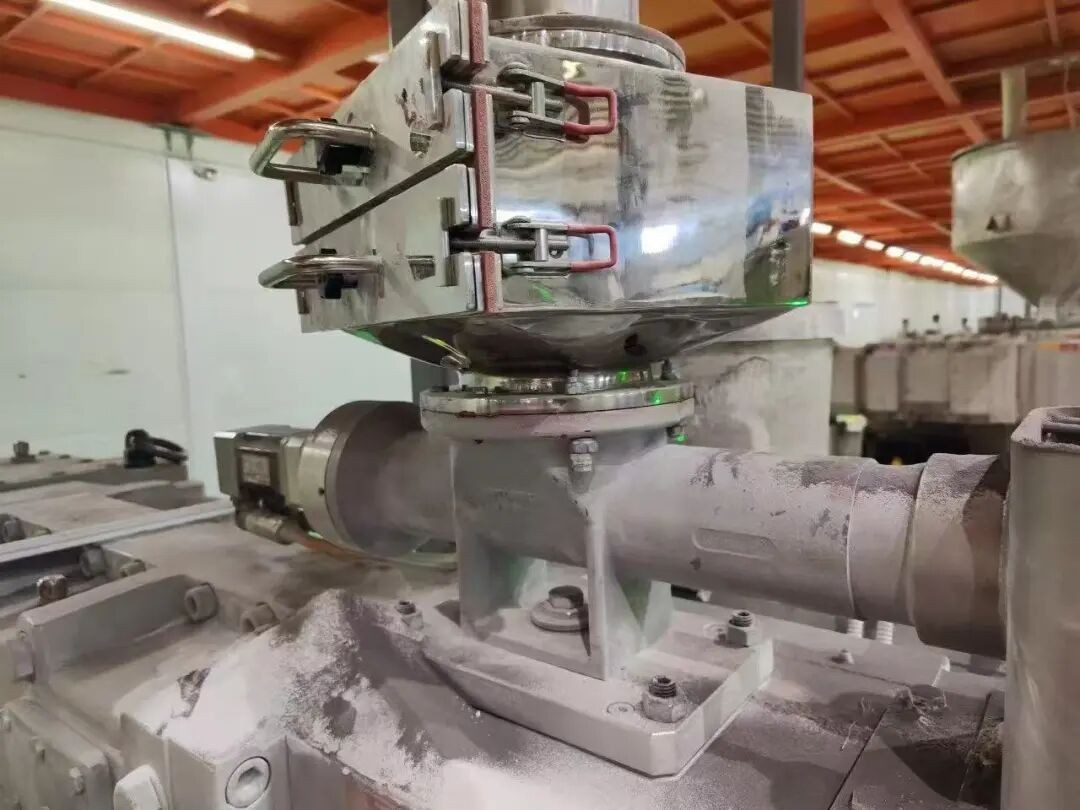
Real Photos of Saint Langma Permanent Magnetic Filtration Equipment
03 How “Permanent Magnetic Filters Are Applied in Lithium Battery Material Production”
Building a Multi-Stage Iron Removal System with Layer-by-Layer Protection
Lithium battery material manufacturing generally includes four major stages:
1. Raw material pretreatment
2. Synthesis reaction
3. Crushing and grinding
4. Final purification
By strategically deploying permanent magnetic filters at different stages, manufacturers can establish a multi-stage, cascade contamination control system, achieving full-process prevention of metal contamination.
Raw Material Pretreatment: Controlling Contamination at the Source
After raw materials such as lithium spodumene and iron phosphate enter the factory, suspended permanent magnetic filters installed above belt conveyors remove:
• Large iron fragments
• Rust particles
• Magnetic metal contaminants
This reduces the initial iron impurity level and prevents contaminants from entering subsequent processes where they could increase equipment wear.
Grinding Process: Deep Purification
Grinding processes such as: Sand milling、Jet milling are high-risk stages for generating metal contamination.
At this stage, pipeline-type and drawer-type permanent magnetic filters are installed.
The process flow:
1. Ground powder passes through pipeline magnetic filters
2. Fine iron particles are removed
3. Materials undergo secondary purification through drawer magnetic filters
The iron impurity level can gradually be reduced: From:10–20 ppm to:Below 5 ppm
Final Product Purification: Precision Cleaning
After drying and before packaging, high-precision rotary magnetic filters or slurry-specific magnetic filters are applied.
For dry powders:
Rotary magnetic filters dynamically capture iron particles trapped inside or attached to material particles.
For slurry materials:
Special slurry magnetic filters prevent metal ion dissolution and secondary contamination.
Final control results:
Standard materials: iron impurities controlled below 3 ppm
High-end materials: can reach 0.1–1 ppm
Meeting the strict purity requirements of power batteries and energy storage batteries.
Application Performance Data
Lithium Iron Phosphate (LFP) Cathode Materials: After multi-stage permanent magnetic filtration:
Iron impurities reduced from 40 ppm to 2.8 ppm. Iron removal efficiency: 93%
Battery-Grade Lithium Carbonate: After rotary permanent magnetic filtration:
Iron impurities reduced from 15 ppm to 1.8 ppm. Iron removal efficiency: 88%
Artificial Graphite Anode Materials: After drawer-type permanent magnetic filtration: Iron impurities reduced from 25 ppm to 2.5 ppm. Meeting high-purity requirements for anode materials.
Data sources: lithium battery material manufacturers’ production reports and publicly available industry testing data.
04.What Are the “Technical Advantages and Industry Value”?
High Purity, High Safety, and Low Cost Are Closely Connected
Against the backdrop of increasingly fierce competition in the lithium battery industry and continuously upgraded safety standards, the application of permanent magnetic filtration equipment not only addresses the critical issue of metal contamination, but also drives the lithium battery industry toward higher purity, enhanced safety, and lower production costs.
Core Technical Advantages
1) High-precision iron removal
Capable of capturing micron-level iron impurities, achieving ppm-level or even ppb-level purification performance, meeting the requirements of high-end lithium battery materials.
2) Zero secondary contamination
The parts in contact with materials are made of 304 stainless steel and ceramic materials, eliminating the risk of metal ion leaching.
3) Energy-saving and high efficiency
No external power supply is required. Energy consumption is only about 1/10 that of electromagnetic iron removers, making it suitable for continuous production lines and helping reduce manufacturing costs.
4) Stable and durable performance
The magnetic system has a service life of more than 10 years, with a magnetic field attenuation rate of less than 5%, and can operate reliably in the high-temperature and high-humidity environments of lithium battery production.
Core Industry Value
1) Ensuring battery safety
By intercepting metal impurities at the source, it helps prevent dendrite formation and short circuits caused by metallic contamination, reducing thermal runaway risks and improving battery safety and reliability.
2) Enhancing product competitiveness
Meeting material purity standards significantly improves battery cycle life and energy density, helping manufacturers gain a competitive advantage in the high-end market.
3) Reducing production costs
It minimizes rework and scrap losses caused by excessive impurities, reduces equipment wear and maintenance costs, and improves overall production efficiency.
4) Driving industry upgrading
Aligned with the green and high-quality development trend of the new energy industry, it helps lithium battery manufacturers establish a comprehensive quality control system throughout the entire supply chain.
Future Outlook
Cleaner, Smarter, More Efficient
As the lithium battery industry continues to raise its requirements for material purity, permanent magnetic filters are playing an increasingly important role in the pretreatment stage of lithium battery materials and in distributed impurity-control applications, thanks to their unique advantages of “zero energy consumption, maintenance-free operation, and high cost-effectiveness.”
For lithium battery material manufacturers, establishing a comprehensive magnetic impurity control system based on “source prevention — process control — end-stage management” is essential to ensure downstream battery safety while maintaining product competitiveness.
From raw material storage to finished product delivery, Saint Langma permanent magnetic filters quietly safeguard the purity of lithium battery materials and protect the safety baseline of batteries.
If you have related requirements, please feel free to leave us a message or contact us through the phone number below. We will provide customized industry solutions to support your business development and help you move forward.
Search
Categories List
Please give us a message
Beijing Saint Langma Magnetic Technology Co.,Ltd