
One stop solution for magnetic products
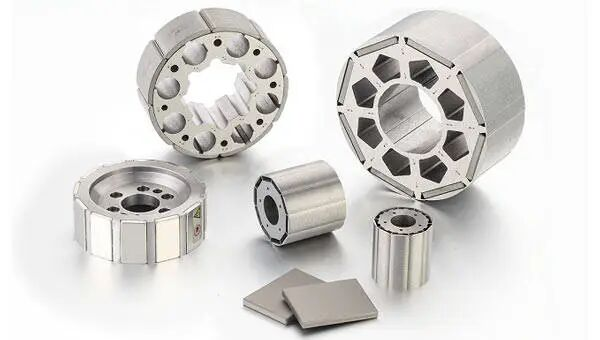
With the rapid development of industries such as new energy, industrial automation, home appliances, and automotive, permanent magnet motors have become the mainstream choice due to their advantages of high efficiency, energy savings, and compact size. As the "heart" of permanent magnet motors, the performance, structure, and quality of the magnets directly determine the motor's stability, efficiency, and service life.
Today, we will systematically discuss the magnets used in permanent magnet motors from the perspectives of application scenarios, structural characteristics, key testing, and procurement considerations.
The largest application area of rare earth permanent magnet materials is permanent magnet motors. The motors (machines) we commonly refer to include both electric motors that convert electrical energy into mechanical energy and generators that convert mechanical energy into electrical energy. Their operation is based on the principles of electromagnetic induction and electromagnetic force.
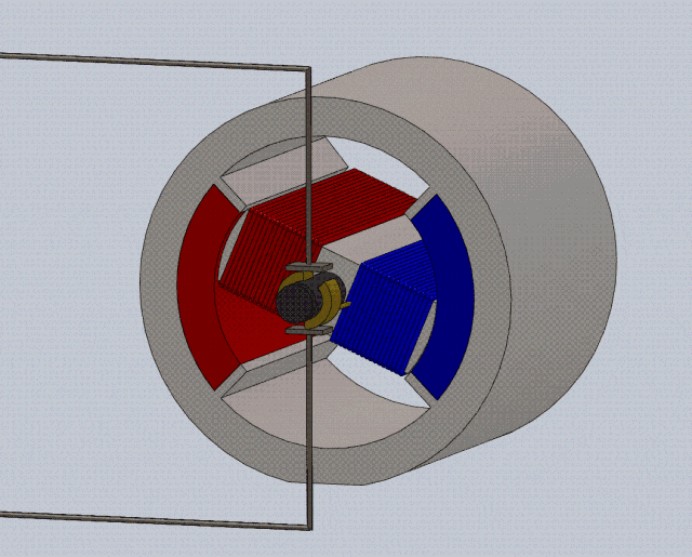
Based on the method of generating the air-gap magnetic field, motors are mainly divided into two types:
Those that rely on electric excitation to generate the magnetic field are called induction motors.
Those that rely on permanent magnets to provide the magnetic field are called permanent magnet motors.
In permanent magnet motors, the magnets directly provide the air-gap magnetic field, eliminating the need for additional excitation current or complex excitation windings. As a result, they offer significant advantages such as high efficiency, energy savings, simple structure, and compact size. They are widely used in various small and micro motors, industrial motors, and new energy drive motors.
1.Position and Shape of Magnets in Permanent Magnet Motors
In rotating electrical machines, the shape and structure of magnets vary significantly depending on their assembly position:
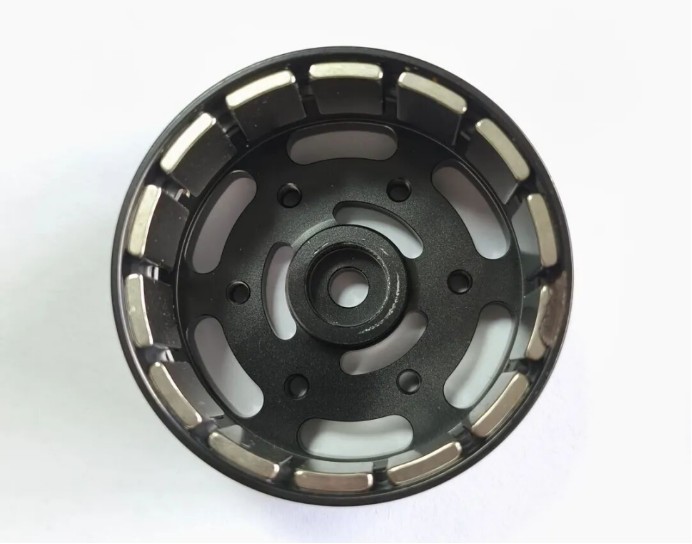
1.1Magnets as the Stator
Externally curved surface-mounted arc-shaped magnets are commonly used, which are attached to the inner side of the housing.
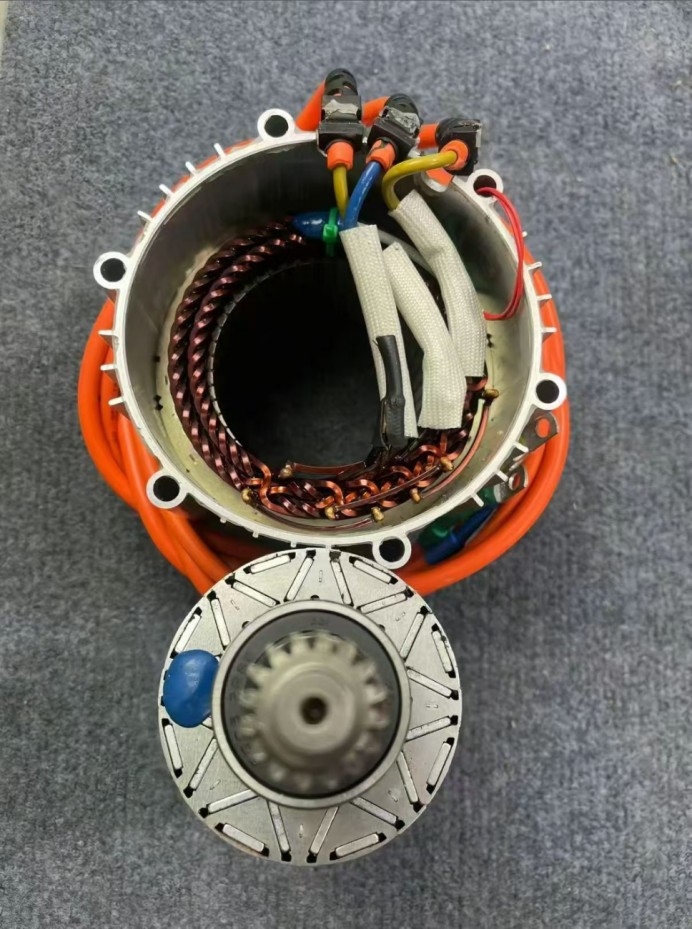
1.2Magnets as the Rotor
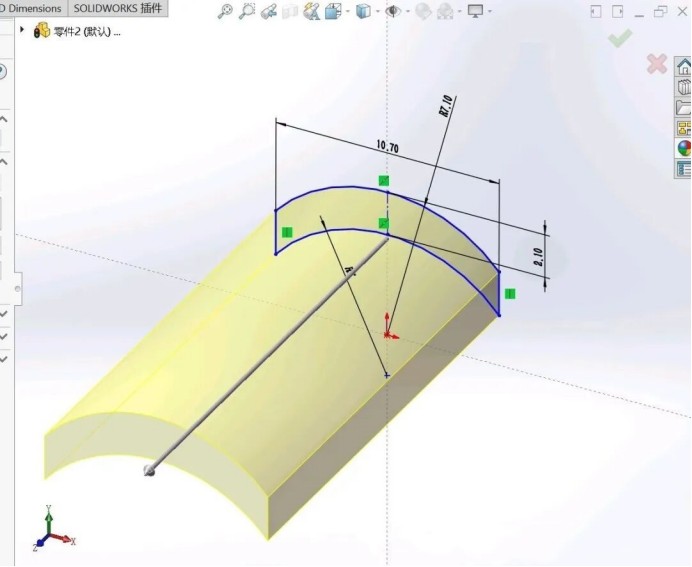
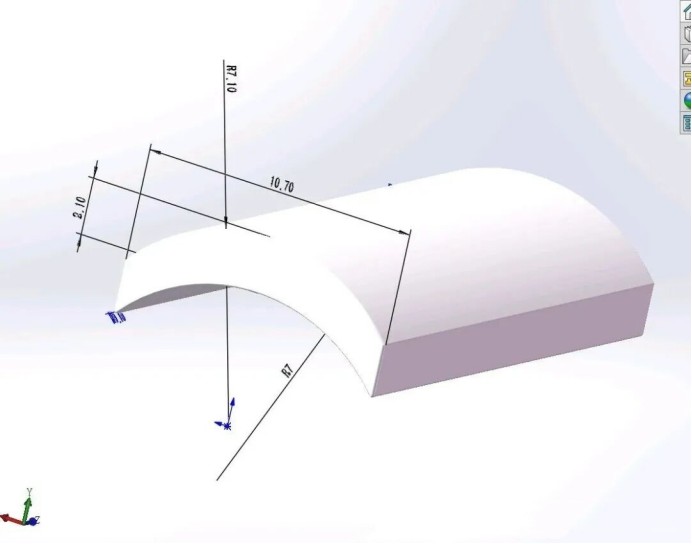
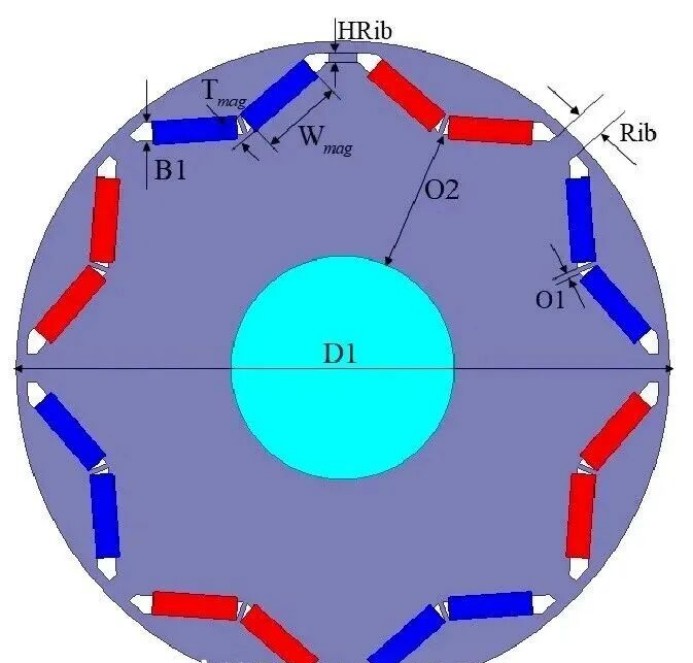
Internally curved surface-mounted arc-shaped magnets are often used, attached to the surface of the rotor core, or square-shaped magnets are embedded inside the rotor core.
For linear motors, magnets are mainly square or parallelogram in shape; for tubular linear motors, axially magnetized ring magnets are also used.
2.Main Characteristics of Magnets Used in Motors
2.1Predominantly Conventional Shapes
Except for micro motors, most magnets come in simple shapes such as rectangles, arcs (tiles), sectors, and bread shapes. Under the trend of cost-reduction design, embedded square magnets are becoming increasingly common.
2.2 Simple and Efficient Magnetization Method
Single-pole magnetization is the primary method, forming a multi-pole magnetic circuit after assembly. For integral magnetic rings, such as bonded neodymium-iron-boron (NdFeB) and hot-pressed magnetic rings, multi-pole radial magnetization is often used.
2.3 Key Focus on High-Temperature Stability and Consistency
The critical requirements for motor magnets are concentrated on three points:
Good high-temperature stability, making them resistant to demagnetization; High magnetic flux consistency to ensure smooth motor operation; Compatibility with the motor structure for reliable assembly precision
Different application scenarios have additional requirements: drive motors emphasize high-temperature resistance, while wind power and linear motors demand higher resistance to salt spray corrosion.
2.4 Performance Focuses on Medium-to-High Coercivity
The magnetic energy product covers high, medium, and low ranges, but the coercivity is generally at medium-to-high levels.
For new energy vehicle drive motors, high-grade magnets such as 45UH, 48UH, 50UH, 42EH, and 45EH are commonly used, which typically require mature diffusion process support.
2.5 Insulation and Loss-Reduction Designs Are Becoming More Widespread
In high-temperature motors, segmented bonded magnets are widely used to improve insulation performance and reduce eddy current losses. Some magnets are coated with an epoxy coating on the surface to further enhance insulation and protective capabilities.
3. Key Testing Items for Motor Magnets
3.1. High-Temperature Stability
The focus is on testing magnetic decay under high-temperature conditions, including open-circuit magnetic decay, semi-open-circuit magnetic decay, and high-temperature demagnetization curves, to ensure the motor operates stably under high temperatures and alternating magnetic fields.
3.2. Magnetic Flux Consistency
Excessive variation in magnetic flux can lead to motor vibration, insufficient output, and performance degradation.
Industry standards generally require flux deviation to be controlled within 5%. For high-precision motors, the requirement is even stricter, reaching 2%–3%, with stringent controls on remanence, dimensions, coating, chamfering, and other factors.
3.3. Assembly Compatibility
The curvature, angle, and splicing gap of arc-shaped magnets all affect the actual assembly outcome.
Many professional manufacturers use dedicated contour-matching fixtures to simulate real assembly conditions and verify the compatibility and interchangeability of the magnets.
3 Key Points to Consider When Purchasing Motor Magnets
3.1. Pay Attention to Rare Earth Raw Material Market Trends
Magnets account for a relatively high proportion of the motor cost, and the cost is primarily driven by materials. Fluctuations in rare earth prices directly affect the cost and quotation of magnets.
3.2. Performance Indicators Directly Determine Cost
The magnet grade, coercivity, and temperature rating directly impact the amount of heavy rare earth elements used, making them key factors in cost control.
3.3. Batch Size Affects Unit Price
Motor magnets are generally large in size, limiting the number of pieces that can be produced from a single blank.
Small batch orders often result in low material utilization and high mold cost allocation. Therefore, it is important to plan order quantities and delivery schedules reasonably.
Closing Remarks
Though small in size, magnets are the core component of permanent magnet motors. Choosing the right magnets and using them properly is the only way to make motors more efficient, stable, and durable.
Search
Categories List
Please give us a message
Beijing Saint Langma Magnetic Technology Co.,Ltd