
One stop solution for magnetic products
This news greatly boosted market confidence. Holders of goods reacted swiftly, with a general increase in reluctance to sell and a willingness to support prices, leading to a rapid tightening of low-priced praseodymium oxide supplies and a significant price increase. On October 27th, the price of praseodymium oxide, a benchmark in the rare earth market, rose by approximately 9,000 yuan/ton in a single day, with spot prices approaching the 510,000 yuan/ton mark. Looking ahead to the remaining two months of 2025, praseodymium oxide prices are expected to maintain a high level of fluctuation.
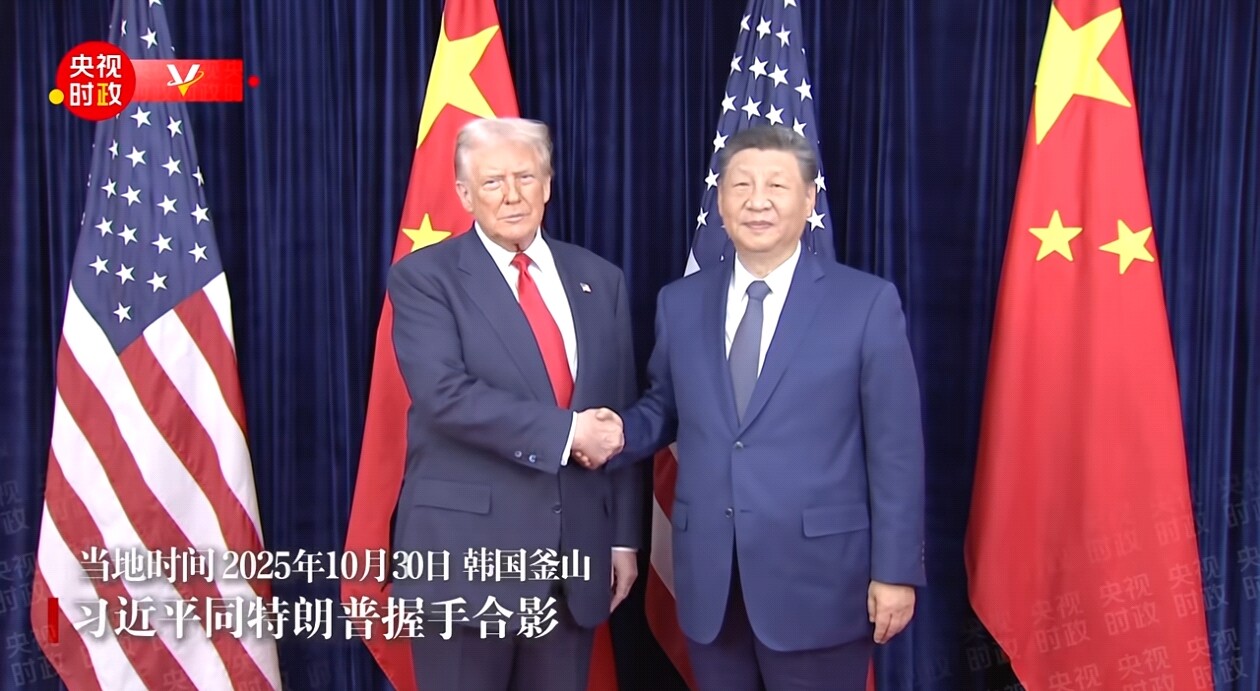
Subsequently, on October 30, Chinese leaders departed for Busan, South Korea, to attend the APEC meeting and will meet with US President Trump. It is expected that the two sides will further discuss issues such as semiconductor and rare earth trade. Recently, there has been a significant increase in domestic and international inquiries for neodymium iron boron permanent magnets and praseodymium-neodymium metal, and end-user companies' purchasing intentions have also improved compared to the previous period.
Prices of praseodymium and neodymium oxides and metals from October 2024 to October 2025.
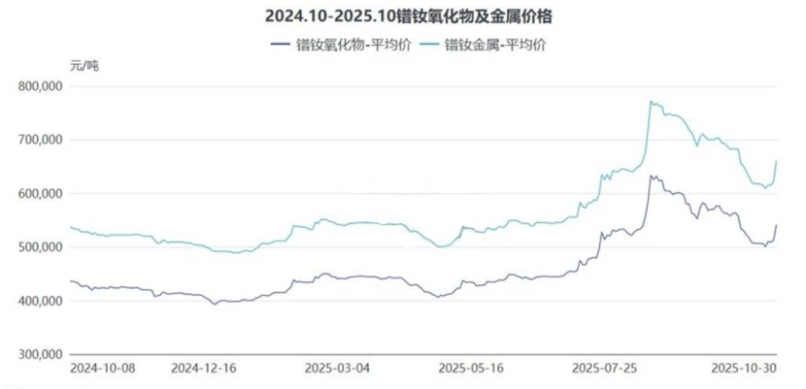
Gray lines: Praseodymium-neodymium oxide
Green lines: Praseodymium-neodymium metal
The two high-level talks sent a positive signal: China's delayed implementation of rare earth export controls provides global buyers with a clear "buffer period" or "window of opportunity." This is not a relaxation of controls, but rather gives overseas buyers a year to build strategic reserves, which is expected to trigger a panic-driven, strategic surge in purchasing and stockpiling. Against this backdrop, order volumes are expected to increase significantly.
Rare earth permanent magnet materials are core materials in high-end manufacturing fields such as new energy vehicles, robotics, and wind power. With the explosive growth of these industries, the demand for rare-earth permanent magnets continues to rise. Global demand for high-performance NdFeB magnets is projected to reach 58,000 tons by 2025, with China accounting for 34,000 tons. The delay in export controls will further exacerbate the supply-demand imbalance, driving a significant increase in magnetic material orders.
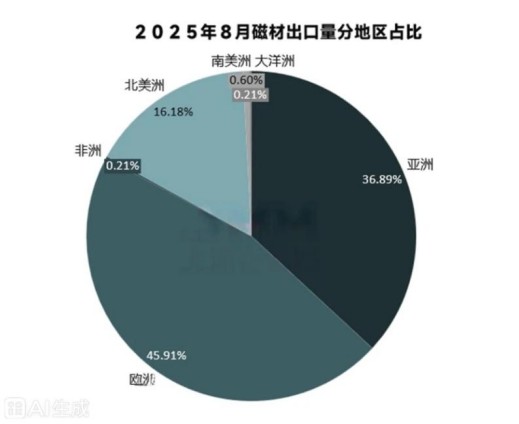
Regional share of magnetic material exports in August 2025
In summary, the one-year postponement of rare earth export controls will directly stimulate global buyers to make purchases in advance, leading to a significant increase in magnetic material orders in the short term. Saint Langma will continue to monitor the evolution of the global rare earth industry landscape and the specific outcomes of this high-level meeting between China and the United States.
Search
Categories List
Please give us a message
Beijing Saint Langma Magnetic Technology Co.,Ltd