
Complete product specifications
Support customization
PRODUCTS
MESSAGE
What Determines Magnet Strength? Three Key Factors
Magnets are used throughout industry and everyday life, from refrigerator magnets and smartphone speakers to microphones and automotive motors. Yet their strength varies widely. Some magnets can easily lift a steel ball, while others barely pick up a paper clip. What determines magnet strength? Three key factors are the magnetic material, the magnet’s shape and size, and the design of the magnetic circuit.
1. Magnetic Material
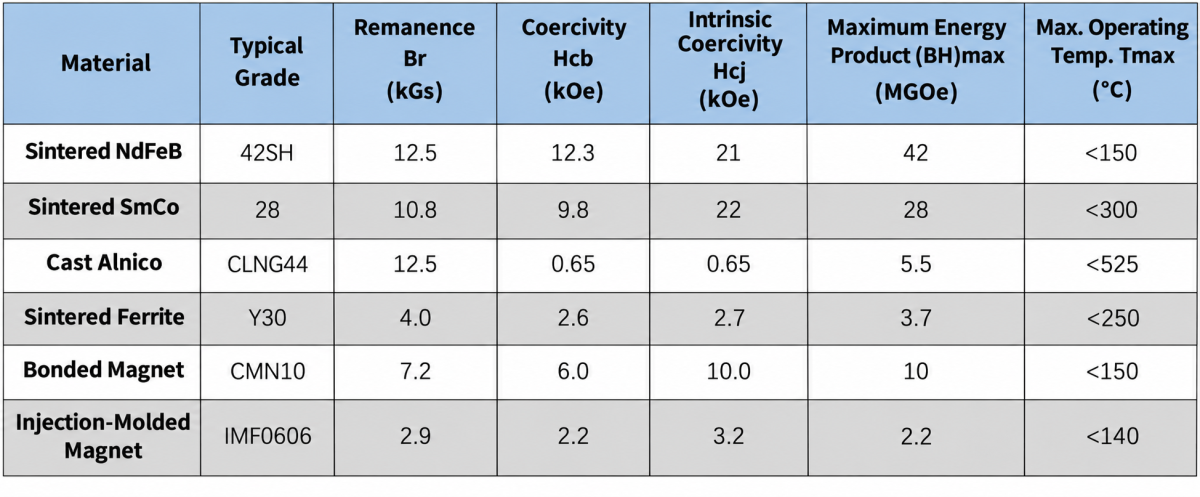
The material sets the foundation for a magnet’s performance. The way its magnetic domains align affects the magnetic field it produces. Three properties are commonly used to characterize permanent magnet materials:
- Remanence (Br) is the magnetic flux density that remains after a material has been magnetized to saturation and the external magnetizing field is removed. All else being equal, higher remanence can help a magnet exert a stronger pull on ferromagnetic materials.
- Coercivity (Hc) measures resistance to demagnetization. A magnet with higher coercivity can withstand a stronger opposing magnetic field before losing its magnetization.
- Maximum energy product ((BH)max) is a measure of how much magnetic energy a material can supply to an external magnetic circuit for a given volume. A higher maximum energy product can help designers achieve a stronger field with the same magnet volume.
Sintered neodymium iron boron (NdFeB), for example, has high remanence and a high maximum energy product. These properties make it suitable for demanding applications such as high-precision servo motors and certain magnetic resonance imaging (MRI) systems.
2. Magnet Shape and Size
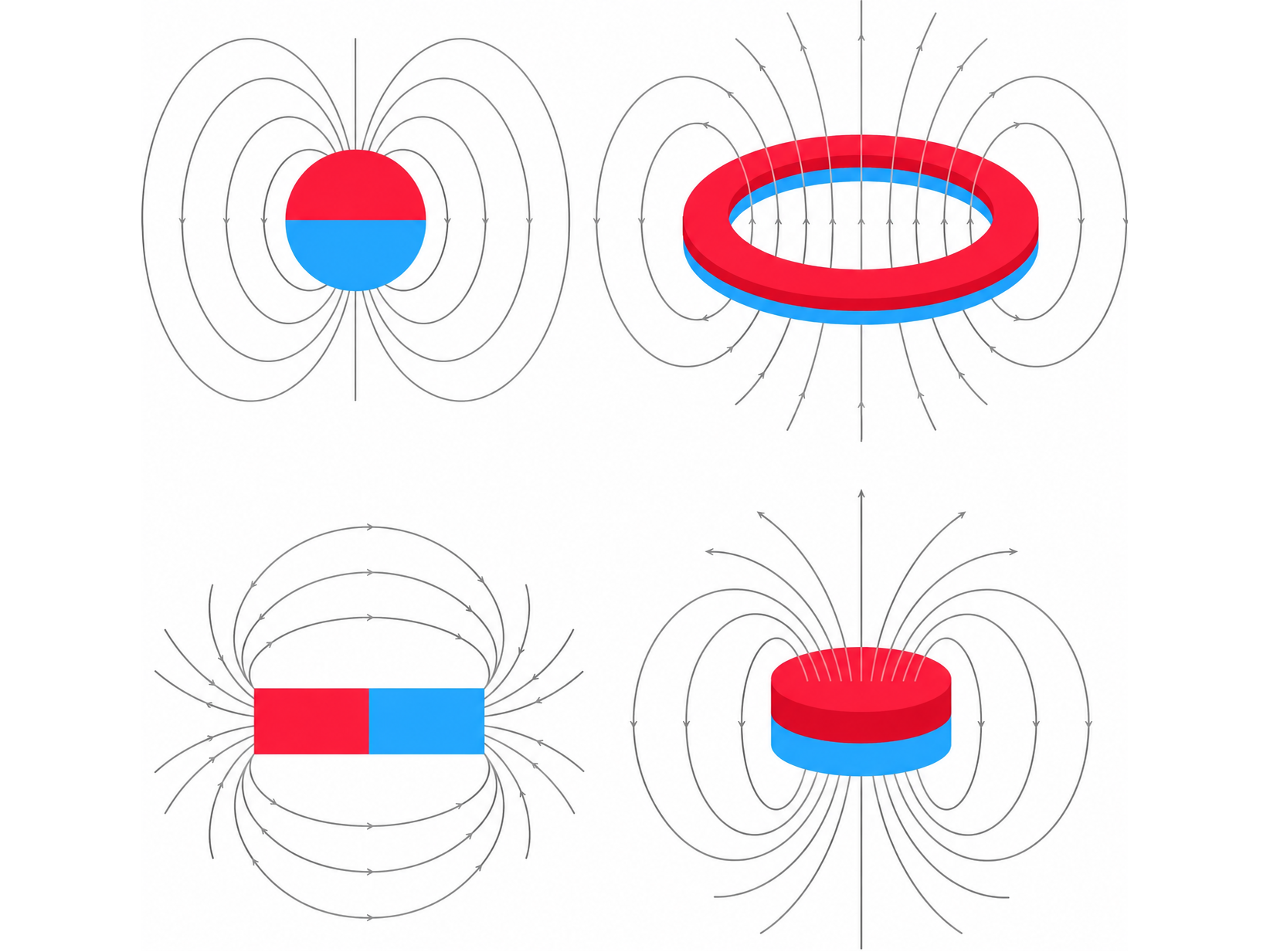
A magnet’s geometry affects both the strength and distribution of its magnetic field. Cylindrical, rectangular, and ring magnets produce different field patterns. One particularly important dimension is the magnet’s thickness along the direction of magnetization.Increasing this thickness can strengthen the field at a given working distance, although the benefit depends on the magnet’s geometry and application. Designers also need to account for how the field is distributed across the working area. In precision magnetic separation equipment, for example, magnet geometry affects how effectively the system captures the target material. In miniature electronic devices, tight control over magnet dimensions helps meet performance requirements within limited space.
3. Magnetic Circuit Design
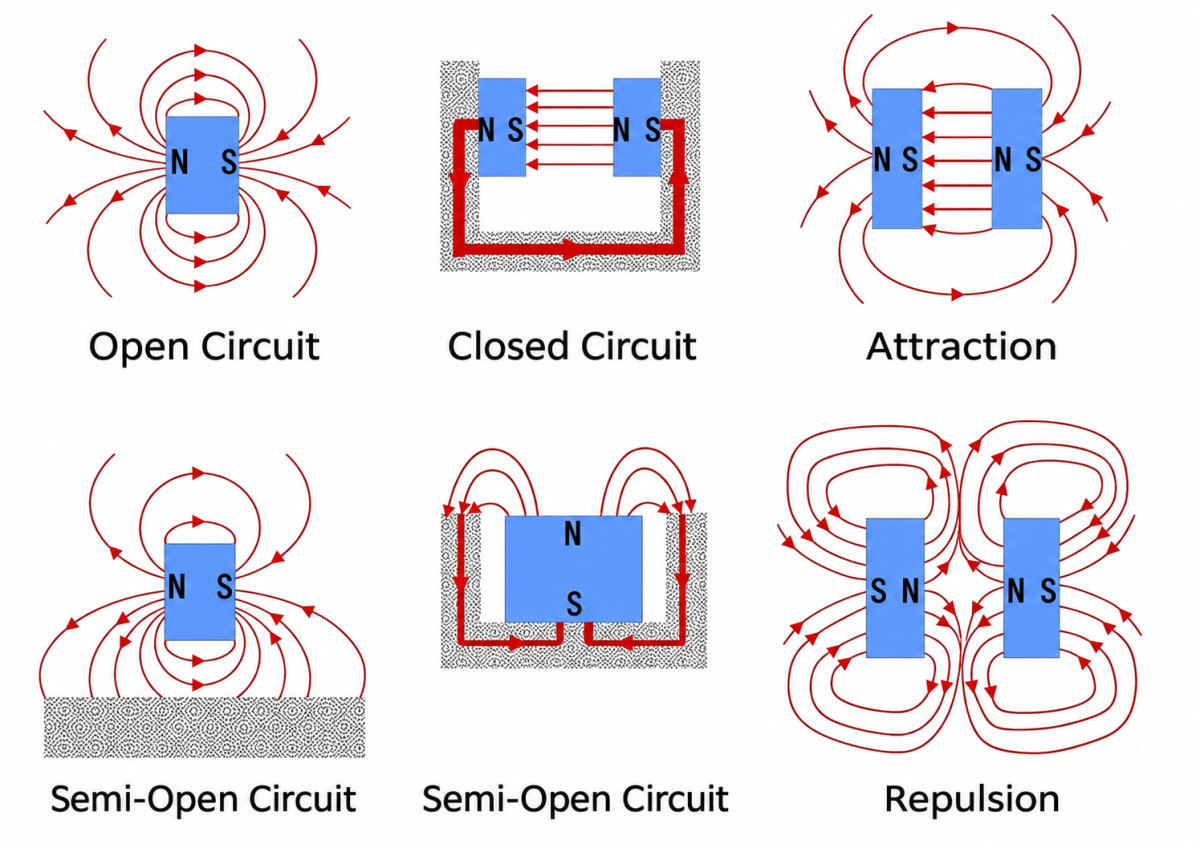
In many applications, a permanent magnet works alongside components such as steel yokes or pole pieces. Together, these components form a magnetic circuit that guides the magnetic flux to where it is needed.
A well-designed magnetic circuit can concentrate flux in the working area and reduce flux leakage. In electric motors, optimizing the arrangement of the permanent magnets and the steel yoke can improve energy conversion efficiency. In magnetic levitation systems, the magnetic circuit helps shape the field needed for stable levitation.
Conclusion
Magnet strength in a finished product depends on how the material, geometry, and magnetic circuit work together. Material properties guide the choice of magnet grade, while the magnet’s dimensions and the surrounding components determine how much of its field reaches the working area. Considering all three factors helps engineers select and design magnets for the conditions in which they will operate.
Please give us a message
Beijing Saint Langma Magnetic Industry Technology Co., Ltd.