
Complete product specifications
Support customization
PRODUCTS
MESSAGE
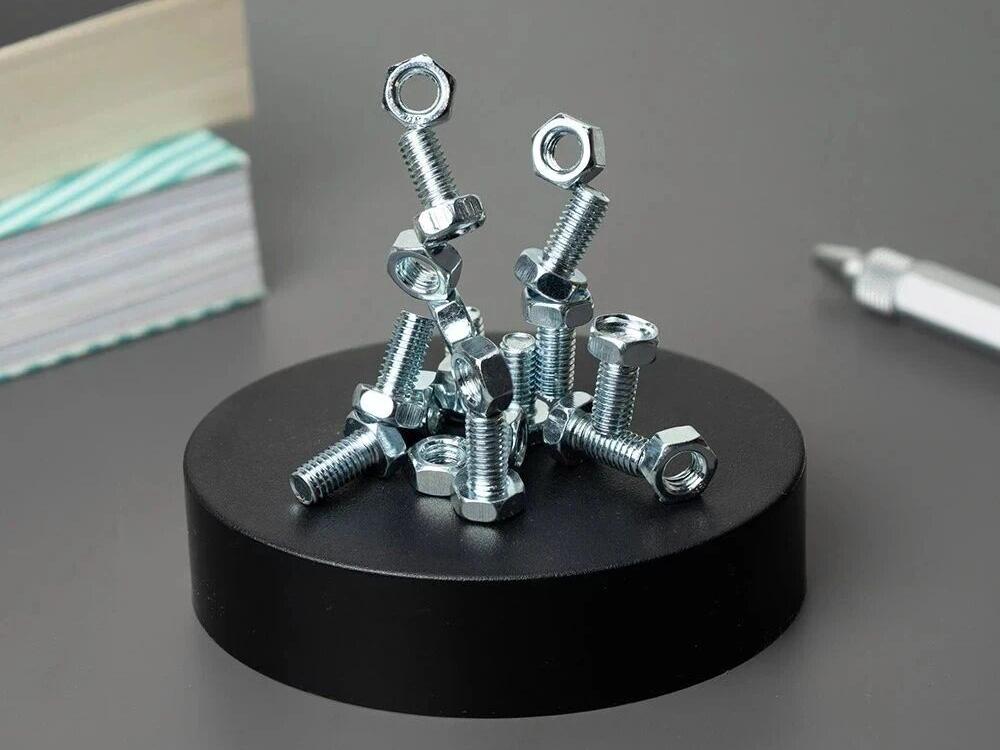
Why Don’t Magnets Run Out of Energy?
Stick a magnet to a steel plate, then use it to hold a handful of iron nuts.
A day, a year, or even many years later, the nuts may still be firmly in place.
All that time, the magnet keeps exerting a force. It has no battery, no wires, and no external power supply.
So why doesn’t its pull gradually weaken? Could a magnet’s strength run down like the charge in a battery?
To answer that, we need to distinguish three things: force, work, and energy.
Why Holding Something Still Takes No Mechanical Work
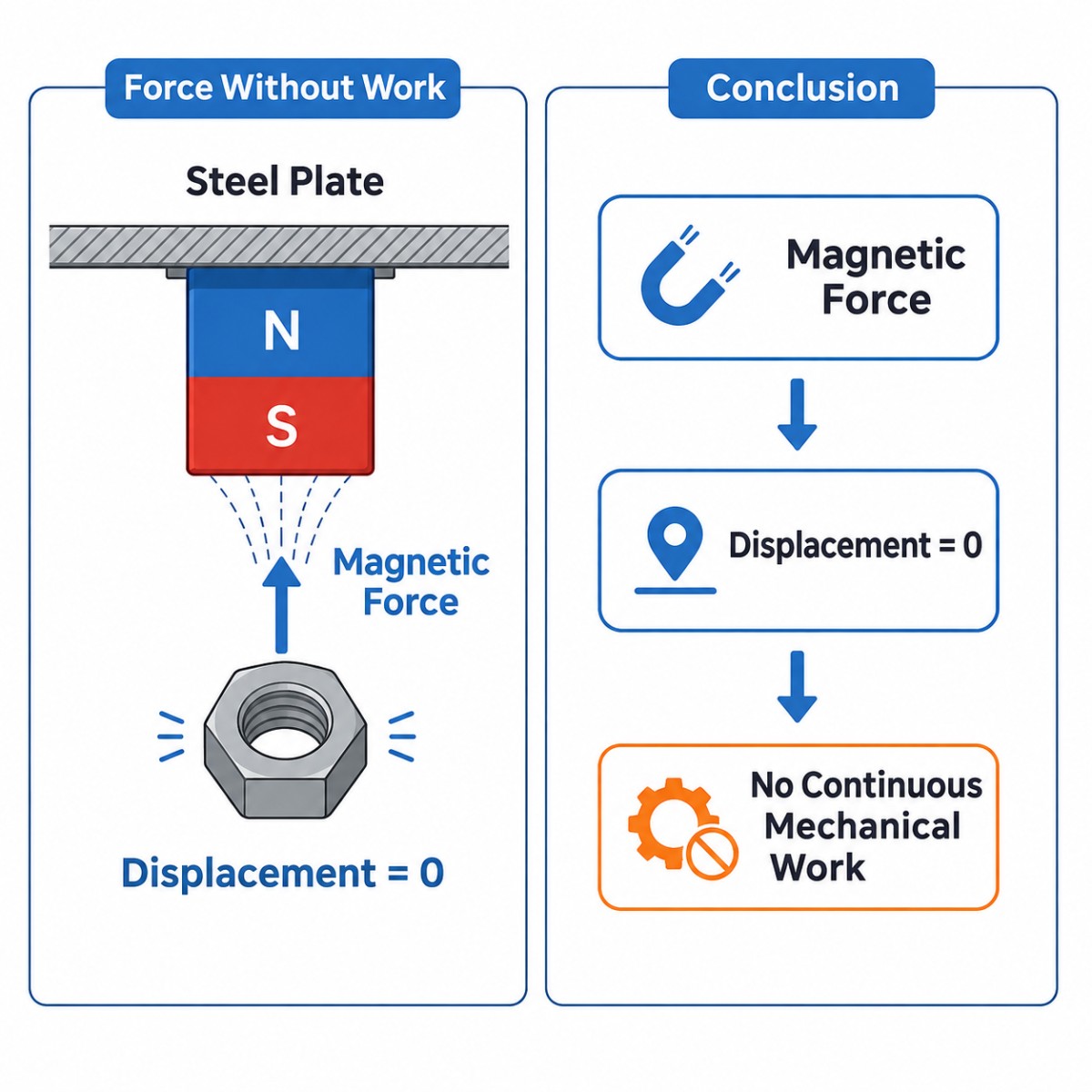
A book resting on a table experiences a constant upward force from the tabletop. The table spends no energy supporting it overnight. Leave the book there for a year, and the table can still support it.
The same principle applies when a magnet holds iron nuts in place. The magnetic force is still there, but once the nuts stop moving, the force does no further mechanical work.
Our experience with muscles can make this counterintuitive. Hold a heavy object in your hand and you’ll eventually get tired, even if your hand stays still. Your muscles use chemical energy to maintain tension. A magnet has no such process. To determine whether energy is being used continuously, look for an ongoing transfer of energy in the system. The presence of a force alone tells you very little.
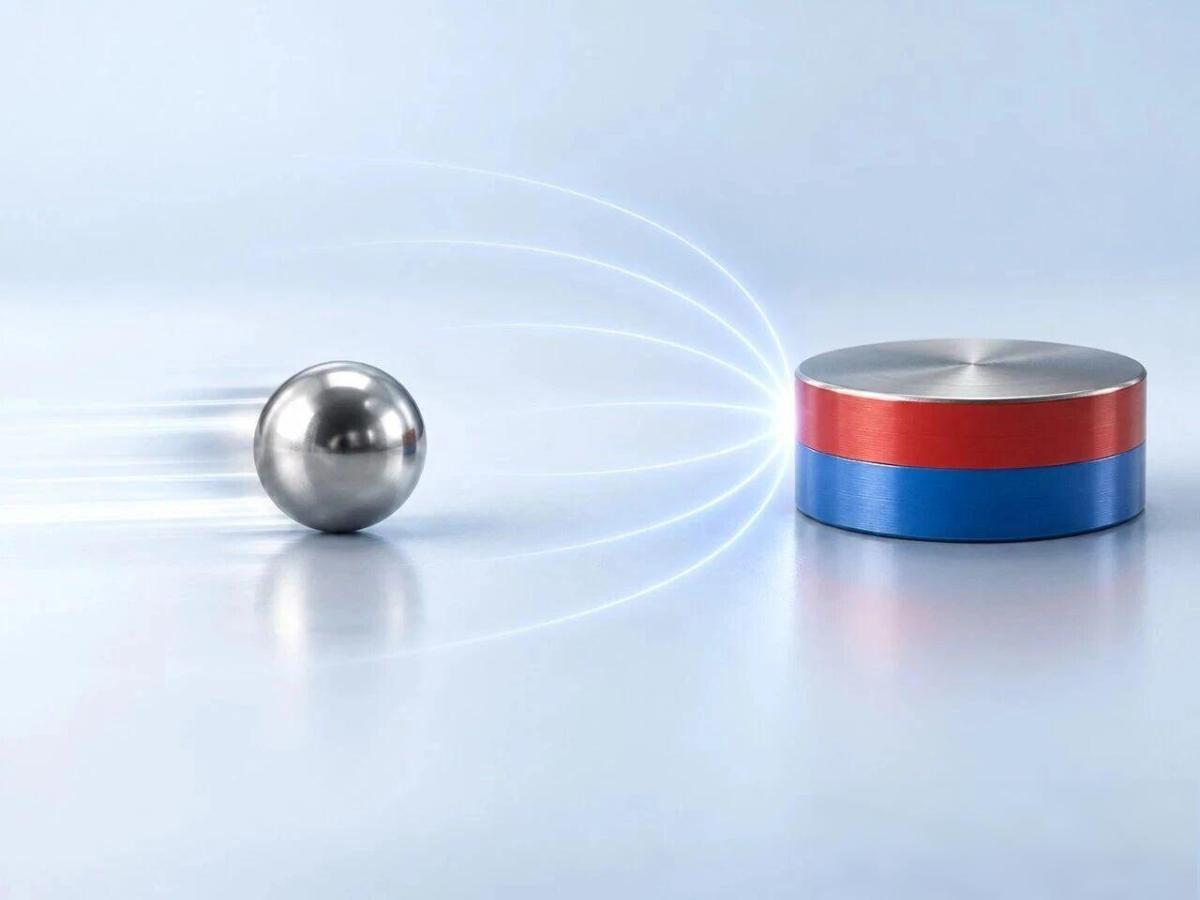
Where Does a Steel Ball Get Its Energy as It Rolls Toward a Magnet?
Place a steel ball near a magnet and let it go. The ball rolls toward the magnet, picks up speed, and eventually hits it. This time, the ball gains kinetic energy. The magnetic force has done work on it.
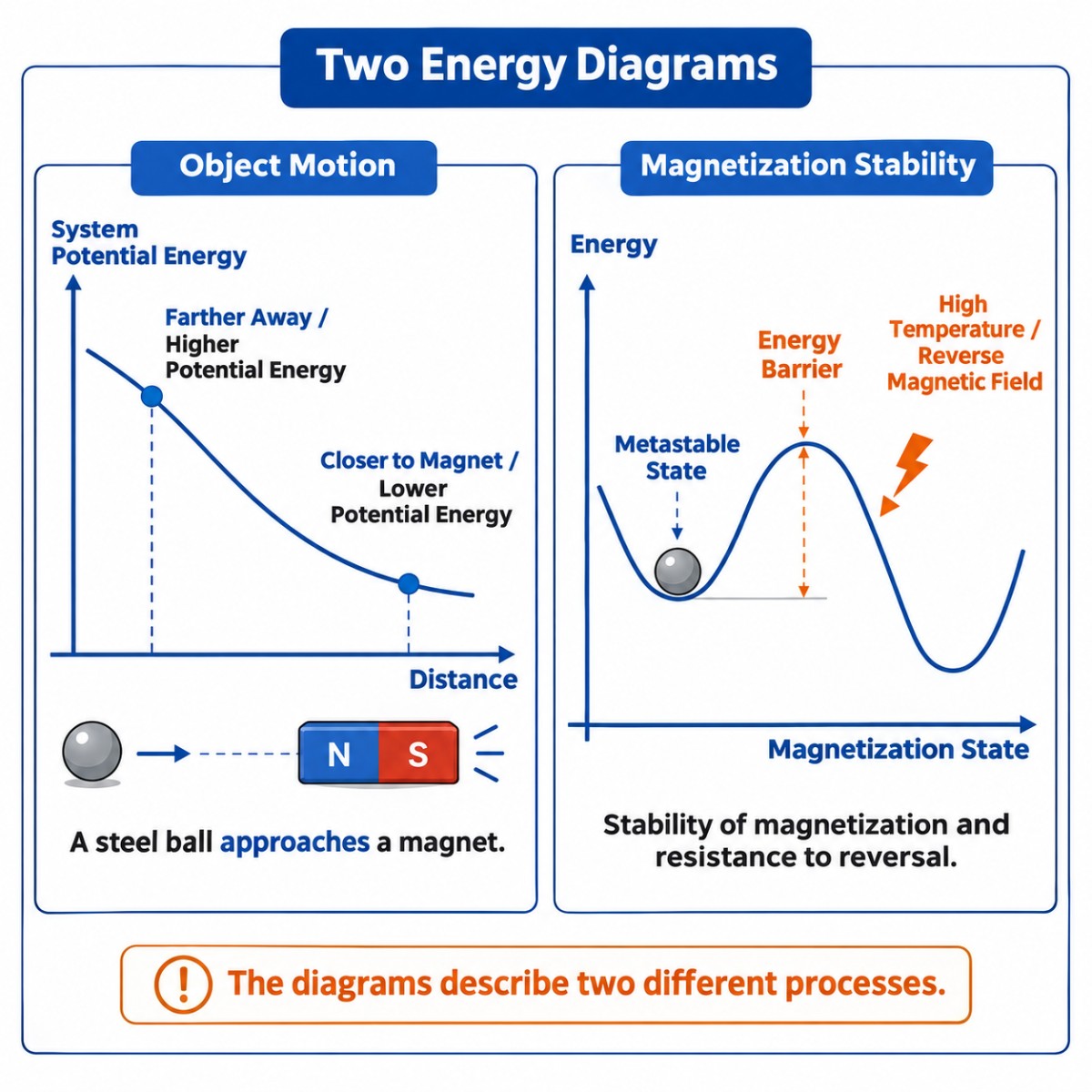
That energy comes from a change in the configuration of the whole system, which includes the magnet, the steel ball, and the magnetic field. When the ball is farther away, the system has higher magnetic potential energy. As the ball approaches the magnet, the system’s potential energy decreases and the ball gains kinetic energy. On impact, that kinetic energy is transferred into sound, vibration, small deformations, and heat.
Think of a ball rolling down a slope. It speeds up as its gravitational potential energy decreases. A steel ball rolling toward a magnet undergoes a similar energy conversion, with magnetic potential energy supplying the motion.
Repeating the Experiment Takes Energy
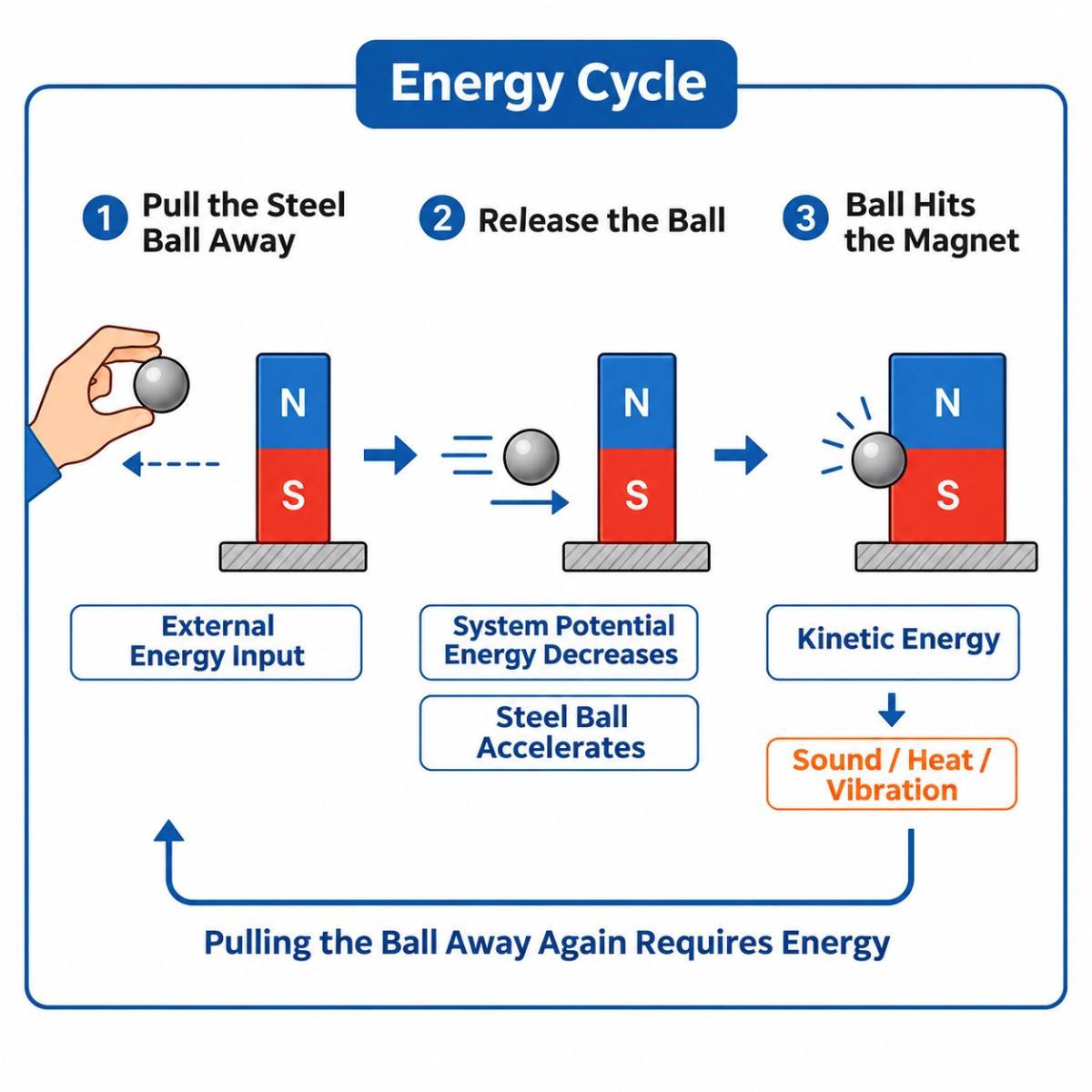
Once the steel ball is stuck to the magnet, you have to pull it away before you can repeat the experiment. The pull is strongest when the ball is close to the magnet, so getting it moving away takes the most force. As you pull the ball back to its starting position, you do work on the system and restore it to a state of higher magnetic potential energy.
Here’s the full cycle. Pulling the ball away puts energy into the system. Releasing it converts magnetic potential energy into kinetic energy. When the ball hits the magnet, that energy goes into sound, vibration, and heat. To start over, you have to pull the ball away again.
The magnet can draw the ball from a higher-energy position to a lower-energy one each time. Returning the ball to its starting position requires an external energy input. The same energy accounting applies to cycles that use magnetic repulsion. Magnetic forces alone cannot provide a continuous supply of mechanical energy.
Where Does the Energy in a Permanent Magnet Motor Come From?
A permanent magnet motor can make the question seem more puzzling. The rotor keeps spinning, the magnets help produce torque, and the machine can run for thousands or even tens of thousands of hours.
The mechanical energy comes from the power supply. The permanent magnets establish a magnetic field. When current flows through the windings, it interacts with that field to produce torque and turn the rotor. The power supply continuously delivers electrical energy, and the motor converts part of it into mechanical energy.
A generator works in the opposite direction. A turbine or engine supplies mechanical energy, and the generator converts part of it into electrical energy. In a permanent magnet generator, the magnets establish the magnetic field.
Using permanent magnets can eliminate the need for field windings and the electricity they draw. It can also make the machine more compact. The energy that drives the conversion still comes from the electrical supply in a motor or the mechanical input in a generator.
So far, we’ve seen why a magnet can exert a force for years without continuously delivering energy. That leaves a question about the material itself. How does a magnet stay magnetized for so long?
How Do Permanent Magnets Stay Magnetized?
A permanent magnet contains many microscopic magnetic moments. In magnetic materials, these moments can form regions called magnetic domains, each with its own direction of magnetization.
Before the material has much overall magnetization, the magnetization in different regions can partly cancel out. Applying a strong magnetic field changes the material’s magnetic state, increasing its net magnetization in a preferred direction. The material then produces a noticeable external magnetic field.
If that state could easily reverse, the material would quickly lose much of its magnetization once the applied field was removed. Permanent magnets last because their magnetized state is difficult to change.
The crystal structure makes certain directions energetically favorable for the magnetic moments. Grain size, grain boundaries, and other features of the microstructure influence where magnetization reversal begins and how it spreads. A suitable microstructure makes reversal more difficult and helps the magnet retain its magnetization.
An energy landscape helps illustrate what’s happening. In the steel-ball example, the energy changes as the distance between the ball and the magnet changes. Here, the landscape describes how the energy changes with the magnet’s internal magnetization state. When the steel ball moves closer, the system moves to a lower-energy configuration. The magnet’s internal state doesn’t move one step closer to demagnetization each time it attracts the ball.
A permanent magnet can remain in a local energy minimum after it has been magnetized. Physicists call this a metastable state. The state can change, but under normal conditions an energy barrier makes that change difficult.
What Coercivity Tells Us About a Magnet
Coercivity is one of the most important properties of a permanent magnet. It measures the material’s resistance to a magnetic field applied in the opposite direction. In practical terms, it tells you how strong a reverse field must be to drive the material toward demagnetization. The higher the coercivity, the harder it is to demagnetize the material with a reverse field.
In real materials, coercivity depends on several factors, including magnetocrystalline anisotropy, grain size, grain-boundary structure, local demagnetizing fields, and temperature.
Hard magnetic materials such as neodymium-iron-boron (NdFeB) and samarium-cobalt (SmCo) combine high remanence, the magnetization they retain after the magnetizing field is removed, with strong magnetocrystalline anisotropy and high coercivity. These properties help them maintain their magnetization for years without a continuous supply of power.
Can a Permanent Magnet Lose Its Strength?
How well a permanent magnet holds its strength depends on its operating conditions.
In common sintered neodymium magnets, rising temperatures generally reduce coercivity. Heat also makes it easier for thermal fluctuations to change the magnetization state. A sufficiently strong reverse magnetic field can cause irreversible demagnetization. The design of the magnetic circuit matters, too. If it exposes the magnet to a strong demagnetizing field during operation, the risk of performance loss increases.
Corrosion can degrade a magnet more directly. As corrosion damages the NdFeB material and its grain boundaries, less magnetic material remains effective, and the magnet’s performance declines.
In engineering, permanent means the magnet can retain its magnetization for a long time under specified temperature, magnetic field, and environmental conditions. Holding iron parts in place during normal use doesn’t gradually drain a magnet the way using a battery drains its charge. The factors that deserve attention are temperature, reverse fields, corrosion, and the magnet’s operating conditions within the magnetic circuit.
Think back to the magnet holding those iron nuts. Watch the demonstration again
Years later, it may still hold them with nearly the same force. The material inside the magnet has kept its magnetization without burning through a stock of “magnetic fuel.”
That may be the most remarkable thing about permanent magnets. With the right material and microstructure, a pattern of microscopic order can persist for years.
Please give us a message
Beijing Saint Langma Magnetic Industry Technology Co., Ltd.