
One stop solution for magnetic products

Price matters when purchasing neodymium magnets. But for industrial projects involving repeat orders and high-volume production, sample-to-production consistency and reliable quality across batches matter just as much.
A quotation and a factory’s size can tell you part of the story. To make a sound decision, buyers also need to understand whether the supplier can interpret the technical requirements, verify product quality, maintain production records, and respond effectively when problems occur.
This guide explains how to choose a neodymium magnet supplier using seven practical checks.
When a Lower Price Led a Customer Back to Us
A customer once asked us to quote a custom magnet. After reviewing our offer, the customer replied:
“Your quotation is about 20% higher than the other suppliers’ offers. I’m sorry, but we’ve decided to purchase from another supplier.”
From a buyer’s perspective, choosing a lower price when the specifications appear to be the same is understandable. We respected the decision, and the quotation process came to an end.
More than two months later, the customer contacted us again. They sent the same drawing and specifications and asked whether our price had changed.
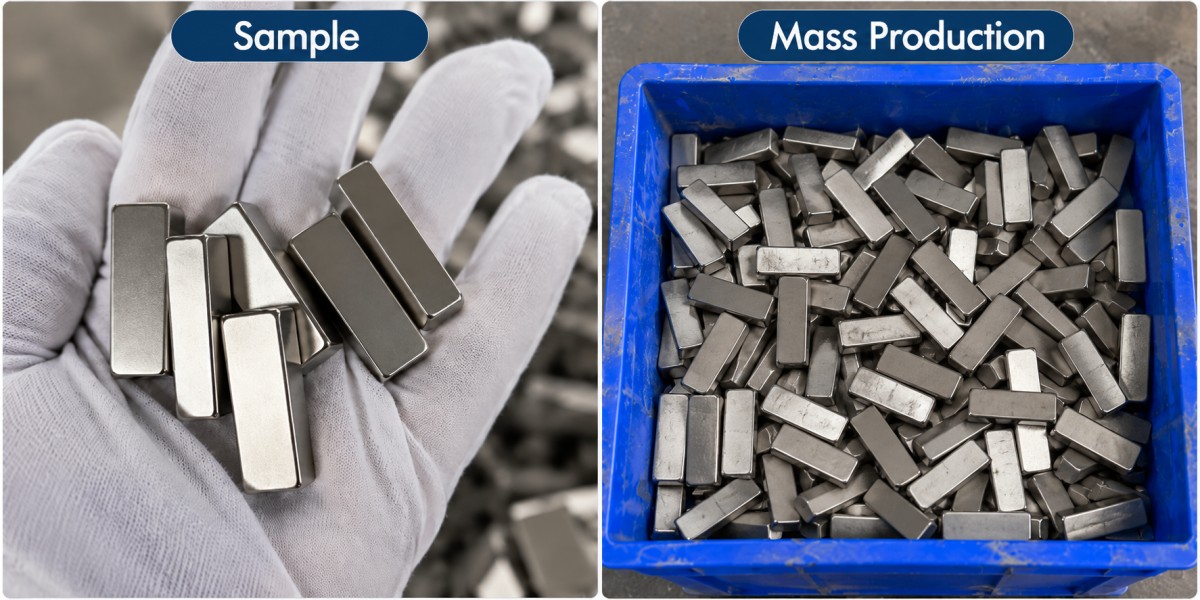
During the conversation, we learned why they had returned: the magnets delivered in mass production differed significantly from the approved samples, and there was also a noticeable difference in magnetic strength.
When the customer raised the issue with the supplier, the response was:
“The magnets were made according to the grade you requested. A small difference in magnetic strength is normal.”
For an industrial buyer, however, the important question is whether the delivered magnets meet the agreed technical requirements—and whether the samples and production parts are tested and accepted against the same standards.
For this customer, the losses caused by the inconsistency between the samples and mass-produced magnets were far greater than the additional 20% they would have paid to purchase from us.
The experience raises a question: when evaluating a new supplier, how can buyers determine whether it can deliver consistent magnets over time?
The following seven checks provide a practical starting point.
1. Does the Supplier Review Your Technical Requirements Before Quoting?
You might start by sending a simple inquiry:
“N52, 50 × 10 × 5 mm, 20,000 pieces. Please provide a quotation.”
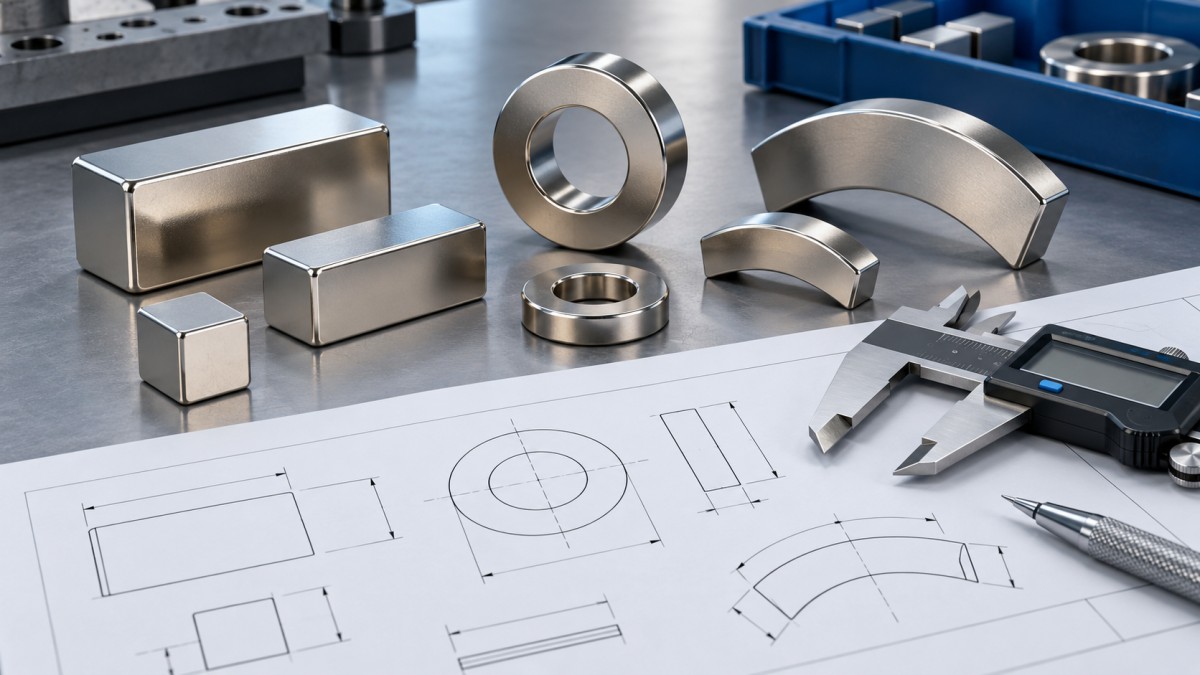
Grade, size, and quantity are important, but they may not be enough for an accurate quotation for a custom industrial magnet. The supplier may also need to confirm:
- Dimensional tolerances, especially critical assembly dimensions
- Magnetization direction and requirements
- Coating type and thickness
- Operating temperature and environment
- Magnetic flux, surface field, or other performance requirements
- Salt spray test requirements
- Application and installation method
For multipole rings, magnetic gears, or motor arc magnets, additional questions may involve the number of poles, operating air gap, magnetic field distribution, rotational speed, and assembly structure.
A quick quotation is not necessarily a problem when the product specifications are complete and the manufacturing process is established. However, if the requirements are still incomplete, ask whether the price is preliminary and what assumptions it includes.
Ask the supplier:
“What additional technical information do you need before providing a final quotation?”
An experienced supplier should be able to explain which details are already sufficient, which need clarification, and how those requirements may affect price and lead time.
2. Can the Supplier Provide Relevant Magnet Testing Data?
Magnet quality cannot be verified by appearance or hand feel alone.
A magnet may feel strong, but that does not prove that its material meets the specified grade. Depending on the application, magnet testing may include:
- Material magnetic properties
- Dimensions and tolerances
- Magnetic flux or surface field
- Coating thickness
- Corrosion resistance
Material magnetic properties are commonly evaluated using parameters such as Br, Hcb, Hcj, and (BH)max. For high-temperature motor applications, resistance to demagnetization should also be assessed under the actual operating conditions.
A surface field reading from a gaussmeter cannot, by itself, confirm a magnet’s material grade. The reading is also affected by the magnet’s size, shape, magnetization state, measurement position, and probe.
Not every test needs to be performed in the supplier’s own laboratory. Some tests may be carried out by the material supplier or an independent laboratory. What matters is knowing who performs the test, which method is used, and whether the result can be linked to the delivered batch.
Ask the supplier:
“How do you verify that this batch meets the N42SH grade? What material data and finished-product inspection records can you provide?”
Before testing, agree on the measurement position, method, sample quantity, and acceptance criteria. This makes the supplier’s and buyer’s results easier to compare.
3. Is the Quality Management System Applied in Practice?
Certificates such as ISO 9001 can be useful when evaluating a supplier, but a certificate alone does not show how effectively the system operates on the factory floor.
Along with checking the certificate’s validity, scope, and applicable production site, look at how the supplier manages day-to-day quality:
- Are raw materials, work-in-progress, and finished products clearly identified?
- Are different batches kept separate?
- Are nonconforming products isolated?
- Are key production and inspection records maintained?
- Are drawings, specifications, and inspection standards controlled?
- Is measuring equipment calibrated as required?
For example, if a supplier has certificates but cannot identify product batches or provide relevant inspection records, buyers should investigate how the system works in practice.
For automotive or other projects with specific requirements, confirm whether additional systems, such as IATF 16949, and supporting documents are required.
Ask the supplier:
“Which production site is covered by this certificate? Can you show us relevant production and inspection records for this type of magnet?”
4. Can the Supplier Trace a Problem Back to the Relevant Batch?
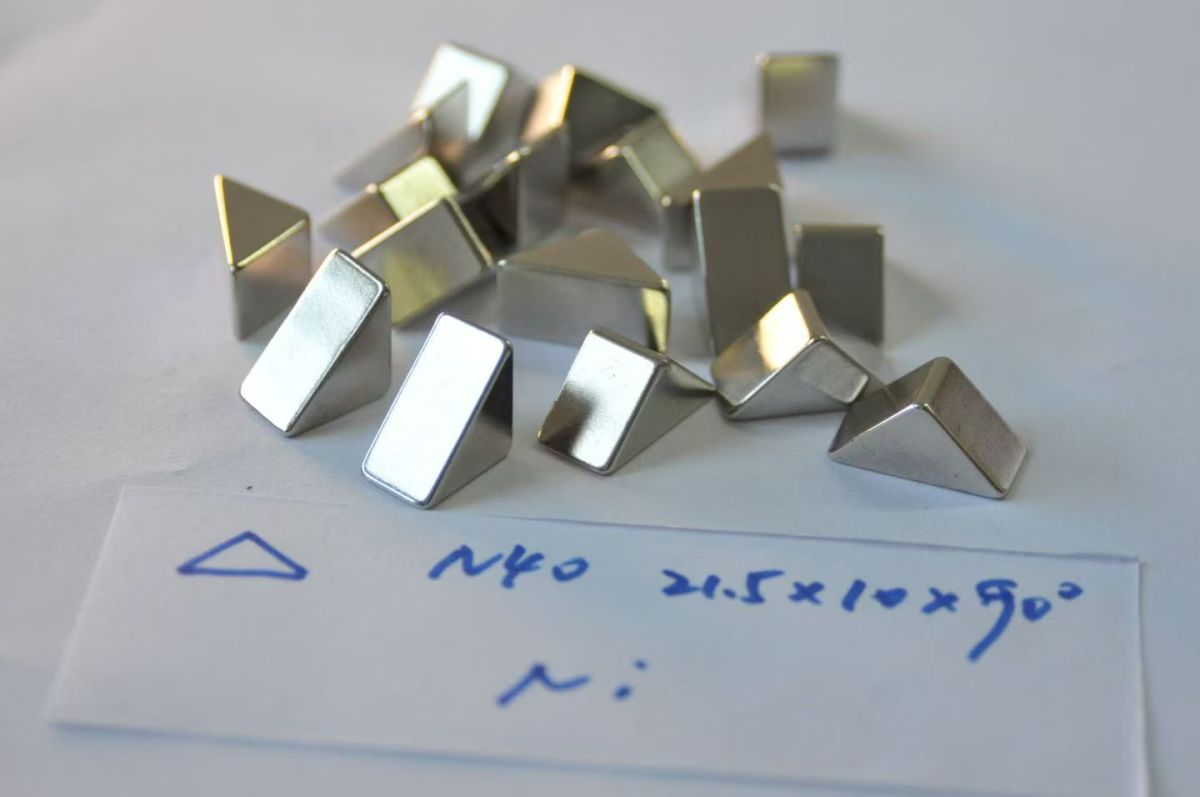
Imagine purchasing 100,000 magnets and discovering an issue with some of them three months later. The supplier’s ability to find the corresponding production and inspection records can make a major difference to the investigation.
Depending on the product and project, magnet batch traceability may involve:
- Raw material batch information
- Production batch numbers and key process records
- Coating and magnetization records
- Inspection results
- Shipment dates and quantities
The level of traceability does not need to be identical for every product. Before placing an order, agree on how far the supplier must trace the product, how long records will be kept, and who will provide them if an issue occurs.
Traceability cannot prevent every problem, but it helps identify the affected products and gives both parties evidence for the investigation.
Ask the supplier:
“If we give you the batch number on the outer carton, what production and inspection information can you trace?”
5. After Sample Approval, Can the Supplier Maintain Consistent Production?
This is one of the most important checks when buying custom magnets.
A small number of samples can be inspected individually. Mass production involves more material, more processing steps, and potentially several production batches. It places greater demands on process control.
An approved sample does not automatically guarantee that every future production batch will meet the same requirements.
When assessing neodymium magnet batch consistency, buyers can focus on:
- Stability of critical dimensions
- Magnetic performance within the agreed range
- Variation between batches
- Coating thickness and appearance
- Chipping and other agreed visual defects
- Pole spacing or magnetic field distribution for multipole products
Ask whether the supplier has experience with similar materials, dimensions, processes, and production volumes. The supplier does not need to disclose another customer’s confidential information, but it should be able to explain how the relevant processes are controlled and which requirements need validation.
For more demanding projects, agree on the following before production:
- Whether the sample material and process are representative of mass production
- Which drawing revision and technical standards apply
- Which characteristics will be inspected during production and how samples will be selected
- Whether changes to materials, processes, or subcontractors require advance notification and approval
Ask the supplier:
“After the samples are approved, what standards will be used to accept the production batches? How will the measurement methods remain consistent?”
6. Can the Supplier Identify Potential Problems in Your Drawing or Application?
A supplier with engineering experience should be able to manufacture to a drawing and identify points that need clarification before quotation or sampling.
For example:
- Is a tolerance tighter than necessary for the assembly?
- If the magnet operates at 120°C, should the selected grade and magnetic circuit be reassessed?
- Could a thin section or sharp corner be vulnerable to chipping during manufacturing, transport, or assembly?
- Is the coating suitable for the actual humidity, chemicals, and adhesive?
- Have the pole count, pole spacing, and working distance of a multipole ring been defined?
- Does a magnetic gear need to be evaluated against its operating air gap and target torque, in addition to surface field?
Such feedback does not mean the supplier necessarily knows the final product better than the customer. It means both parties can discuss potential risks and limitations before production begins.
If a supplier immediately says “no problem” to every requirement without reviewing the conditions or explaining how the requirements will be verified, ask for more detail.
Sometimes, “Our engineer needs to review or test this first” is a more useful answer than an unqualified promise.
Ask the supplier:
“Based on our drawing and operating conditions, which manufacturing or application risks should we review?”
7. How Does the Supplier Handle Quality Problems?
Many suppliers look similar when orders run smoothly. Their ability to respond becomes clearer when a quality problem occurs.
Common issues include out-of-tolerance dimensions, magnetic performance outside the agreed range, coating failure, excessive chipping, or assembly problems.
A structured response typically includes:
Identify and contain the affected products → check batch and test conditions → obtain samples and relevant information → retest and investigate the cause → implement corrective actions → verify the results and prevent recurrence.
For more demanding industrial projects, the customer may also request an 8D report.
The investigation should be based on evidence. A problem may involve material, machining, coating, magnetization, transportation, assembly, operating conditions, or several of these factors. Before the cause is confirmed, neither party benefits from making assumptions.
Ask the supplier:
“If a production batch differs from the approved samples, how would you identify the affected products, retest them, and report the results?”
Neodymium Magnet Supplier Evaluation Checklist
The table below summarizes the seven areas buyers can use when comparing suppliers.
How to Reduce Risk When Working with a New Supplier
For high-volume projects or applications with demanding requirements, a staged qualification process can help both parties confirm expectations:
Technical review → Samples → Sample testing → Small production trial → Assembly validation → Mass-production approval
Assembly validation is particularly important. A magnet may meet its dimensional and inspection requirements on its own, but its performance in a motor, magnetic encoder, magnetic gear, or other assembly still needs to be verified under the actual installation and operating conditions.
For a standard, low-risk product, the process can be simpler. For high-temperature, precision, or high-volume applications, more detailed testing and acceptance requirements may be appropriate.
Manufacturer or Trading Company: What Should Buyers Check?
Many buyers prefer to work directly with a manufacturer. However, a trading company is not necessarily unreliable, and owning a factory does not automatically mean a supplier can meet every project requirement.
Whether the supplier is a manufacturer or a trading company, buyers should understand:
- Who manufactures the product and where it is produced
- Which processes are performed in-house and which are outsourced
- Who is responsible for magnetic testing, coating, and magnetization
- Who provides test reports and batch records
- Who communicates and takes responsibility if a quality issue occurs
The key is to understand the supply chain and confirm who is accountable for the delivered product.
A Simple Seven-Point Supplier Scorecard
For an initial neodymium magnet supplier evaluation, buyers can score each area from 1 to 5.
This scorecard is a tool for initial comparison and internal discussion, not an industry-wide certification standard.
Different projects have different priorities. A high-temperature motor project may place greater weight on material properties and demagnetization resistance, while a precision assembly may focus more on dimensional control and measurement methods.
If a supplier cannot meet a critical requirement, the issue should be resolved before approval—even if its overall score is high.
Final Thoughts
A reliable supplier cannot be identified by price, factory size, or response speed alone.
Before committing to a long-term relationship, buyers should establish whether the supplier can:
- Understand the application and technical requirements
- Provide relevant testing data
- Apply clear acceptance criteria from samples through mass production
- Trace delivered products to the appropriate records
- Investigate and resolve quality problems
For industrial buyers, selecting a supplier means choosing a partner whose production and quality processes can support repeat orders over time.
A reliable neodymium magnet supplier may not always offer the lowest quotation, but it should be able to demonstrate its capability through clear specifications, relevant test data, and consistent delivery records.
Search
Categories List
Please give us a message
Beijing Saint Langma Magnetic Technology Co.,Ltd