
One stop solution for magnetic products
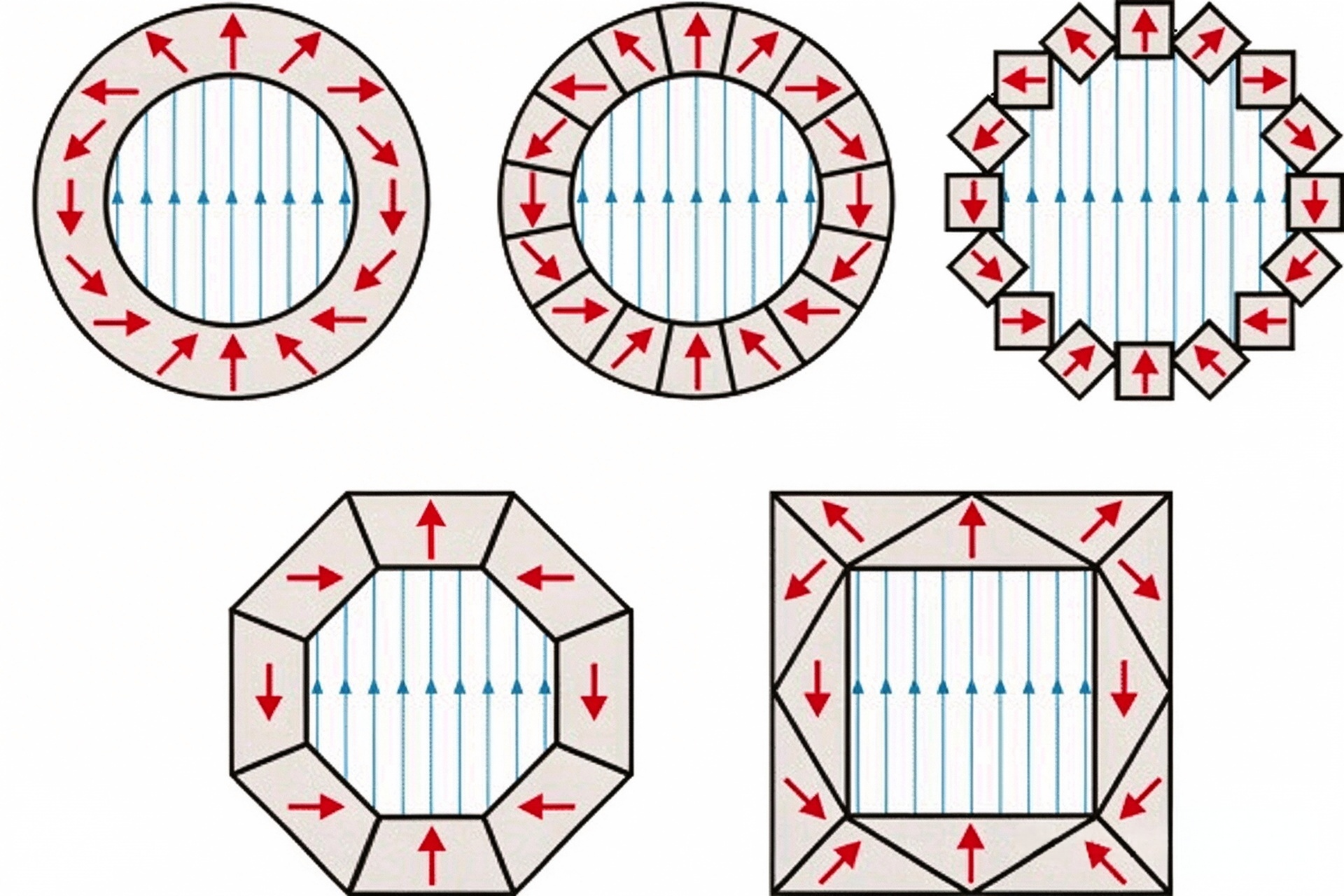
Have you ever encountered this problem: a powerful neodymium magnet can generate a strong magnetic field on its working surface, but the magnetic field on the back side remains unused. This not only wastes magnetic energy but may also interfere with surrounding precision components.
Is there a way to make the magnetic field appear only in the direction where it is needed? It may sound impossible, but this seemingly contradictory magnetic field distribution is exactly what makes the Halbach Array so unique.
1. What Is a Halbach Array? It’s Not About the Material, but the Arrangement
When people first hear the term “Halbach Array”, they may assume it refers to a new type of permanent magnet material. However, that is not the case. A Halbach Array is not a special magnetic material, but rather an ingenious magnetic circuit design concept based on the precise arrangement of permanent magnets.
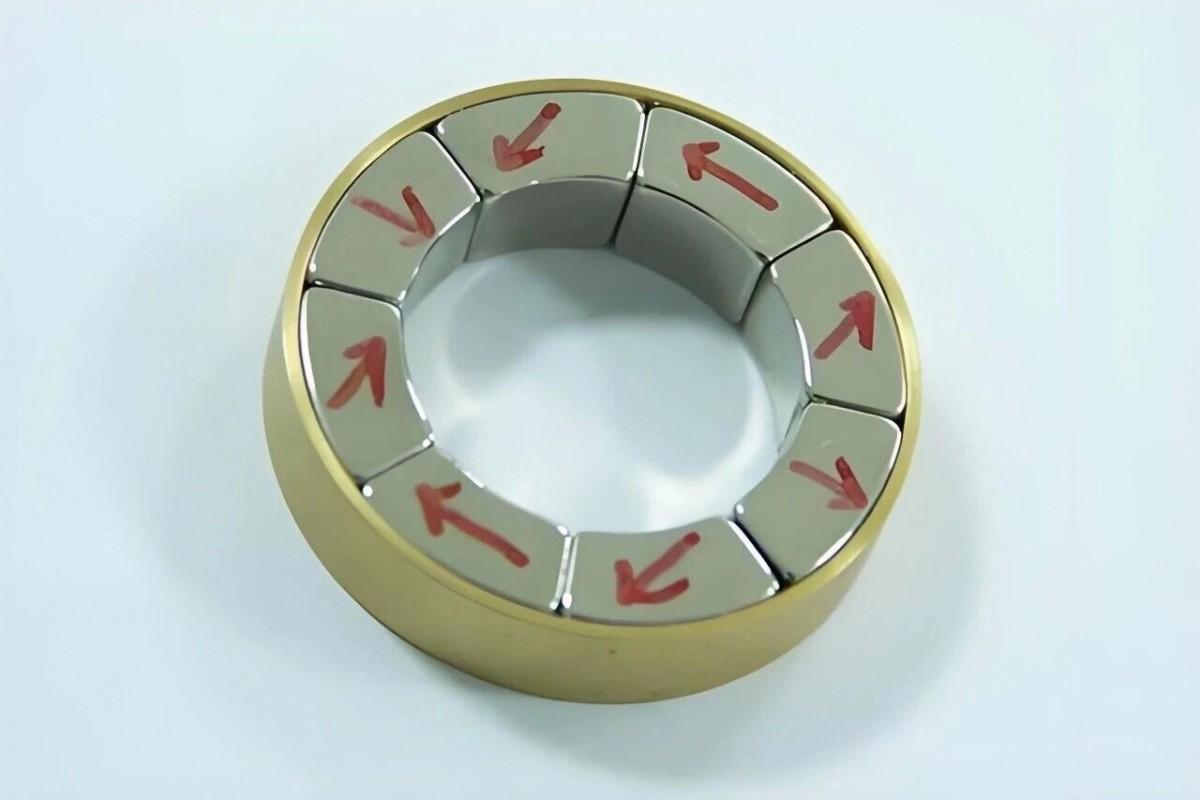
Simply put, a Halbach Array is a magnetic assembly structure in which multiple permanent magnets are arranged at specific angles, allowing the magnetic field to be enhanced on one side while weakened on the other.
Here is an intuitive example:
Imagine a row of magnets where the magnetization direction of each magnet rotates step by step:
The first magnet: magnetized upward
The second magnet: magnetized to the right
The third magnet: magnetized downward
The fourth magnet: magnetized to the left
What happens after arranging them this way?
The magnetic fields will combine and strengthen on one side, while canceling each other out on the opposite side.
From a physical perspective:
Magnetic fields on the same side → same phase → reinforcement
Magnetic fields on the opposite side → opposite phase → cancellation
The final result is a unique magnetic field distribution: one side with an extremely strong magnetic field, and the other side with a very weak magnetic field (even close to zero).
This is why the Halbach Array is known as a “one-sided magnetic field structure.”
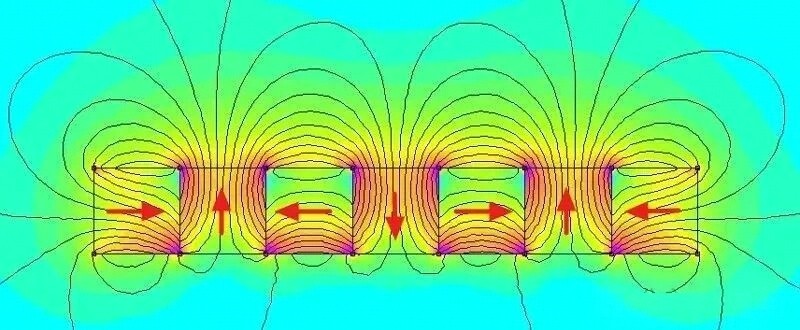
Linear Halbach Array (Magnetization Directions Rotated by 90° Between Adjacent Magnets)
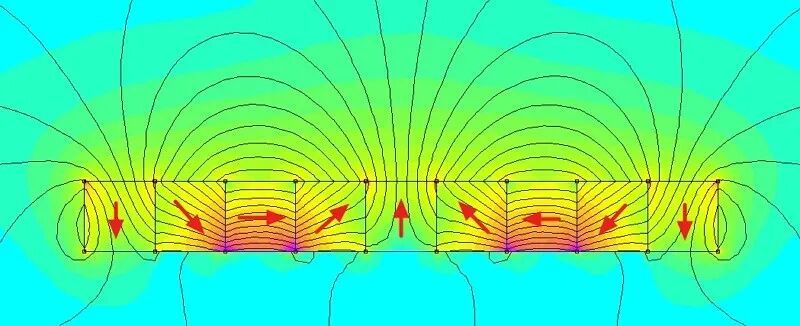
Linear Halbach Array (Magnetization Directions Rotated by 45° Between Adjacent Magnets)
2.Advantages of Halbach Array Design: More Than Just “One-Sided Magnetic Field Enhancement”
2.1 High Magnetic Field Utilization Efficiency
This is the most obvious advantage. In traditional magnet applications, the magnetic field on the back side of a magnet is often wasted. A Halbach Array can redirect this “unused” magnetic flux toward the working side, improving overall magnetic field utilization by 30%–50%. This means the same magnetic field strength requirements can be achieved with less magnetic material.
2.2 Reduced Magnetic Interference
Because the magnetic field is concentrated and confined to one side, this “clean” magnetic environment is extremely valuable for devices containing large numbers of sensitive electronic components.
2.3 Replacing Complex Magnetic Circuit Structures
In traditional magnetic circuit designs, heavy iron magnetic yokes are often added behind the magnets to guide and concentrate the magnetic field. However, a Halbach Array can achieve magnetic field confinement through its own structural arrangement, requiring little to no magnetic yoke, or only a much thinner one.
2.4 Generating Highly Uniform Magnetic Fields Close to an Ideal Sine Wave Distribution
This characteristic is especially important in high-performance electric motors using ring-shaped Halbach arrays. Traditional motor magnets can produce the cogging effect, resulting in torque fluctuations, noise, and vibration.
By using a Halbach Array in brushless motors, the air-gap magnetic field distribution becomes much smoother, significantly reducing torque ripple. As a result, motors can operate with higher stability, lower noise, and improved efficiency.
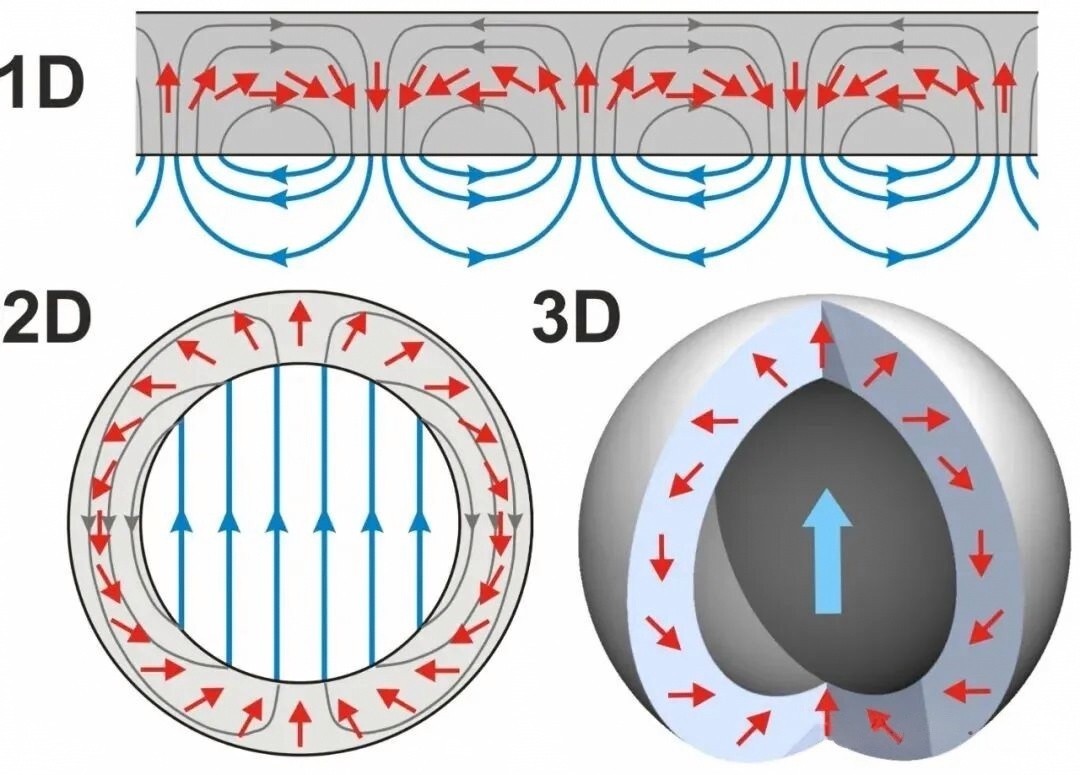
(linear, circular, and-spherical-halbach-arrays)
3. From High-Tech Innovations to Everyday Life: Applications of Halbach Arrays
You may think this technology sounds extremely “high-end” and far removed from our daily lives. In reality, the magnetic circuit design of Halbach Arrays has already demonstrated its value across many industries and may even be closer to our lives than we imagine.
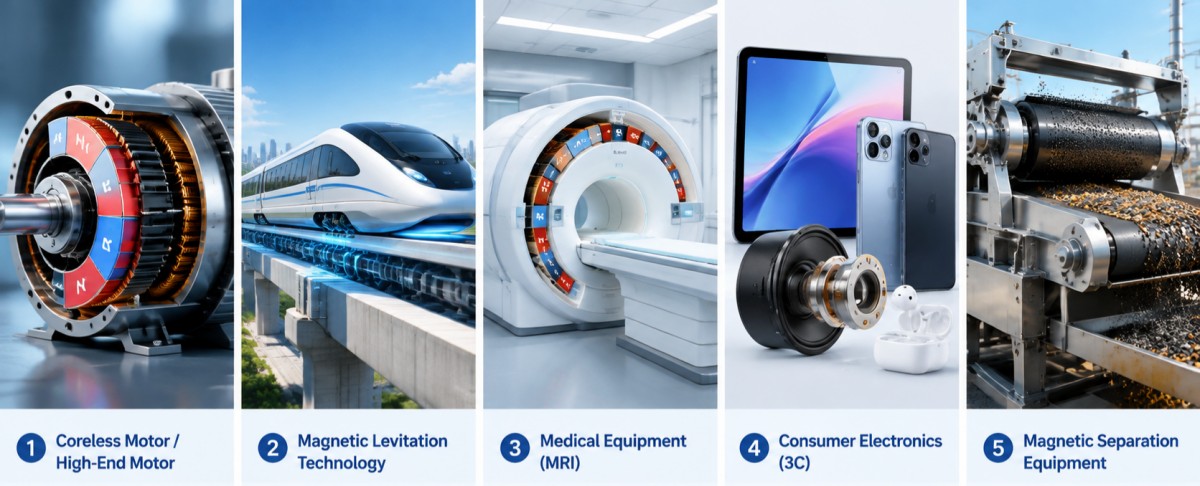
3.1 Coreless Motors / High-Performance Electric Motors
This is one of the most widespread application areas of Halbach Array technology. The high efficiency and high power density brought by Halbach magnetic structures enable longer operating times and stronger performance.
From high-precision linear motors and servo motors used in industrial robots and CNC machine tools, to high-power-density drive motors in drones and new energy electric vehicles, Halbach arrays in motors are playing an increasingly important role in improving performance, efficiency, and reliability.
3.2 Magnetic Levitation Technology
Next-generation magnetic levitation transportation systems utilize Halbach array magnetic levitation technology to generate stable and concentrated magnetic fields.
When a high-speed train moves along the track, the magnetic field generated by the Halbach array induces eddy currents in the track. These currents create a powerful repulsive force, allowing the train to lift above the track and achieve low-friction, high-speed operation.
3.3 Medical Equipment
In magnetic resonance imaging (MRI) systems, Halbach magnets for MRI can precisely control the distribution and direction of magnetic fields.
Compared with traditional magnet configurations, Halbach magnet structures help create a more concentrated and efficient magnetic field, providing new possibilities for compact MRI systems and advanced medical imaging equipment.
3.4 3C Electronic Devices
In consumer electronics such as tablets and other smart devices, Halbach array designs provide stronger magnetic force while enabling lighter and more compact structures. They also help reduce interference with internal electronic components.
In speakers and headphones, the application of Halbach array speaker magnets increases magnetic flux density, improving sound quality, sensitivity, and overall audio performance.
3.5 Magnetic Separation Equipment
In industries such as mineral sorting, food iron removal, and environmental protection equipment, Halbach array magnetic structures create highly concentrated magnetic field regions.
This concentrated magnetic force improves the efficiency of magnetic separation, allowing equipment to achieve better impurity removal performance while maintaining a more compact design.
4. Manufacturing Challenges and Cost Considerations of Halbach Arrays
Since Halbach Arrays offer such outstanding magnetic performance, why haven’t they completely replaced traditional magnet designs? The reason is that implementing this technology is far from simple. It mainly faces two major challenges: complex manufacturing processes and relatively high production costs.
4.1 Complex Manufacturing Processes
Difficult Control of Magnetization Direction
For conventional magnets, a single magnetization direction is usually sufficient. However, in a Halbach Array, each individual magnet requires a different magnetization direction with extremely precise angular control. Even a slight deviation can significantly affect the overall magnetic field distribution and reduce the performance of the entire magnetic structure.
Extremely High Assembly Precision
A Halbach Array requires multiple high-performance permanent magnets with different magnetization directions to be assembled at precisely defined angles. During assembly, manufacturers must use specialized fixtures and tooling to overcome the strong repulsive or attractive forces between magnets, ensuring accurate positioning and tight integration.
After precise alignment, the magnet segments are typically bonded together using high-strength adhesives to create a reliable and stable compact permanent magnet design.
Complex Magnetic Field Testing
For conventional magnets, measuring the surface magnetic strength may be sufficient. However, evaluating a Halbach Array requires a much more comprehensive approach — the entire magnetic field distribution must be measured and analyzed to ensure the designed magnetic performance is achieved.
4.2 Relatively Higher Costs
Higher Requirements for Magnetization Equipment
Producing Halbach Arrays requires specialized multi-angle magnetization fixtures and equipment. Standard magnetization machines alone cannot easily achieve the precise magnetization patterns required.
Longer Processing and Assembly Time
The complex magnet manufacturing processes, precise magnetization steps, and detailed assembly procedures require more production time compared with conventional magnet assemblies.
Strict Yield Control
Due to the complexity of the magnetic circuit design and the high precision requirements, manufacturers must maintain strict quality control throughout magnet production. Improving production yield and reducing manufacturing losses are critical challenges, which also place higher demands on a factory’s overall engineering capabilities and manufacturing experience.
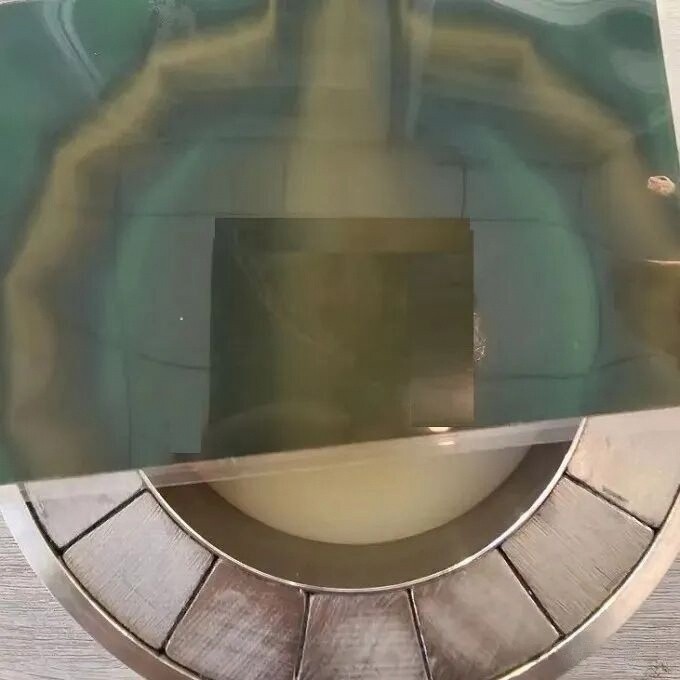
halbach-magnet-array-magnetic-field-visualization-using-magnetic-viewing-film
5.Common Alternatives to Halbach Arrays
Choosing the right magnetic solution depends on the specific application requirements. While Halbach Arrays offer outstanding magnetic field utilization and control, alternative designs can often provide a more practical solution when cost, production efficiency, or manufacturing simplicity are key considerations.
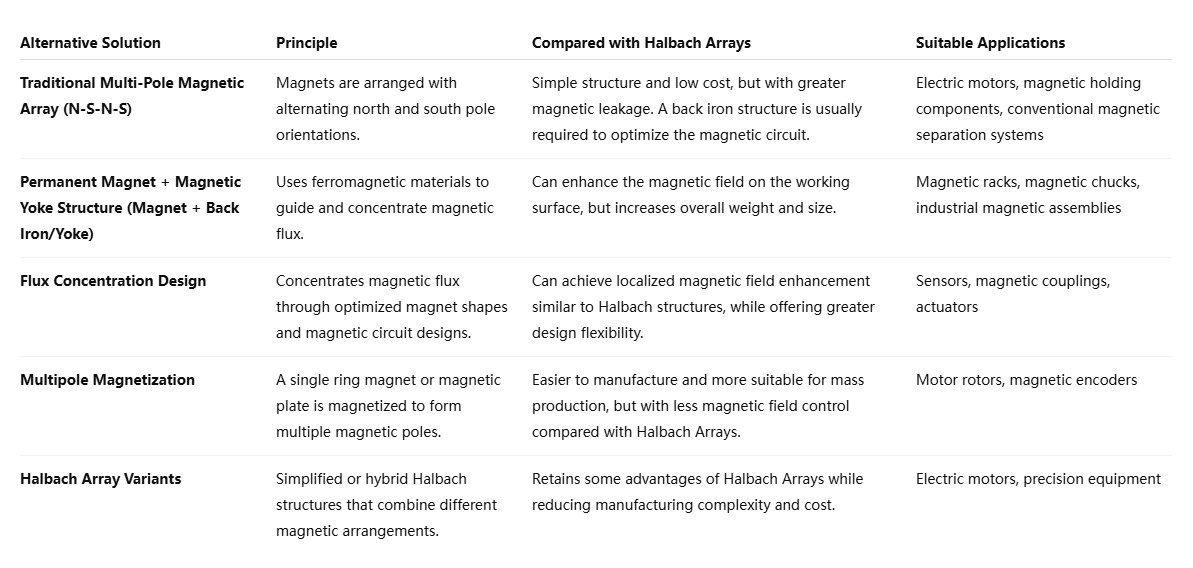
Halbach Array Alternatives: Comparing Different Magnetic Solutions
6. What Kind of Magnet Manufacturer Can Produce Halbach Arrays?
A qualified Halbach Array manufacturer should have:
Magnetic circuit design capabilities
Customized magnetization equipment
Precision assembly experience
Magnetic field measurement and testing capabilities
If you are working on:
Electric motor upgrades
Precision sensing systems
High-end magnetic applications
What you may need is not simply a “stronger magnet”, but a smarter magnetic field design.
The real advantage lies in designing the right magnetic solution for the application — where magnetic performance, structure, and efficiency work together.
With 16 years of expertise in high-performance custom magnets, Saint Langma delivers integrated solutions from magnetic materials and circuit design to complete magnetic assemblies.
Let’s work together to develop the right magnetic solution for your application.
Search
Categories List
Please give us a message
Beijing Saint Langma Magnetic Technology Co.,Ltd