
One stop solution for magnetic products
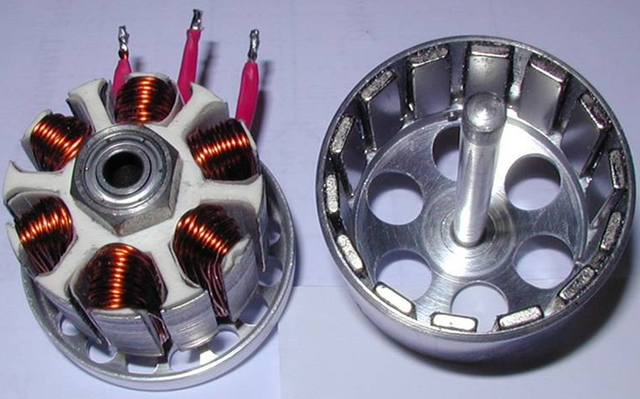
In motor design, engineers continuously seek ways to make motors more efficient and powerful. There's a seemingly paradoxical technique: cutting a single magnet into multiple segments. This method is known as magnet segmentation or laminated magnet. Why cut a functional magnet? What advantages does it offer? And where can it be applied? This article provides a detailed explanation.
I. Main Issues: Magnets Can Also Develop Heat Generation
To understand why segmentation is necessary, we must first recognize a key fact: in high-speed motors, the magnets themselves generate heat.
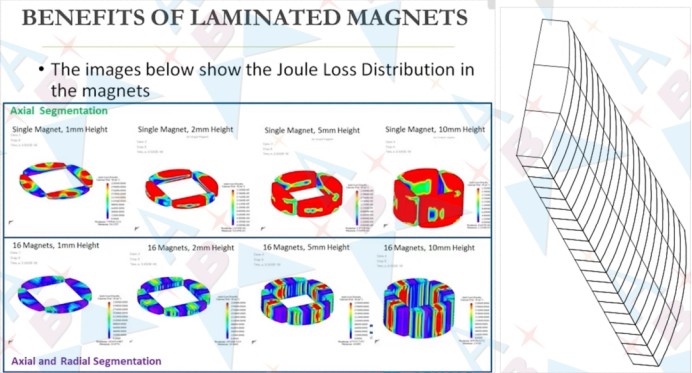
The magnetic field within an electric motor is constantly changing. When a complete, conductive metal object (such as a sintered neodymium-iron-boron magnet) is placed in this varying magnetic field, cyclic currents are generated inside the magnet according to the principle of electromagnetic induction, resembling vortices in water. These currents are referred to as eddy currents.
When eddy currents flow within a magnet, they encounter resistance, generating heat. This phenomenon is known as eddy current loss in magnets. For a large solid magnet, the eddy current path is extensive, resulting in significant heat generation.
Fever can lead to three adverse effects::
1. Wastes energy and reduces the overall efficiency of the motor.
2. An increase in temperature may lead to a decline in permanent magnet performance (demagnetization).
3. Local overheating poses reliability risks.
II. Solution: How does a segmented magnet work?
The principle of segmentation technology is straightforward: it blocks the path of large eddy currents.
Imagine a wide road prone to traffic congestion. If numerous median strips are installed along the road, dividing the main thoroughfare into multiple one-way lanes, vehicle flow (electric current) cannot form extensive circulation patterns, thereby alleviating congestion (heat generation).
The specific procedure is as follows:
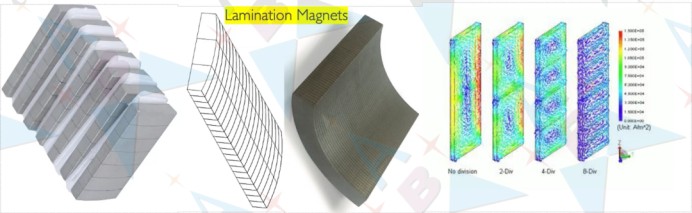
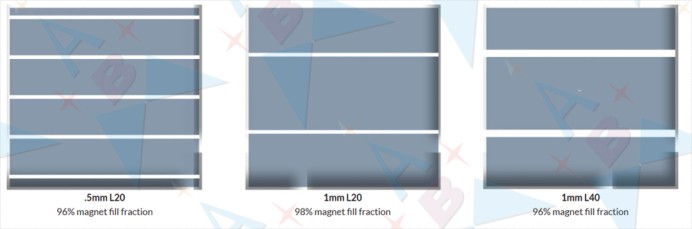
Physically divide a single magnet into multiple small segments. Then, fill the spaces between these segments with insulating material (such as epoxy resin) or insulate the surface of each segment. Finally, reassemble these segmented magnets into a complete magnetic pole.
Thus, although each small magnet segment still contains minor eddy currents, the large eddy current loops that traverse the entire magnetic pole are completely isolated by the insulating layer, resulting in a significant reduction in overall eddy current losses.
III. Advantages of Segmented Magnets
The segmented design offers the following tangible benefits:
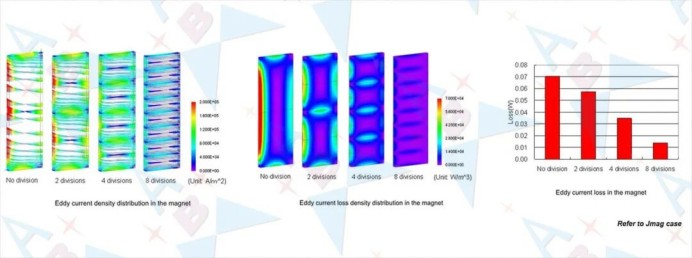
1. Significantly reduces eddy current losses and improves efficiency
This represents the primary and direct advantage. Under high-frequency (high-speed) operating conditions, the eddy current losses in segmented magnets can be reduced to just a fraction of their original level or even lower. The saved energy is directly translated into enhanced motor efficiency. For motors aiming for the IE4 or IE5 ultra-high energy efficiency standards, this constitutes one of the key technical breakthroughs.
2. Reduce magnet heating and enhance reliability
Reduced losses mean decreased heat generation. The temperature of the magnet body becomes lower and more uniform, resulting in two major benefits:
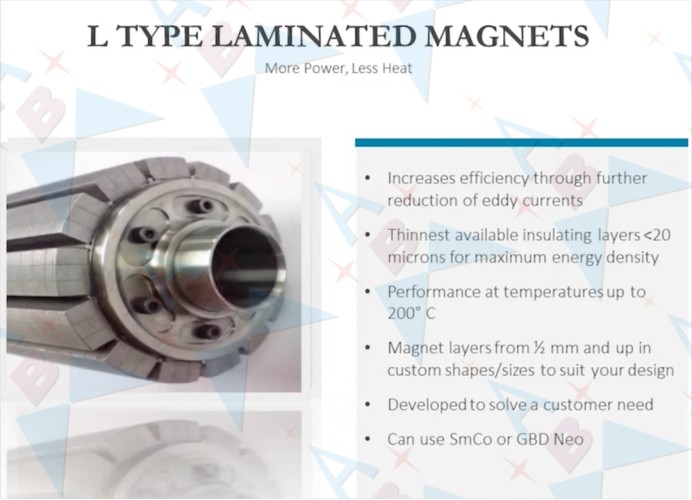
Prevention of high-temperature demagnetization: Magnets (particularly neodymium iron boron magnets) are prone to demagnetization at elevated temperatures. Upon cooling, their operational stability improves and the motor's overload capacity increases.
Protective adhesive and magnet: Lower temperatures delay adhesive aging and reduce the risk of magnet cracking or delamination due to thermal expansion and contraction.
3. Challenges in improving motor thermal management
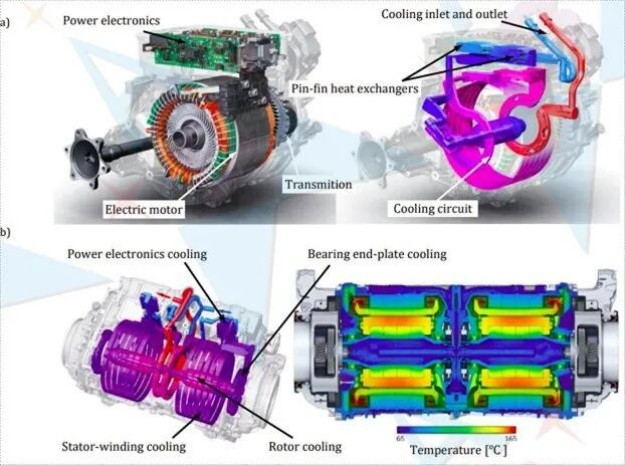
The magnet's inherent heat generation constitutes a primary thermal source within the motor. Controlling this heat source significantly reduces the overall cooling load on the motor, enabling engineers to design more efficient cooling systems or achieve higher power output under equivalent cooling conditions.
4. The "Ceiling" for Enhancing High-Speed Performance
Eddy current losses increase proportionally with the square of rotational speed, representing one of the primary limitations for achieving high-speed motor performance. Segmental technology effectively overcomes this limitation, enabling the design of ultra-high-speed motors capable of operating at tens of thousands of revolutions perminute.
IV. Which scenarios particularly require segmented magnets?
Not all motors require segmented magnets. They are primarily used in applications where stringent requirements for "high frequency" and "high efficiency" are essential.
V. Aspects That Require Weighing
Increased manufacturing costs: Processes such as cutting, insulation treatment, and reassembly bonding add complexity and raise expenses.
Magnetic performance shows slight degradation: the insulation layer occupies a small amount of space, potentially causing a minor decrease in magnetic performance per unit volume.
Mechanical strength considerations: After segmentation, the overall mechanical strength of the magnetic poles must be ensured by the binder; design specifications should account for factors such as centrifugal force.
Summary
Segmented magnets are essentially a sophisticated engineering strategy employed by motor engineers to mitigate "eddy current losses." By adopting the approach of "dividing the whole into parts and implementing insulation isolation," they effectively block the pathways for energy loss.
As motors evolve toward higher speeds, greater efficiency, and higher power density, eddy current losses in magnets remain a significant challenge. Segmental magnets serve as a reliable solution to overcome this obstacle. When your design approaches performance limits, be sure to evaluate the value of this approach.
Search
Categories List
Please give us a message
Beijing Saint Langma Magnetic Technology Co.,Ltd