
One stop solution for magnetic products
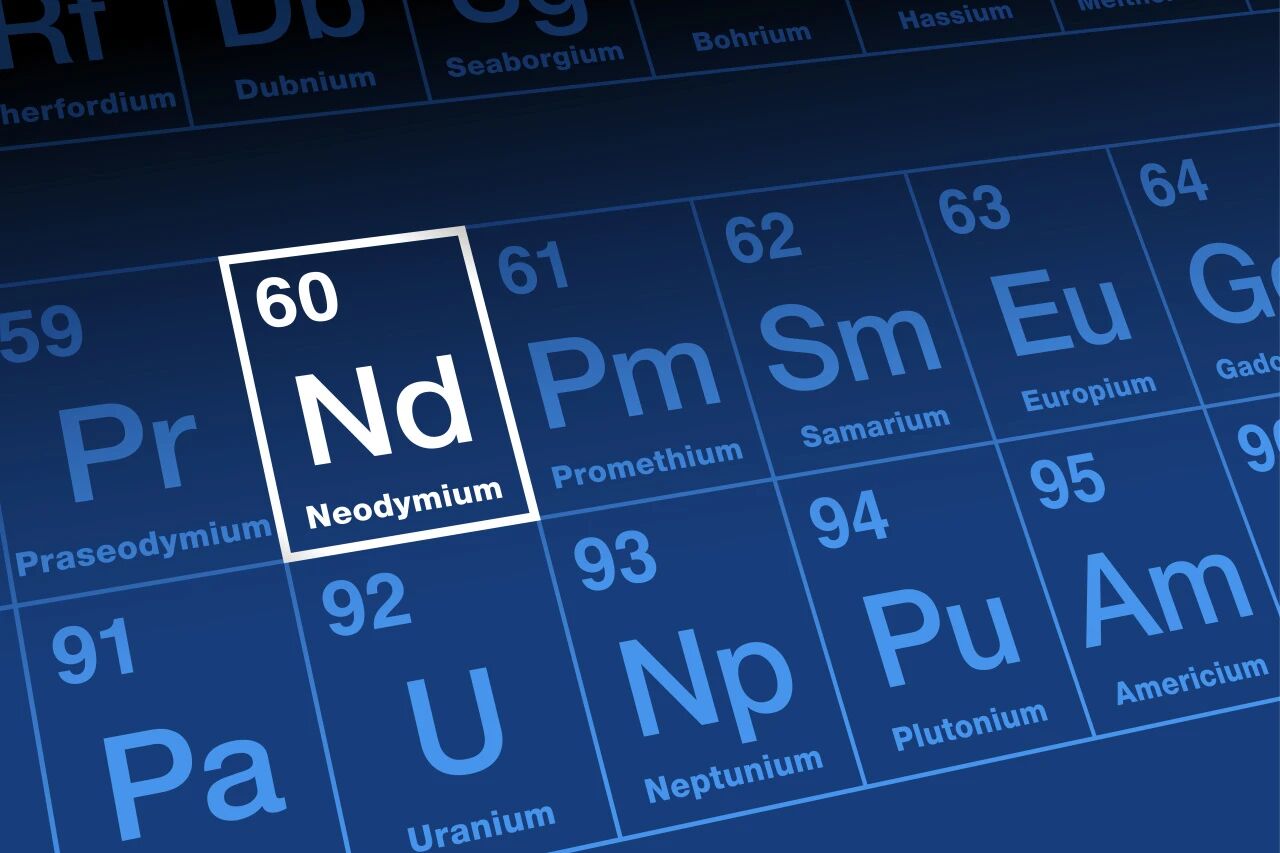
Less ubiquitous than steel, rare earths function like vitamins: only a tiny dosage delivers dramatic performance leaps. Today, we take rare earths as our core subject.
Rare earth elements permeate all industrial sectors like vital bloodstreams, acting as an invisible powerhouse driving industrial upgrading and technological innovation. Among all rare earth application segments, rare earth permanent magnets stand out for both technical value and commercial significance. To fully grasp the capabilities and applicable scenarios of permanent magnetic materials, we must first interpret their core performance parameters — these are the unique identity codes of rare earth permanent magnets. They not only define magnetic output and anti-interference capacity, but also directly determine operational stability and service life under diverse working conditions.

1. Core Performance: The Performance Triangle of Permanent Magnetic Materials
Remanence: Intuitive Indicator of Magnetic Retention Capacity
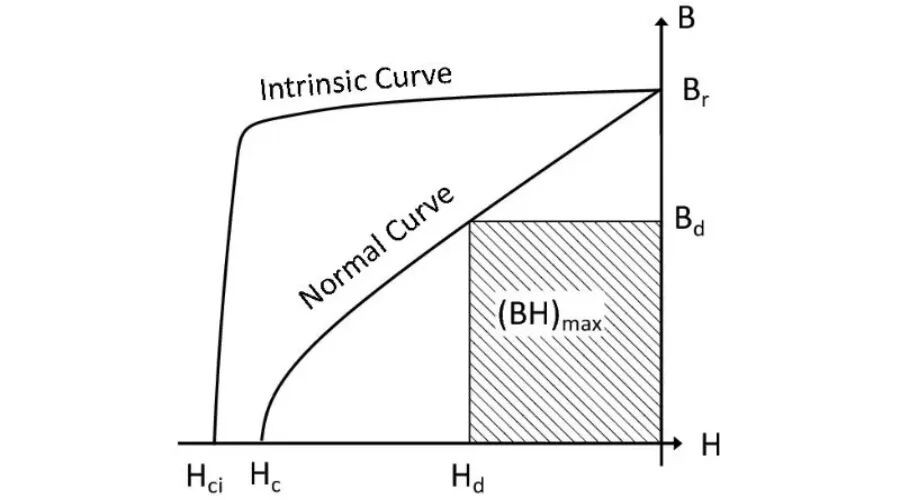
Remanence (symbol: Br) refers to the residual magnetic flux density retained by a saturated permanent magnet after the external magnetizing field is removed. Its units are Tesla (T) or Gauss (Gs), with the conversion factor: 1 T = 10,000 Gs. Remanence directly reflects a material’s capacity to generate external magnetic fields. A higher remanence value means stronger magnetic output within the same volume, making the material ideal for miniaturized, high-magnetic-strength applications.
Data shows neodymium iron boron (NdFeB) delivers remanence 3 to 5 times that of ferrite magnets. This allows drastically reduced magnet volume while maintaining identical magnetic strength, earning NdFeB its reputation as the "King of Magnets".
Coercivity: Dual Safeguards Against Demagnetization
Coercivity consists of two distinct indicators rather than a single metric:
B-H Coercivity (Hcb): The reverse magnetic field strength required to temporarily reduce a magnet’s internal magnetic flux density to zero during reverse magnetization. It marks the baseline threshold of anti-demagnetization performance.
Intrinsic Coercivity (Hcj): The reverse magnetic field strength needed to permanently eliminate a magnet’s magnetization intensity. It serves as the core bottom line for anti-demagnetization resilience.
Key Insight
Intrinsic coercivity is always greater than B-H coercivity (Hcj > Hcb). A wider gap between the two values indicates superior resistance to irreversible demagnetization. For equipment exposed to intense reverse magnetic fields or high temperatures — such as drive motors for electric vehicles — high intrinsic coercivity is an indispensable performance feature.
Maximum Energy Product: Comprehensive Core Indicator
Maximum Energy Product (symbol: (BH)max) represents the maximum magnetic energy density a permanent magnet can supply along its demagnetization curve, measured in kilojoules per cubic meter (kJ/m³) or Mega-Gauss Oersted (MGOe), with the conversion: 1 MGOe ≈ 7.96 kJ/m³.
Simply put, the maximum energy product is an all-round metric for evaluating overall magnetic performance. A higher (BH)max value enables smaller magnet sizes for equivalent performance requirements, which is critical for miniaturized and lightweight component design.
Key Insight
Rare earth permanent magnets with high maximum energy product are mandatory for weight- and size-sensitive applications including drones, smartphones, and miniature medical devices.
External Environmental Parameters: Temperature and Humidity Challenges
The three indicators above are intrinsic material properties that determine inherent magnetic performance. However, external environmental factors are equally critical for real-world deployment;
Humidity: Mitigated via Surface Coating Technology
Corrosion damage caused by humidity can be effectively eliminated through customized surface coating solutions such as nickel plating, zinc plating, and epoxy resin coating — this falls under engineering-level protective measures.
Operating Temperature: The Lifeline of Magnetic Stability
Operating temperature refers to the maximum temperature at which a material maintains stable magnetic properties, always below its Curie temperature (Tc). Exposure beyond the rated operating temperature triggers reversible demagnetization; temperatures exceeding the Curie point lead to irreversible demagnetization and permanent loss of magnetic performance.
Major permanent magnet materials exhibit vastly different temperature tolerance ranges.
Material Selection Guidelines
High-temperature applications (automotive engines, deep well drilling): Samarium-cobalt (SmCo) or Alnico magnets are prioritized.
Size-sensitive, mild-temperature scenarios (consumer electronics, precision instruments): NdFeB magnets deliver optimal cost-performance balance.



Mainstream Permanent Magnet Materials for Diverse Application Scenarios
Three categories of rare earth permanent magnets dominate industrial production. Each boasts unique performance advantages to cover complementary application fields:
Neodymium Iron Boron (NdFeB)
As third-generation rare earth permanent magnets, NdFeB materials feature outstanding comprehensive performance with high remanence, high coercivity, and ultra-high maximum energy product. They offer favorable mechanical toughness with low brittleness and low alloy density, supporting lightweight, thin, and compact magnetic component design. Widely adopted across high-end sectors including new energy vehicles, wind power generation, and intelligent robotics. A drawback lies in its relatively high magnetic temperature coefficient; thermal stability under high temperatures must be enhanced via specialized production processes.
Samarium-Cobalt (SmCo)
Second-generation rare earth permanent magnets are split into two grades: SmCo5 and Sm2Co17. They deliver exceptional temperature stability, outstanding high-temperature resistance, and robust corrosion resistance, making them suitable for extreme high-temperature and corrosive working environments such as aerospace sensors and petroleum exploration equipment. Limited supply of raw rare earth cobalt drives higher material costs, restricting large-scale mass deployment.
Aluminum-Nickel-Cobalt (Alnico)
One of the earliest commercialized permanent magnet materials, Alnico alloys consist of aluminum, nickel, cobalt, iron, and trace additional metals, manufactured via casting or powder sintering processes. Characterized by high remanence and ultra-low temperature coefficients, Alnico maintains steady magnetic output even at extreme heat, with a maximum operating temperature above 600°C. Primarily deployed in traditional industrial equipment including precision instrumentation and magnetoelectric sensors requiring consistent magnetic performance.
Wide-Ranging Applications of Rare Earth Permanent Magnets
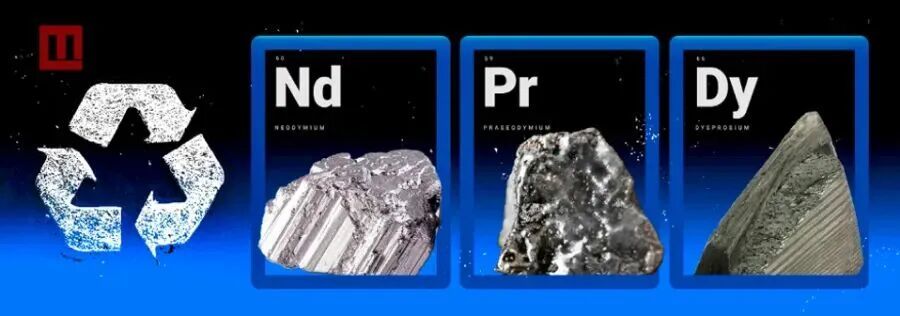
Rare earth permanent magnet materials are ubiquitous across industrial production, daily consumer goods, fundamental manufacturing, and cutting-edge high-tech sectors. Taking Sanlangma’s product portfolio as an example, our rare earth permanent magnets and finished magnetic assemblies serve three core market segments:
Industrial Sector
Extensively applied in power generation, steel & petrochemical engineering, shipbuilding, and automotive manufacturing. As core components of generators and automotive drive motors, rare earth permanent magnets drastically boost equipment efficiency and operational stability.

High-Tech Sector
The miniaturization and high-performance strengths of rare earth permanent magnets fuel technological iteration across intelligent robotics, low-altitude economy equipment, biomedicine, and new energy batteries.

Consumer & Daily Living Sector
Found in food processing machinery, smart home appliances, and 3C electronics — including refrigerator magnetic seals, headphone magnetic cores, and smartphone vibration motors. Rare earth magnets deliver greater convenience to everyday life.

Search
Categories List
Please give us a message
Beijing Saint Langma Magnetic Technology Co.,Ltd